
Black theme by J-Rad14
Download: Black_2.p3t
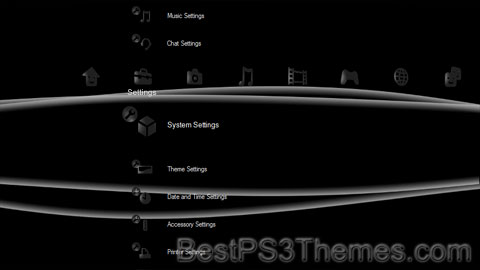
(1 background)
| Black | |
|---|---|
.png)     Clockwise, from top left: Anubis statue; American black bear; Galaxy NGC 406; The Supreme Court of the United States in October 2022; Portrait painting of Queen Victoria. | |
 Color coordinates Color coordinates | |
| Hex triplet | #000000 |
| sRGBB (r, g, b) | (0, 0, 0) |
| HSV (h, s, v) | (0°, 0%, 0%) |
| CIELChuv (L, C, h) | (0, 0, 0°) |
| Source | HTML/CSS[1] |
| B: Normalized to [0–255] (byte) H: Normalized to [0–100] (hundred) | |
Black is a color that results from the absence or complete absorption of visible light. It is an achromatic color, without hue, like white and grey.[2] It is often used symbolically or figuratively to represent darkness.[3] Black and white have often been used to describe opposites such as good and evil, the Dark Ages versus Age of Enlightenment, and night versus day. Since the Middle Ages, black has been the symbolic color of solemnity and authority, and for this reason it is still commonly worn by judges and magistrates.[3]
Black was one of the first colors used by artists in Neolithic cave paintings.[4] It was used in ancient Egypt and Greece as the color of the underworld.[5] In the Roman Empire, it became the color of mourning, and over the centuries it was frequently associated with death, evil, witches, and magic.[6] In the 14th century, it was worn by royalty, clergy, judges, and government officials in much of Europe. It became the color worn by English romantic poets, businessmen and statesmen in the 19th century, and a high fashion color in the 20th century.[3] According to surveys in Europe and North America, it is the color most commonly associated with mourning, the end, secrets, magic, force, violence, fear, evil, and elegance.[7]
Black is the most common ink color used for printing books, newspapers and documents, as it provides the highest contrast with white paper and thus is the easiest color to read. Similarly, black text on a white screen is the most common format used on computer screens.[8] As of September 2019,[update] the darkest material is made by MIT engineers from vertically aligned carbon nanotubes.[9]
Etymology[edit]
The word black comes from Old English blæc ("black, dark", also, "ink"), from Proto-Germanic *blakkaz ("burned"), from Proto-Indo-European *bhleg- ("to burn, gleam, shine, flash"), from base *bhel- ("to shine"), related to Old Saxon blak ("ink"), Old High German blach ("black"), Old Norse blakkr ("dark"), Dutch blaken ("to burn"), and Swedish bläck ("ink"). More distant cognates include Latin flagrare ("to blaze, glow, burn"), and Ancient Greek phlegein ("to burn, scorch"). The Ancient Greeks sometimes used the same word to name different colors, if they had the same intensity. Kuanos' could mean both dark blue and black.[10] The Ancient Romans had two words for black: ater was a flat, dull black, while niger was a brilliant, saturated black. Ater has vanished from the vocabulary, but niger was the source of the country name Nigeria,[11] the English word Negro, and the word for "black" in most modern Romance languages (French: noir; Spanish and Portuguese: negro; Italian: nero; Romanian: negru).
Old High German also had two words for black: swartz for dull black and blach for a luminous black. These are parallelled in Middle English by the terms swart for dull black and blaek for luminous black. Swart still survives as the word swarthy, while blaek became the modern English black.[10] The former is cognate with the words used for black in most modern Germanic languages aside from English (German: schwarz, Dutch: zwart, Swedish: svart, Danish: sort, Icelandic: svartr).[12] In heraldry, the word used for the black color is sable,[13] named for the black fur of the sable, an animal.
Art[edit]
Prehistoric[edit]

Black was one of the first colors used in art. The Lascaux Cave in France contains drawings of bulls and other animals drawn by paleolithic artists between 18,000 and 17,000 years ago. They began by using charcoal, and later achieved darker pigments by burning bones or grinding a powder of manganese oxide.[10]
Ancient[edit]

For the ancient Egyptians, black had positive associations; being the color of fertility and the rich black soil flooded by the Nile. It was the color of Anubis, the god of the underworld, who took the form of a black jackal, and offered protection against evil to the dead. To ancient Greeks, black represented the underworld, separated from the living by the river Acheron, whose water ran black. Those who had committed the worst sins were sent to Tartarus, the deepest and darkest level. In the center was the palace of Hades, the king of the underworld, where he was seated upon a black ebony throne. Black was one of the most important colors used by ancient Greek artists. In the 6th century BC, they began making black-figure pottery and later red figure pottery, using a highly original technique. In black-figure pottery, the artist would paint figures with a glossy clay slip on a red clay pot. When the pot was fired, the figures painted with the slip would turn black, against a red background. Later they reversed the process, painting the spaces between the figures with slip. This created magnificent red figures against a glossy black background.[14]

In the social hierarchy of ancient Rome, purple was reserved for the emperor; red was the color worn by soldiers (red cloaks for the officers, red tunics for the soldiers); white the color worn by the priests, and black was worn by craftsmen and artisans. The black they wore was not deep and rich; the vegetable dyes used to make black were not solid or lasting, so the blacks often faded to gray or brown.[15]
In Latin, the word for black, ater and to darken, atere, were associated with cruelty, brutality and evil. They were the root of the English words "atrocious" and "atrocity".[16] For the Romans, black symbolized death and mourning. In the 2nd century BC Roman magistrates wore a dark toga, called a toga pulla, to funeral ceremonies. Later, under the Empire, the family of the deceased also wore dark colors for a long period; then, after a banquet to mark the end of mourning, exchanged the black for a white toga. In Roman poetry, death was called the hora nigra, the black hour.[10]
The German and Scandinavian peoples worshipped their own goddess of the night, Nótt, who crossed the sky in a chariot drawn by a black horse. They also feared Hel, the goddess of the kingdom of the dead, whose skin was black on one side and red on the other. They also held sacred the raven. They believed that Odin, the king of the Nordic pantheon, had two black ravens, Huginn and Muninn, who served as his agents, traveling the world for him, watching and listening.[17]
Postclassical[edit]
In the early Middle Ages, black was commonly associated with darkness and evil. In Medieval paintings, the devil was usually depicted as having human form, but with wings and black skin or hair.[18]
12th and 13th centuries[edit]
In fashion, black did not have the prestige of red, the color of the nobility. It was worn by Benedictine monks as a sign of humility and penitence. In the 12th century a famous theological dispute broke out between the Cistercian monks, who wore white, and the Benedictines, who wore black. A Benedictine abbot, Pierre the Venerable, accused the Cistercians of excessive pride in wearing white instead of black. Saint Bernard of Clairvaux, the founder of the Cistercians responded that black was the color of the devil, hell, "of death and sin", while white represented "purity, innocence and all the virtues".[19]
Black symbolized both power and secrecy in the medieval world. The emblem of the Holy Roman Empire of Germany was a black eagle. The black knight in the poetry of the Middle Ages was an enigmatic figure, hiding his identity, usually wrapped in secrecy.[20]
Black ink, invented in China, was traditionally used in the Middle Ages for writing, for the simple reason that black was the darkest color and therefore provided the greatest contrast with white paper or parchment, making it the easiest color to read. It became even more important in the 15th century, with the invention of printing. A new kind of ink, printer's ink, was created out of soot, turpentine and walnut oil. The new ink made it possible to spread ideas to a mass audience through printed books, and to popularize art through black and white prints. Because of its contrast and clarity, black ink on white paper continued to be the standard for printing books, newspapers and documents; and for the same reason black text on a white background is the most common format used on computer screens.[8]
-
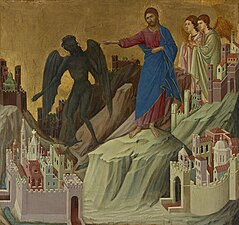 The Italian painter Duccio di Buoninsegna showed Christ expelling the Devil, shown covered with bristly black hair (1308–11).
 -
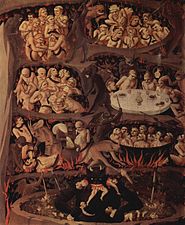 The 15th-century painting of the Last Judgement by Fra Angelico (1395–1455) depicted hell with a vivid black devil devouring sinners.
 -
 Portrait of a monk of the Benedictine Order (1484)
 -
 The black knight in a miniature painting of a medieval romance,Le Livre du cœur d'amour épris (about 1460)
 -
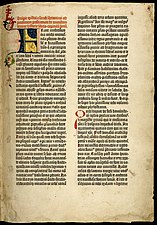 Gutenberg Bible (1451–1452). Black ink was used for printing books, because it provided the greatest contrast with the white paper and was the clearest and easiest color to read.


14th and 15th centuries[edit]
In the early Middle Ages, princes, nobles and the wealthy usually wore bright colors, particularly scarlet cloaks from Italy. Black was rarely part of the wardrobe of a noble family. The one exception was the fur of the sable. This glossy black fur, from an animal of the marten family, was the finest and most expensive fur in Europe. It was imported from Russia and Poland and used to trim the robes and gowns of royalty.
In the 14th century, the status of black began to change. First, high-quality black dyes began to arrive on the market, allowing garments of a deep, rich black. Magistrates and government officials began to wear black robes, as a sign of the importance and seriousness of their positions. A third reason was the passage of sumptuary laws in some parts of Europe which prohibited the wearing of costly clothes and certain colors by anyone except members of the nobility. The famous bright scarlet cloaks from Venice and the peacock blue fabrics from Florence were restricted to the nobility. The wealthy bankers and merchants of northern Italy responded by changing to black robes and gowns, made with the most expensive fabrics.[21]
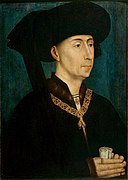
The change to the more austere but elegant black was quickly picked up by the kings and nobility. It began in northern Italy, where the Duke of Milan and the Count of Savoy and the rulers of Mantua, Ferrara, Rimini and Urbino began to dress in black. It then spread to France, led by Louis I, Duke of Orleans, younger brother of King Charles VI of France. It moved to England at the end of the reign of King Richard II (1377–1399), where all the court began to wear black. In 1419–20, black became the color of the powerful Duke of Burgundy, Philip the Good. It moved to Spain, where it became the color of the Spanish Habsburgs, of Charles V and of his son, Philip II of Spain (1527–1598). European rulers saw it as the color of power, dignity, humility and temperance. By the end of the 16th century, it was the color worn by almost all the monarchs of Europe and their courts.[22]
-
-
 Portrait of a Young Girl , Petrus Christus, between 1465–70
 -
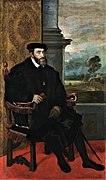 Charles V, Holy Roman Emperor, Titian, c.1500–1558
 -
 Portrait of Philip II of Spain (1527–1598)


Modern[edit]
16th and 17th centuries[edit]

While black was the color worn by the Catholic rulers of Europe, it was also the emblematic color of the Protestant Reformation in Europe and the Puritans in England and America. John Calvin, Philip Melanchthon and other Protestant theologians denounced the richly colored and decorated interiors of Roman Catholic churches. They saw the color red, worn by the pope and his cardinals, as the color of luxury, sin, and human folly.[23] In some northern European cities, mobs attacked churches and cathedrals, smashed the stained glass windows and defaced the statues and decoration. In Protestant doctrine, clothing was required to be sober, simple and discreet. Bright colors were banished and replaced by blacks, browns and grays; women and children were recommended to wear white.[24]
In the Protestant Netherlands, Rembrandt used this sober new palette of blacks and browns to create portraits whose faces emerged from the shadows expressing the deepest human emotions. The Catholic painters of the Counter-Reformation, like Rubens, went in the opposite direction; they filled their paintings with bright and rich colors. The new Baroque churches of the Counter-Reformation were usually shining white inside and filled with statues, frescoes, marble, gold and colorful paintings, to appeal to the public. But European Catholics of all classes, like Protestants, eventually adopted a sober wardrobe that was mostly black, brown and gray.[25]
-
 Increase Mather, an American Puritan clergyman (1688).
 -
 Rembrandt, Self-portrait (1659)
 -
 John, Duke of Braganza, later King John IV of Portugal (1628)
 -
![Black painted suit of German armor crafted circa 1600.[26]](//upload.wikimedia.org/wikipedia/commons/thumb/7/7d/Infantry_Armor_MET_DP277181.jpg/135px-Infantry_Armor_MET_DP277181.jpg) Black painted suit of German armor crafted circa 1600.[26]
Black painted suit of German armor crafted circa 1600.[26]


.png)
![Black painted suit of German armor crafted circa 1600.[26]](https://en.wikipedia.org/wiki/File:Infantry_Armor_MET_DP277181.jpg)

In the second part of the 17th century, Europe and America experienced an epidemic of fear of witchcraft. People widely believed that the devil appeared at midnight in a ceremony called a Black Mass or black sabbath, usually in the form of a black animal, often a goat, a dog, a wolf, a bear, a deer or a rooster, accompanied by their familiar spirits, black cats, serpents and other black creatures. This was the origin of the widespread superstition about black cats and other black animals. In medieval Flanders, in a ceremony called Kattenstoet, black cats were thrown from the belfry of the Cloth Hall of Ypres to ward off witchcraft.[27]
Witch trials were common in both Europe and America during this period. During the notorious Salem witch trials in New England in 1692–93, one of those on trial was accused of being able turn into a "black thing with a blue cap," and others of having familiars in the form of a black dog, a black cat and a black bird.[28] Nineteen women and men were hanged as witches.[29]
18th and 19th centuries[edit]
In the 18th century, during the European Age of Enlightenment, black receded as a fashion color. Paris became the fashion capital, and pastels, blues, greens, yellow and white became the colors of the nobility and upper classes. But after the French Revolution, black again became the dominant color. Black was the color of the industrial revolution, largely fueled by coal, and later by oil. Thanks to coal smoke, the buildings of the large cities of Europe and America gradually turned black. By 1846 the industrial area of the West Midlands of England was "commonly called 'the Black Country'".[30] Charles Dickens and other writers described the dark streets and smoky skies of London, and they were vividly illustrated in the wood-engravings
White Blaze
White Blaze theme by sXnc
Download: WhiteBlaze.p3t
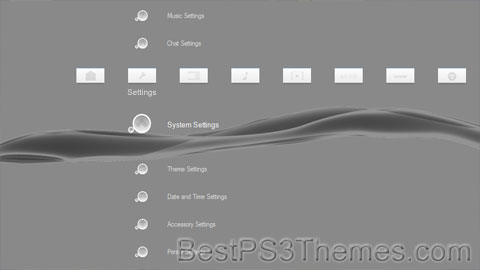
(no backgrounds)
Redirect to:
This page is a redirect. The following categories are used to track and monitor this redirect:
|
TurboTime
TurboTime theme by goggles182
Download: TurboTime.p3t
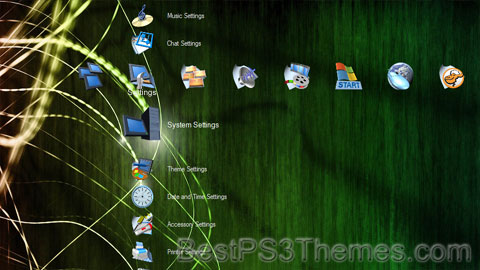
(4 backgrounds)
P3T Unpacker v0.12
Copyright (c) 2007. Anoop Menon
This program unpacks Playstation 3 Theme files (.p3t) so that you can touch-up an existing theme to your likings or use a certain wallpaper from it (as many themes have multiple). But remember, if you use content from another theme and release it, be sure to give credit!
Download for Windows: p3textractor.zip
Instructions:
Download p3textractor.zip from above. Extract the files to a folder with a program such as WinZip or WinRAR. Now there are multiple ways to extract the theme.
The first way is to simply open the p3t file with p3textractor.exe. If you don’t know how to do this, right click the p3t file and select Open With. Alternatively, open the p3t file and it will ask you to select a program to open with. Click Browse and find p3textractor.exe from where you previously extracted it to. It will open CMD and extract the theme to extracted.[filename]. After that, all you need to do for any future p3t files is open them and it will extract.
The second way is very simple. Just drag the p3t file to p3textractor.exe. It will open CMD and extract the theme to extracted.[filename].
For the third way, first put the p3t file you want to extract into the same folder as p3textractor.exe. Open CMD and browse to the folder with p3extractor.exe. Enter the following:
p3textractor filename.p3t [destination path]Replace filename with the name of the p3t file, and replace [destination path] with the name of the folder you want the files to be extracted to. A destination path is not required. By default it will extract to extracted.filename.
Final Fantasy #4
Final Fantasy theme by Quickly Jo
Download: FinalFantasy_4.p3t
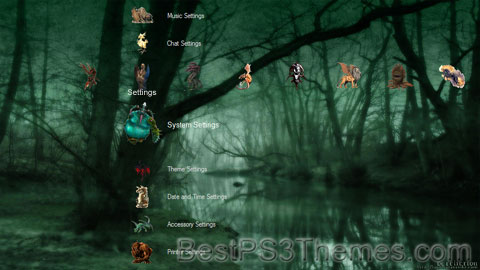
(1 background)

Final Fantasy[a] is a fantasy anthology media franchise created by Hironobu Sakaguchi which is owned, developed, and published by Square Enix (formerly Square). The franchise centers on a series of fantasy role-playing video games. The first game in the series was released in 1987, with 16 numbered main entries having been released to date.
The franchise has since branched into other video game genres such as tactical role-playing, action role-playing, massively multiplayer online role-playing, racing, third-person shooter, fighting, and rhythm, as well as branching into other media, including films, anime, manga, and novels.
Final Fantasy is mostly an anthology series with primary installments being stand-alone role-playing games, each with different settings, plots and main characters, but the franchise is linked by several recurring elements, including game mechanics and recurring character names. Each plot centers on a particular group of heroes who are battling a great evil, but also explores the characters' internal struggles and relationships. Character names are frequently derived from the history, languages, pop culture, and mythologies of cultures worldwide. The mechanics of each game involve similar battle systems and maps.
Final Fantasy has been both critically and commercially successful. Several entries are regarded as some of the greatest video games, with the series selling more than 185 million copies worldwide, making it one of the best-selling video game franchises of all time. The series is well known for its innovation, visuals, such as the inclusion of full-motion videos, photorealistic character models, and music by Nobuo Uematsu. It has popularized many features now common in role-playing games, also popularizing the genre as a whole in markets outside Japan.
Media[edit]
Games[edit]
The first installment of the series was released in Japan on December 18, 1987. Subsequent games are numbered and given a story unrelated to previous games, so the numbers refer to volumes rather than to sequels. Many Final Fantasy games have been localized for markets in North America, Europe, and Australia on numerous video game consoles, personal computers (PC), and mobile phones. As of June 2023, the series includes the main installments from Final Fantasy to Final Fantasy XVI, as well as direct sequels and spin-offs, both released and confirmed as being in development. Most of the older games have been remade or re-released on multiple platforms.[1]
Main series[edit]
| 1987 | Final Fantasy |
|---|---|
| 1988 | Final Fantasy II |
| 1989 | |
| 1990 | Final Fantasy III |
| 1991 | Final Fantasy IV |
| 1992 | Final Fantasy V |
| 1993 | |
| 1994 | Final Fantasy VI |
| 1995 | |
| 1996 | |
| 1997 | Final Fantasy VII |
| 1998 | |
| 1999 | Final Fantasy VIII |
| 2000 | Final Fantasy IX |
| 2001 | Final Fantasy X |
| 2002 | Final Fantasy XI |
| 2003 | |
| 2004 | |
| 2005 | |
| 2006 | Final Fantasy XII |
| 2007 | |
| 2008 | |
| 2009 | Final Fantasy XIII |
| 2010 | Final Fantasy XIV (original) |
| 2011 | |
| 2012 | |
| 2013 | Final Fantasy XIV |
| 2014 | |
| 2015 | |
| 2016 | Final Fantasy XV |
| 2017 | |
| 2018 | |
| 2019 | |
| 2020 | |
| 2021 | |
| 2022 | |
| 2023 | Final Fantasy XVI |
Three Final Fantasy installments were released on the Nintendo Entertainment System (NES). Final Fantasy was released in Japan in 1987 and in North America in 1990.[2][3] It introduced many concepts to the console RPG genre, and has since been remade on several platforms.[3] Final Fantasy II, released in 1988 in Japan, has been bundled with Final Fantasy in several re-releases.[3][4][5] The last of the NES installments, Final Fantasy III, was released in Japan in 1990,[6] but was not released elsewhere until a Nintendo DS remake came out in 2006.[5]
The Super Nintendo Entertainment System (SNES) also featured three installments of the main series, all of which have been re-released on several platforms. Final Fantasy IV was released in 1991; in North America, it was released as Final Fantasy II.[7][8] It introduced the "Active Time Battle" system.[9] Final Fantasy V, released in 1992 in Japan, was the first game in the series to spawn a sequel: a short anime series, Final Fantasy: Legend of the Crystals.[3][10][11] Final Fantasy VI was released in Japan in 1994, titled Final Fantasy III in North America.[12]
The PlayStation console saw the release of three main Final Fantasy games. Final Fantasy VII (1997) moved away from the two-dimensional (2D) graphics used in the first six games to three-dimensional (3D) computer graphics; the game features polygonal characters on pre-rendered backgrounds. It also introduced a more modern setting, a style that was carried over to the next game.[3] It was also the second in the series to be released in Europe, with the first being Final Fantasy Mystic Quest. Final Fantasy VIII was published in 1999, and was the first to consistently use realistically proportioned characters and feature a vocal piece as its theme music.[3][13] Final Fantasy IX, released in 2000, returned to the series' roots, by revisiting a more traditional Final Fantasy setting, rather than the more modern worlds of VII and VIII.[3][14]
Three main installments, as well as one online game, were published for the PlayStation 2.[15][16][17] Final Fantasy X (2001) introduced full 3D areas and voice acting to the series, and was the first to spawn a sub-sequel (Final Fantasy X-2, published in 2003).[18][19] The first massively multiplayer online role-playing game (MMORPG) in the series, Final Fantasy XI, was released on the PS2 and PC in 2002, and later on the Xbox 360.[20][21] It introduced real-time battles instead of random encounters.[21] Final Fantasy XII, published in 2006, also includes real-time battles in large, interconnected playfields.[22][23] The game is also the first in the main series to utilize a world used in a previous game, namely the land of Ivalice, which was previously featured in Final Fantasy Tactics and Vagrant Story.[24]
In 2009, Final Fantasy XIII was released in Japan, and in North America and Europe the following year, for PlayStation 3 and Xbox 360.[25][26] It is the flagship installment of the Fabula Nova Crystallis Final Fantasy series[27] and became the first mainline game to spawn two sub-sequels (XIII-2 and Lightning Returns).[28] It was also the first game released in Chinese and high definition along with being released on two consoles at once. Final Fantasy XIV, a MMORPG, was released worldwide on Microsoft Windows in 2010, but it received heavy criticism when it was launched, prompting Square Enix to rerelease the game as Final Fantasy XIV: A Realm Reborn, this time to the PlayStation 3 as well, in 2013.[29] Final Fantasy XV is an action role-playing game that was released for PlayStation 4 and Xbox One in 2016.[30][31] Originally a XIII spin-off titled Versus XIII, XV uses the mythos of the Fabula Nova Crystallis series, although in many other respects the game stands on its own and has since been distanced from the series by its developers.[38] The sixteenth mainline entry, Final Fantasy XVI,[39] was released in 2023 for PlayStation 5.[40]
Remakes, sequels and spin-offs[edit]
Final Fantasy has spawned numerous spin-offs and metaseries. Several are, in fact, not Final Fantasy games, but were rebranded for North American release. Examples include the SaGa series, rebranded The Final Fantasy Legend, and its two sequels, Final Fantasy Legend II and III.[41] Final Fantasy Mystic Quest was specifically developed for a United States audience, and Final Fantasy Tactics is a tactical RPG that features many references and themes found in the series.[42][43] The spin-off Chocobo series, Crystal Chronicles series, and Kingdom Hearts series also include multiple Final Fantasy elements.[41][44] In 2003, the Final Fantasy series' first sub-sequel, Final Fantasy X-2, was released.[45] Final Fantasy XIII was originally intended to stand on its own, but the team wanted to explore the world, characters and mythos more, resulting in the development and release of two sequels in 2011 and 2013 respectively, creating the series' first official trilogy.[28] Dissidia Final Fantasy was released in 2009, a fighting game that features heroes and villains from the first ten games of the main series.[46] It was followed by a prequel in 2011,[47] a sequel in 2015[48] and a mobile spin-off in 2017.[49][50] Other spin-offs have taken the form of subseries—Compilation of Final Fantasy VII, Ivalice Alliance, and Fabula Nova Crystallis Final Fantasy. In 2022, Square Enix released an action-role playing title Stranger of Paradise: Final Fantasy Origin developed in collaboration with Team Ninja, which takes place in an alternate, reimagined reality based on the setting of the original Final Fantasy game, depicting a prequel story that explores the origins of the antagonist Chaos and the emergence of the four Warriors of Light.[51][52] Enhanced 3D remakes of Final Fantasy III and IV were released in 2006 and 2007 respectively.[53][54] The first installment of the Final Fantasy VII Remake project was released on the PlayStation 4 in 2020.[55] The second and latest installment of the remake trilogy, Final Fantasy VII Rebirth, was released on the PlayStation 5 in 2024.[56]
Other media[edit]
Film and television[edit]
| 1994 | Final Fantasy: Legend of the Crystals |
|---|---|
| 1995–2000 | |
| 2001 | Final Fantasy: The Spirits Within |
| Final Fantasy: Unlimited | |
| 2002–2004 | |
| 2005 | Final Fantasy VII: Advent Children |
| Last Order: Final Fantasy VII | |
| 2006–2015 | |
| 2016 | Kingsglaive: Final Fantasy XV |
| Brotherhood: Final Fantasy XV | |
| 2017 | Final Fantasy XIV: Dad of Light |
| 2018 | |
| 2019 | Final Fantasy XV: Episode Ardyn – Prologue |
Square Enix has expanded the Final Fantasy series into various media. Multiple anime and computer-generated imagery (CGI) films have been produced that are based either on individual Final Fantasy games or on the series as a whole. The first was an original video animation (OVA), Final Fantasy: Legend of the Crystals, a sequel to Final Fantasy V. The story was set in the same world as the game, although 200 years in the future. It was released as four 30-minute episodes, first in Japan in 1994 and later in the United States by Urban Vision in 1998. In 2001, Square Pictures released its first feature film, Final Fantasy: The Spirits Within. The film is set on a future Earth invaded by alien life forms.[57] The Spirits Within was the first animated feature to seriously attempt to portray photorealistic CGI humans, but was considered a box office bomb and garnered mixed reviews.[57][58][59]
A 25-episode anime television series, Final Fantasy: Unlimited, was released in 2001 based on the common elements of the Final Fantasy series. It was broadcast in Japan by TV Tokyo and released in North America by ADV Films.
In 2005, Final Fantasy VII: Advent Children, a feature length direct-to-DVD CGI film, and Last Order: Final Fantasy VII, a non-canon OVA,[60] were released as part of the Compilation of Final Fantasy VII. Advent Children was animated by Visual Works, which helped the company create CG sequences for the games.[61] The film, unlike The Spirits Within, became a commercial success.[62][63][64][65] Last Order, on the other hand, was released in Japan in a special DVD bundle package with Advent Children. Last Order sold out quickly[66] and was positively received by Western critics,[67][68] though fan reaction was mixed over changes to established story scenes.[69]
Two animated tie-ins for Final Fantasy XV were released as part of a larger multimedia project dubbed the Final Fantasy XV Universe. Brotherhood is a series of five 10-to-20-minute-long episodes developed by A-1 Pictures and Square Enix detailing the backstories of the main cast. Kingsglaive, a CGI film released prior to the game in Summer 2016, is set during the game's opening and follows new and secondary characters.[70][71][72][73] In 2019, Square Enix released a short anime, produced by Satelight Inc, called Final Fantasy XV: Episode Ardyn – Prologue on their YouTube channel which acts as the background story for the final piece of DLC for Final Fantasy XV giving insight into Ardyn's past.
Square Enix also released Final Fantasy XIV: Dad of Light in 2017, an 8-episode Japanese soap opera based, featuring a mix of live-action scenes and Final Fantasy XIV gameplay footage.
As of June 2019, Sony Pictures Television is working on a live-action adaptation of the series with Hivemind and Square Enix. Jason F. Brown, Sean Daniel and Dinesh Shamdasani for Hivemind are the producers while Ben Lustig and Jake Thornton were attached as writers and executive producers for the series.[74]
Other media[edit]
Several video games have either been adapted into or have had spin-offs in the form of manga and novels. The first was the novelization of Final Fantasy II in 1989, and was followed by a manga adaptation of Final Fantasy III in 1992.[75][76] The past decade has seen an increase in the number of non-video game adaptations and spin-offs. Final Fantasy: The Spirits Within has been adapted into a novel, the spin-off game Final Fantasy Crystal Chronicles has been adapted into a manga, and Final Fantasy XI had a novel and manga set in its continuity.[77][78][79][80] Seven novellas based on the Final Fantasy VII universe have also been released. The Final Fantasy: Unlimited story was partially continued in novels and a manga after the anime series ended.[81] The Final Fantasy X and XIII series have also had novellas and audio dramas released. Final Fantasy Tactics Advance has been adapted into a radio drama, and Final Fantasy: Unlimited has received a radio drama sequel.
A trading card game named Final Fantasy Trading Card Game is produced by Square Enix and Hobby Japan, first released Japan in 2012 with an English version in 2016.[82] The game has been compared to Magic: the Gathering, and a tournament circuit for the game also takes place.[83][84]
Common elements[edit]
Although most Final Fantasy installments are independent, many gameplay elements recur throughout the series.[85][86] Most games conta
MaDv2.0
MaDv2.0 theme by beermonstermark
Download: MaDv2.0.p3t
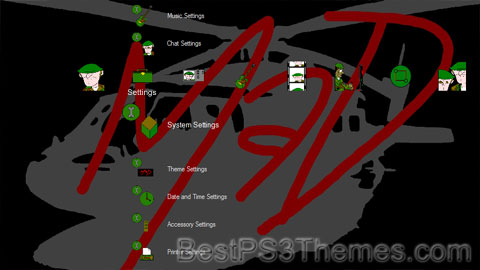
(1 background)
P3T Unpacker v0.12
Copyright (c) 2007. Anoop Menon
This program unpacks Playstation 3 Theme files (.p3t) so that you can touch-up an existing theme to your likings or use a certain wallpaper from it (as many themes have multiple). But remember, if you use content from another theme and release it, be sure to give credit!
Download for Windows: p3textractor.zip
Instructions:
Download p3textractor.zip from above. Extract the files to a folder with a program such as WinZip or WinRAR. Now there are multiple ways to extract the theme.
The first way is to simply open the p3t file with p3textractor.exe. If you don’t know how to do this, right click the p3t file and select Open With. Alternatively, open the p3t file and it will ask you to select a program to open with. Click Browse and find p3textractor.exe from where you previously extracted it to. It will open CMD and extract the theme to extracted.[filename]. After that, all you need to do for any future p3t files is open them and it will extract.
The second way is very simple. Just drag the p3t file to p3textractor.exe. It will open CMD and extract the theme to extracted.[filename].
For the third way, first put the p3t file you want to extract into the same folder as p3textractor.exe. Open CMD and browse to the folder with p3extractor.exe. Enter the following:
p3textractor filename.p3t [destination path]Replace filename with the name of the p3t file, and replace [destination path] with the name of the folder you want the files to be extracted to. A destination path is not required. By default it will extract to extracted.filename.
MaDv1.0
MaDv1.0 theme by Banjo101
Download: MaDv1.0.p3t
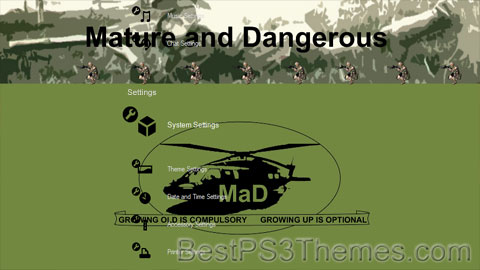
(1 background)
P3T Unpacker v0.12
Copyright (c) 2007. Anoop Menon
This program unpacks Playstation 3 Theme files (.p3t) so that you can touch-up an existing theme to your likings or use a certain wallpaper from it (as many themes have multiple). But remember, if you use content from another theme and release it, be sure to give credit!
Download for Windows: p3textractor.zip
Instructions:
Download p3textractor.zip from above. Extract the files to a folder with a program such as WinZip or WinRAR. Now there are multiple ways to extract the theme.
The first way is to simply open the p3t file with p3textractor.exe. If you don’t know how to do this, right click the p3t file and select Open With. Alternatively, open the p3t file and it will ask you to select a program to open with. Click Browse and find p3textractor.exe from where you previously extracted it to. It will open CMD and extract the theme to extracted.[filename]. After that, all you need to do for any future p3t files is open them and it will extract.
The second way is very simple. Just drag the p3t file to p3textractor.exe. It will open CMD and extract the theme to extracted.[filename].
For the third way, first put the p3t file you want to extract into the same folder as p3textractor.exe. Open CMD and browse to the folder with p3extractor.exe. Enter the following:
p3textractor filename.p3t [destination path]Replace filename with the name of the p3t file, and replace [destination path] with the name of the folder you want the files to be extracted to. A destination path is not required. By default it will extract to extracted.filename.
Cloverskys
Cloverskys theme by Cloverskys
Download: Cloverskys.p3t
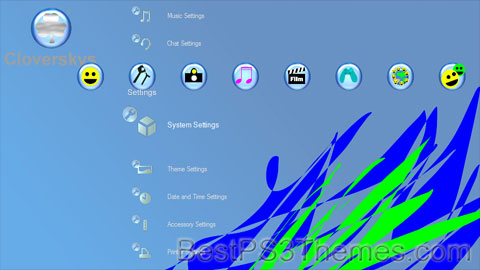
(1 background)
P3T Unpacker v0.12
Copyright (c) 2007. Anoop Menon
This program unpacks Playstation 3 Theme files (.p3t) so that you can touch-up an existing theme to your likings or use a certain wallpaper from it (as many themes have multiple). But remember, if you use content from another theme and release it, be sure to give credit!
Download for Windows: p3textractor.zip
Instructions:
Download p3textractor.zip from above. Extract the files to a folder with a program such as WinZip or WinRAR. Now there are multiple ways to extract the theme.
The first way is to simply open the p3t file with p3textractor.exe. If you don’t know how to do this, right click the p3t file and select Open With. Alternatively, open the p3t file and it will ask you to select a program to open with. Click Browse and find p3textractor.exe from where you previously extracted it to. It will open CMD and extract the theme to extracted.[filename]. After that, all you need to do for any future p3t files is open them and it will extract.
The second way is very simple. Just drag the p3t file to p3textractor.exe. It will open CMD and extract the theme to extracted.[filename].
For the third way, first put the p3t file you want to extract into the same folder as p3textractor.exe. Open CMD and browse to the folder with p3extractor.exe. Enter the following:
p3textractor filename.p3t [destination path]Replace filename with the name of the p3t file, and replace [destination path] with the name of the folder you want the files to be extracted to. A destination path is not required. By default it will extract to extracted.filename.
theburnmatches
theburnmatches theme by mg3
Download: theburnmatches.p3t
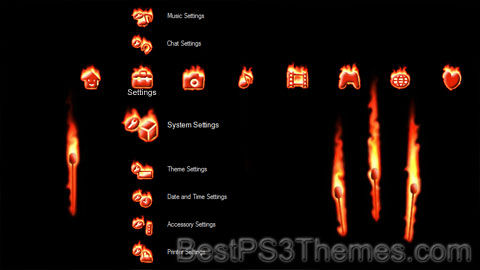
(1 background HD, 2 backgrounds SD)
P3T Unpacker v0.12
Copyright (c) 2007. Anoop Menon
This program unpacks Playstation 3 Theme files (.p3t) so that you can touch-up an existing theme to your likings or use a certain wallpaper from it (as many themes have multiple). But remember, if you use content from another theme and release it, be sure to give credit!
Download for Windows: p3textractor.zip
Instructions:
Download p3textractor.zip from above. Extract the files to a folder with a program such as WinZip or WinRAR. Now there are multiple ways to extract the theme.
The first way is to simply open the p3t file with p3textractor.exe. If you don’t know how to do this, right click the p3t file and select Open With. Alternatively, open the p3t file and it will ask you to select a program to open with. Click Browse and find p3textractor.exe from where you previously extracted it to. It will open CMD and extract the theme to extracted.[filename]. After that, all you need to do for any future p3t files is open them and it will extract.
The second way is very simple. Just drag the p3t file to p3textractor.exe. It will open CMD and extract the theme to extracted.[filename].
For the third way, first put the p3t file you want to extract into the same folder as p3textractor.exe. Open CMD and browse to the folder with p3extractor.exe. Enter the following:
p3textractor filename.p3t [destination path]Replace filename with the name of the p3t file, and replace [destination path] with the name of the folder you want the files to be extracted to. A destination path is not required. By default it will extract to extracted.filename.
Notebook Style
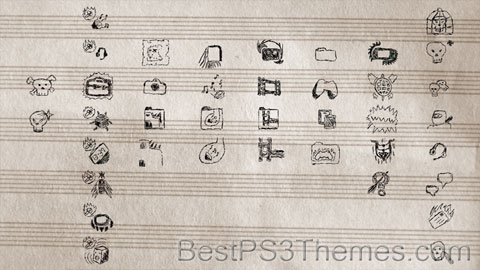
Simply White
Simply White theme by Micke “Yazuka” Johansson
Download: SimplyWhite.p3t
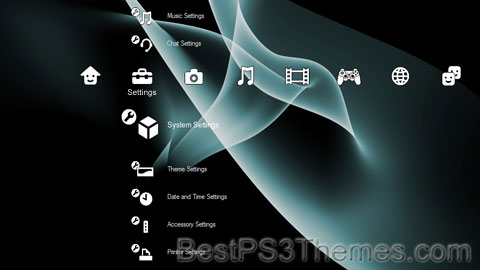
(1 background)
P3T Unpacker v0.12
Copyright (c) 2007. Anoop Menon
This program unpacks Playstation 3 Theme files (.p3t) so that you can touch-up an existing theme to your likings or use a certain wallpaper from it (as many themes have multiple). But remember, if you use content from another theme and release it, be sure to give credit!
Download for Windows: p3textractor.zip
Instructions:
Download p3textractor.zip from above. Extract the files to a folder with a program such as WinZip or WinRAR. Now there are multiple ways to extract the theme.
The first way is to simply open the p3t file with p3textractor.exe. If you don’t know how to do this, right click the p3t file and select Open With. Alternatively, open the p3t file and it will ask you to select a program to open with. Click Browse and find p3textractor.exe from where you previously extracted it to. It will open CMD and extract the theme to extracted.[filename]. After that, all you need to do for any future p3t files is open them and it will extract.
The second way is very simple. Just drag the p3t file to p3textractor.exe. It will open CMD and extract the theme to extracted.[filename].
For the third way, first put the p3t file you want to extract into the same folder as p3textractor.exe. Open CMD and browse to the folder with p3extractor.exe. Enter the following:
p3textractor filename.p3t [destination path]Replace filename with the name of the p3t file, and replace [destination path] with the name of the folder you want the files to be extracted to. A destination path is not required. By default it will extract to extracted.filename.