Tifa Lockhart theme by zee
Download: TifaLockhart.p3t
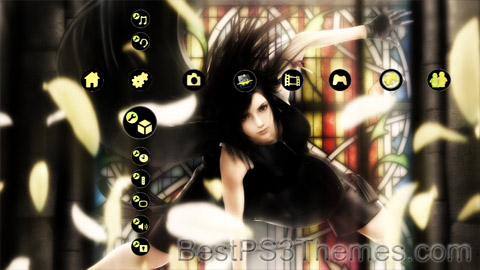
(1 background)
| Tifa Lockhart | |
|---|---|
| Final Fantasy character | |
 Tifa Lockhart artwork by Tetsuya Nomura in Final Fantasy VII | |
| First game | Final Fantasy VII (1997) |
| Created by | Tetsuya Nomura[1] |
| Designed by | Tetsuya Nomura[2] Dan Suzuki (Remake)[3] Roberto Ferrari (Remake)[3] |
| Voiced by |
|
| Motion capture | Haruka Shibai (Remake)[5] |
| In-universe information | |
| Weapon | Gloves |
| Home | Nibelheim |
Tifa Lockhart (Japanese: ティファ・ロックハート, Hepburn: Tifa Rokkuhāto) is a character who debuted in Square's (now Square Enix) 1997 role-playing video game Final Fantasy VII. She was created as a foil to her teammate Aerith Gainsborough by members of the development team, including director Yoshinori Kitase and writers Kazushige Nojima and Tetsuya Nomura, who also contributed to her visual design. She has since appeared as a playable fighter in Ehrgeiz and the Dissidia Final Fantasy series and made cameo appearances in several other titles, such as Kingdom Hearts II and Itadaki Street. Beginning in 2005, she has been featured in sequels and spin-offs as part of the Compilation of Final Fantasy VII series, including the animated film Advent Children and Final Fantasy VII Remake.
Tifa is the childhood friend of Cloud Strife, the protagonist of Final Fantasy VII. She is the owner of the 7th Heaven bar in the slums of Midgar and a member of the eco-terrorist group AVALANCHE. She convinces Cloud to join the group to keep him close and safe, and later assists him in saving the Planet from the game's villain, Sephiroth. Titles in the Compilation of Final Fantasy VII later expanded upon her character, such as in Advent Children, where she attempts to convince Cloud to let go of his self-imposed guilt and move on with his life after Sephiroth's defeat.
Tifa has been named the pin-up girl of the "cyber generation" by The New York Times, and has been compared to Lara Croft as an example of a strong, independent and attractive female character in video games. Media have repeatedly praised her strength and appearance and described her as one of the best female characters in gaming. The heavy emphasis on sex appeal in her reception has also seen frequent discussion, though has also received some criticism for overshadowing other aspects of her character.
Conception and design[edit]

Tifa was designed by Tetsuya Nomura, and was not present in early versions of Final Fantasy VII, as initially, the game was to have only three playable characters; the protagonist Cloud Strife, Aerith Gainsborough and Barret Wallace. However, during a phone call to project director Yoshinori Kitase, it was suggested that at some point in the game, one of the main characters should die and after much discussion as to whether it should be Barret or Aerith, the producers chose Aerith.[7] Nomura later joked that this was his idea, so as to enable him to introduce Tifa into the game.[1] The notion of having two concurrent heroines and having the hero waver between them was something Kitase liked, describing it as something new in the Final Fantasy series.[8] Tifa was designed to use the "monk" character class that appeared in previous games in the series.[9]
In a change from previous entries in the Final Fantasy series, the development team worked off of Nomura's character designs, while series Yoshitaka Amano contributed his own artwork, wanting to depict the characters in futuristic clothing.[2][10] Tifa has long, black hair in a style resembling a dolphin's tail at the tip,[11] and wears a white crop top and a black miniskirt held up by a pair of narrow black suspenders. She also wears red boots and gloves, with black sleeves extending from wrist to elbow; a metal guard covers her left elbow. She stands about 5 feet 6 inches (167 cm) tall.[6][12]
Unlike most other characters for Final Fantasy VII, Nomura wrote down her bust/waist/hip measurements in his concept art for her, defined as 36-24-35" (92-60-88 cm).[13] Nomura wanted each character to have one striking feature, and in Tifa's case it was her large breasts.[14] Internally in the game, the development team jokingly referred to her as "Boing-chan", an allusion to her bust.[15] In an interview with Japanese magazine Jugemu they discussed her character design, with composer Nobuo Uematsu commenting that her breasts were "a bit...overly ample." Cutscene director Motonari Sakakibara countered that the rest of the team insisted he not reduce their size. Nomura himself added "at the end of the day we all like them. [...] If I made them smaller, everyone would get angry at me."[14]
Initially, Nomura had difficulty deciding whether to go with a miniskirt or long pants. Seeking input, he passed his sketches around Square's offices and the majority of the staff members approved of the miniskirt design.[1] This additionally served as a contrast to Aerith, whose "long skirt" was her trademark.[16] The attire was explained as giving her freedom of movement, due to her hand-to-hand combat specialty and the skirt, referred to as "quite short [...] giving a considerable degree of exposure",[6] was kept as a staple of her alternate costumes.[17] The developers noted that due to her figure, her otherwise plain garments took on a pleasant appearance.[6] The development team later clarified in an issue of V-Jump that the miniskirt was more akin to a skort instead of bare underwear, to keep her from being exposed during combat.[18]
Post-Final Fantasy VII[edit]
When producing Final Fantasy VII: Advent Children, co-director Takeshi Nozue had difficulty developing a framework for Tifa's body that was "balanced, yet showed off her feminine qualities". Her outfit was redesigned with emphasis on expressing those qualities, while still being pleasing to the eye.[19] Nomura describes Tifa's character in Advent Children as having several dimensions, calling her "like a mother, a sweetheart and a close ally in battle" and "remarkably strong, not only emotionally, but physically as well".[20] In the film, she wears a white tank top with a black zipped up vest, a pink ribbon around her left bicep, and boots. She also wears a black buttoned-up skirt that covers her thighs and wears shorts beneath it, with a piece of cloth similar to a coattail extending from the back of the skirt's waistband and ending at her ankles. She no longer uses suspenders to hold up her skirt and she wears her gloves during the film's fight scenes. Her hairstyle was changed to end at the middle of her back, with the removal of the dolphin tail from her original design.[21] This alteration was because of the difficulty of animating her original length of hair, as well as problems that arose due to its black color and lighting.[11]
For the Final Fantasy VII Remake series, the development team worked heavily with Nomura to refine her design, adding details like charms around her wrists and going through twenty different hair colors before settling on ashen brown.[22] The development team wanted to avoid favoring either Tifa or Aerith so they deliberately tried to give them equal screen time, as they wanted both to be positioned as heroines,[23] and emphasized Eastern aesthetics and the cuteness of her face to contrast with Aerith's Western aesthetics.[24] They additionally wanted to emphasize her athletic physique, so they gave her visibly defined abdominal muscles.[25] In an interview with Weekly Famitsu Square revealed they modified Tifa's outfit at the request of their Ethics Department, giving her a black sports bra and longer shorts, mainly "tightening" her chest so "as not to get unnatural during all the intense action",[26] with main character modeler Dan Suzuki considering the shorts an improvement to her design.[3] This information led to North American fans voicing concern that her breast size had been reduced, but sources such as gameindustry.biz confirmed through multiple translators this was not the case.[27] The development team later illustrated that when creating her character model, a padded Japanese G70 cup size (95 cm) bra was used on a real-life model to portray her bust accurately.[28]
Artist Roberto Ferrari meanwhile created the multiple outfit options included in Remake for Tifa, aiming for designs that would be easier on the animation team but would also homage outfits she had in the original game. Various ideas were thrown around during development for clothing options, including a maid outfit and a bikini modelled after a chocobo, one of the Final Fantasy series' mascosts. They ultimately settled on a black cheongsam with her hair worn in pigtail buns, as well as a black kimono, both of which are worn with stockings. Ferrari commented that the latter was particularly difficult to create, as several of his design submissions were rejected during the process.[3] In Final Fantasy VII Rebirth, the followup game to Remake, two swimsuit options were added for the character, consisting of a blue tied up shirt and short shorts with her hair in a bun adorned with a flower, and a white and blue frilled bikini with a similar hairstyle and the frills on the lower half forming a makeshift miniskirt.[29]
Casting[edit]
Nomura noted that he liked Ayumi Ito as an actress and wished to work with her on Advent Children. With Aerith's voice actor already decided, Nomura asked Ito to voice Tifa, feeling her "husky voice" would offer a good contrast to Maaya Sakamoto's soft-spoken Aerith.[30] Although Tifa's updated design had already been finalized, Ito's casting motivated them to blend many traits from the voice actress into the character's appearance.[31] Cloud's voice actor Takahiro Sakurai said that while he recorded most of his work individually, he performed alongside Ito for a few scenes. These recordings left him feeling "deflated", as the "exchanges he has with Tifa [could] be pretty painful".[32] Ayaka Mitsumoto voiced Tifa in the flashback from the remake where a teenage Tifa interacts with Cloud.[33] Finding a voice suitable for the young Tifa made Nomura and the staff worried in the recording of the title.[34]
English voice actress Rachael Leigh Cook stated in an interview for Kingdom Hearts II that she enjoys playing Tifa and described her as "very strong physical and emotionally, but also very sensitive" and "very multi-dimensional".[35] In voicing the character, Cook listened to Ito's recording as a guide to how the character sounds. Following Advent Children, Cook thanked Nomura for the film he created as she enjoyed it.[36] Britt Baron voiced Tifa in Final Fantasy VII Remake and Final Fantasy VII Rebirth,[37] and Tifa as a child is voiced by Glory Curda.[38]
Appearances[edit]
Final Fantasy VII[edit]
Tifa is introduced in Final Fantasy VII as the childhood friend of Cloud Strife and owner of the 7th Heaven bar in the slums of Midgar, a technologically advanced metropolis owned by the Shinra Electric Power Company. She is also a member of the eco-terrorist organization AVALANCHE, who opposes Shinra's extraction and use of Mako, the planet's spiritual energy, as a power source. She convinces Cloud to join the group to keep a closer eye on him after noticing his personality has changed, and follows him in pursuit of the game's antagonist, Sephiroth. While she is unable to keep him from being manipulated by Sephiroth, she helps him recover after his mind becomes fractured and they realize their mutual feelings for one another, working together to defeat Sephiroth.[17]
When they were children, Tifa and Cloud followed a path to a mountain near their hometown of Nibelheim. However, they were both injured and Tifa was in a coma for a week, with her father holding Cloud responsible for the incident.[7] Cloud eventually left to join Shinra's SOLDIER program to become stronger, but it is later revealed that he did it primarily to attract her attention.[39] In response, she requested if she were ever in danger, he would return to save her.[40] Years later, during Sephiroth's rampage in Nibelheim, Cloud rescued Tifa after she was wounded by Sephiroth. Tifa was taken to safety by her martial arts instructor and eventually arrived in Midgar, meeting AVALANCHE's leader, Barret Wallace. She joined AVALANCHE to get revenge for the destruction of her home. Shortly before the beginning of Final Fantasy VII, she encountered an incoherent Cloud at the city's train station and convinced him to work for Barret, to keep him close and watch over him.[41]
Her character changed significantly during development, with an early relationship chart during the planning phase intending her to be Sephiroth's sibling.[42] In early drafts of Final Fantasy VII, Tifa was a background character, with role in AVALANCHE was to add support behind the scenes and to cheer everyone up after missions, as well as having a particular fondness for Cloud. She was supposed to have a large scar on her back caused by Cloud, and partial amnesia from the incident when she had received it.[9] A scene intended to imply she and Cloud had sex was proposed by Masato Kato, one of the event planners, but it was replaced with a toned-down version by Kitase in which a risqué line is followed by a fade to black. In an interview, Nojima stated that none of the staff thought the scene would become an issue at the time.[8] When developing the International edition of Final Fantasy VII, an additional cutscene was added to showcase an enemy in the game, Ultima Weapon, and featured Tifa in it due to how popular her character had become.[43]
Compilation of Final Fantasy VII[edit]

Tifa appears in the 2005 film Final Fantasy VII: Advent Children, which is set two years after the events of the game. She tries to give emotional support to Cloud, urging him to come to terms with the unwarranted guilt he places upon himself. She also takes care of Barret's adopted daughter Marlene and an orphan, Denzel. During the film, she duels against Loz and she battles the summoned creature Bahamut SIN alongside the team. Script writer Kazushige Nojima described her role in the film as "very much like any woman who's been left behind by a man", stating that while they did not want her to appear clingy, they wanted to portray that she was emotionally hurt by Cloud's departure.[20] In the film's initial draft, she was intended to have a more central role in the then-short film, which only featured herself, Cloud and several children, with the story revolving around a note being delivered to him.[45]
Tifa is also featured in the prequel games Before Crisis and Crisis Core, as well as the OVA Last Order, which each show different perspectives on the destruction of Nibelheim.[17] The novella "Case of Tifa", written as part of the On the Way to a Smile series, is a story set between the original game and Advent Children that is told from her point of view. The story details how she creates a new 7th Heaven bar in the city of Edge and attempts to hold onto the concept of a normal family with herself and Cloud, despite him beginning to isolate himself from others.[45] Tifa also appears in the game Dirge of Cerberus, which is set one year after the events of Advent Children, in which she helps the protagonist Vincent Valentine defend the planet against the monster Omega WEAPON; in the game's epilogue, she discuss Vincent's disappearance.[17]
Tifa is featured prominently as a playable character in Final Fantasy VII Remake, which covers the Midgar portion of the original game. By focusing solely on Midgar, the development team was able to include additional scenes that developed the relationship between Tifa and Aerith.[46] Trace of Two Pasts, a tie-in novel to the remake, depicts the childhoods of Tifa and Aerith.[47] Tifa's section details her upbringing in Nibelheim, her meeting and tutelage under her martial arts master, and her life in the slums of Midgar following her near-death experience during the Nibelheim incident.[48]
Other appearances[edit]
Outside of the Compilation of Final Fantasy VII, Tifa is featured in the fighting game Ehrgeiz as an unlockable character and an optional boss.[49] She is a playable character in the electronic board games Itadaki Street Special and Itadaki Street Portable.[50][51] In Kingdom Hearts II, she appears in her Advent Children attire, searching for Cloud and later fighting various Heartless.[52] She was originally planned to appear in the Final Mix version of the original Kingdom Hearts, but due to time constraints the staff members chose to incorporate Sephiroth instead.[53] Whereas in the game Cloud goes missing after a battle with Sephiroth, in the manga adaptation, Tifa finds him in Hollow Bastion.[54] In 2015, she was added to the mobile game Final Fantasy: Record Keeper as a playable character.[55]
Tifa is one of the playable characters in the fighting game Dissidia 012 Final Fantasy, which features characters from various Final Fantasy games.[56] She is featured in her Final Fantasy VII outfit, but the player has access to her Advent Children form and a third costume that is shown during her appearances in Nibelheim.[57][58] The first print run of the game features another form based on artwork by Yoshitaka Amano.[59] In LittleBigPlanet 2, Tifa is featured as a downloadable character model, and as a Mii costume and Spirit in Super Smash Bros. Ultimate.[60][61]
Critical reception[edit]
Since her introduction critics and fans reacted positively to Tifa, often appearing near the top of fan polls.[62] The New York Times featured her as the pin-up girl of for the "cyber generation",[63] while The Beaumont Enterprise cited Tifa as an example of a strong female character in video games in the wake of Lara Croft from the Tomb Raider series.[64] Holly Bonson of Polygon described Tifa as defined by her "brittle confidence and supportiveness", further stating her belief that in the context of Final Fantasy VII she represents forcefulness and sexuality.[65] Den of Geek's Matthew Byrd cited her popularity a result of her character's warmth, strength, and the ability to act both supportive and as a leader depending on when the situation called for it in VII's storyline, but also noted her vulnerability and how it made her a well-rounded character "who is more than worthy of her fan-favorite status".[66] Jenni Lada of Siliconera called her an iconic heroine, echoing the sentiments of the other critiques, while praising how future installments such as Remake built upon her character.[67]
Tifa has often been compared and contrasted with the other female protagonist of Final Fantasy VII, Aerith. Gus Turner of Complex described her as standing out as "one of gaming's most independent and empowered females ever", and further described her as a feminine foil to the more "girlish" Aerith, further praising her appearance.[68] In a retrospective, journalist Leigh Alexander argued that Tifa is the heroine of VII's story, there since the beginning and being indispensable during the course of events, calling her "a partner for a grown-up player" and questioned how many of them didn't properly appreciate her on their first playthrough of the game may do so now.[69] Fans of the series meanwhile have heavily debated which character was a better relationship for Cloud since the initial game's release, comparing the pros and cons of each.[70]
RPGamer editor Marie Freed found that when examining Tifa as a character, she came to appreciate her more than fellow character Aerith in the years since VII's release. Emphasizing that Aerith represented more of an ideal of a character, Tifa being portrayed as someone who was "insecure, lonely, and hides her true emotions" may have led to her being perceived negatively by fans, but in Freed's eyes made her the most human of the pair. Freed further expressed that as a symbol of the series, critics often perceived her as a "slut" due to her attire and breasts, and felt it was reasonable for her to be portrayed as insecure in light of such hostility. But further though as a character she saw Tifa's loyalty and love for Cloud even in the light of having to relive her own traumas as admirable, and a welcome contrast to the "destined" romance seen in previous title Final Fantasy IV. She closed by stating that while people had aspects of both characters in them, Tifa ultimately represented "reality" over the "ideal".[71]
On the other hand Patrick Holleman in his book Reverse Design: Final Fantasy VII described Tifa as having "the most typical story of a near-death experience and the loss of a world she belonged to" of the game's cast, despite how atypical Cloud was by comparison. Cloud in turn represented her only living connection to her past, and to this end Holleman felt she ignores the discrepancies in how he remembers events bordering on psychosis not as a matter of romance but as a means to hold onto what she lost. He added that while Tifa does care about Cloud, her desire was more of a selfish one in turn, one that does her more harm than good in Holleman's eyes. However, he also praised a particular moment for her character later in the game where when confronting the character Scarlet. Despite the scene appearing to lead into a boss battle against Scarlet, Tifa instead engages in a slap fight with her, something he felt subverted player's expectations well.[72]
As a sex symbol[edit]
A significant part of Tifa's reception has focused on her sex appeal,[73] with some third-party merchandise leaning heavily into this aspect.[74] Electronic Gaming Monthly awarded her the "Hottest Game Babe" of 1997, calling her "as well-proportioned as they come" and heavily praising her sexual attributes, but also noting her physical and emotional strength as a character.[75] UGO.com shared similar sentiments, complimenting her outfit as well and describing her as a "bona-fide sex symbol", while further noting that she was a rarity among female characters in video games at the time of VII' release.[76] IGN's Phil Pirrello attributed a significant part of her popularity to her large breasts, nothing that she was an example of how series tried to add real sex appeal with Final Fantasy VII, and while her model in the original game was primitive by today's standards, he suggested it had a significant impact on the teenage demographic at its time.[77] Fellow contributor Dave Smith suggested similar, stating it was hard to sing her praises "without sounding just a little teeny-weeny bit sexist", but further added that she helped define "tough, independent" roleplaying game heroines that came after her too due to her character.[78]
The character has also been a frequent subject of fan-made pornography, cited in particular as a frequent search topic on Pornhub.[79][80] Meanwhile, a study of such content on Rule 34 websites such as Rule 34.xxx and Sankaku Channel additionally cited her as the most frequent subject of such content by a wide margin across multiple franchises.[81] In January 2022, a Zoom videoconference meeting done in the Italian Senate was interrupted by a user displaying 3D rendered pornography featuring Tifa engaging in sexual intercourse. The user was quickly removed, but due to the conference being televised, knowledge of the event quickly went viral.[82] While Tifa's use in it was coincidental, it led to a surge in the character's popularity. Jade King of TheGamer noted however that while much reaction to it revolved around fan art of a sexual nature, it also resulted in a large amount of what they saw as "wholesome" art celebrating the character and the humor of the situation, usually portraying her in an awkward or comedic manner in association with the event or the country itself. King attributed it in part to Remake's recent release, but also the enduring nature of the character, calling it wholesome and an "aspect of Tifa's character that will now be ingrained into her history, and there's something brilliant about that".[83]
Other articles however examined that the emphasis on her sex appeal sometimes overshadowed her other aspects. In another article for IGN the staff noted that while her design was meant to emphasize physical beauty, er "awe-inspiring strength, complex background, strong will and her attachment to Cloud" defined her as more than "just an eye-catching woman", further calling her a legendary heroine in the series.[84] The book The Legend of Final Fantasy VII noted that while Tifa has many attributes of a seductive woman, specifically emphasizing her large breasts, she "thwarts the stereotypes associated with her appearance", due to being an independent and strong character, further calling her often the most "leveled headed" and pragmatic character in the game's cast.[85] Philip Bloom of RPGamer felt that fans and critics alike both overemphasized the size of her breasts, to the point she set a perceived standard for other attractive roleplaying game female protagonists to be compared to, she "isn't that absurd of figure" and was instead "quite strong as far as female heroes go, often saving the day. But you wouldn't know it to listen to talks about her."[86]
References[edit]
- ^ a b c Famitsu, ed. (1997). Final Fantasy VII Kaitai Shinsho (in Japanese). Famitsu. ISBN 978-4-7577-0098-7.
- ^ a b
Motorstorm #3
Motorstorm theme by ajefferism
Download: Motorstorm_3.p3t
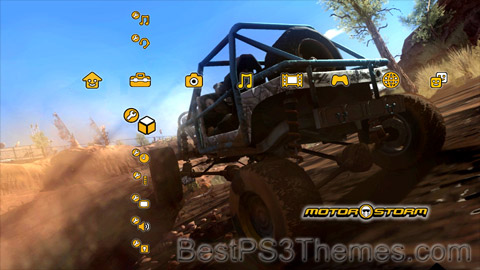
(7 backgrounds)
Redirect to:
This page is a redirect. The following categories are used to track and monitor this redirect:When appropriate, protection levels are automatically sensed, described and categorized.- From a miscapitalisation: This is a redirect from a capitalisation error. The correct form is given by the target of the redirect.
- This redirect is made available to aid searches or to maintain links. Pages that use this link should be updated to link directly to the correct form without using a piped link hiding the correct details.
- This template tags redirects with the Redirects from miscapitalisations category, a subcategory of Redirects from incorrect names, so template {{R from incorrect name}} should not be used with this template.
The Ring
The Ring theme by blindedcoon
Download: TheRing.p3t
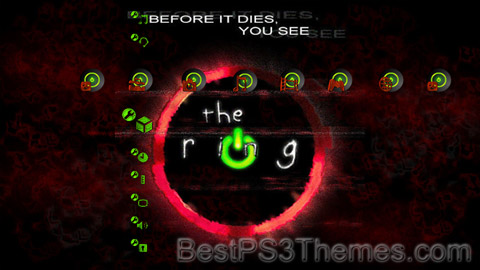
(1 background)
The Ring may refer to:
Arts and entertainment[edit]
- The Ring (franchise), a Japanese horror media franchise
Literature[edit]
- The Ring, a 1967 novel by Richard Chopping
- The Ring, a 1988 book by Daniel Keys Moran
- The Ring, a 1980 novel by Danielle Steel, which formed the basis for the 1996 film
- The Ring, a 1964 children's book by John Updike
- The Ring (magazine), a boxing periodical
- "The Ring" (poem), by Heinrich Wittenwiler
- The Ring: Boxing the 20th Century, 1993 book
Film[edit]
- The Ring (1927 film), by Alfred Hitchcock
- The Ring (1952 film), by Kurt Neumann
- The Ring (1985 film), a Romanian film
- The Rings, a 1985 Iranian horror mystery film
- The Ring (1996 film), or Danielle Steel's The Ring, a TV film
- Ring (film), or The Ring, a 1998 Japanese horror film
- The Ring (2002 film), a remake
- The Ring (2007 film), a Canadian drama film
Television[edit]
- "The Ring" (Angel), a 2000 episode of Angel
- The Ring (Chuck), a fictional spy organization in Chuck
- "The Ring" (South Park), a 2009 episode of South Park
- "The Ring" (Yes, Dear), an episode of Yes, Dear
Music[edit]
- Der Ring des Nibelungen ('The Ring of the Nibelung'), a cycle of operas by Richard Wagner
- The Ring (album), by Terri Hendrix, 2002
Other uses[edit]
- The Ring in Southwark, London, England, a boxing stadium run by Bella Burge
- Nürburgring, or the Ring, a German race track
- The Ring (rock formation), in Bulgaria
- The Ring: Terror's Realm, a 2000 video game
- The Ring (Montreal), an art installation in Montreal
See also[edit]
- All pages with titles beginning with The Ring
- Ring (disambiguation)
- The Circle (disambiguation)
- One Ring, a fictional ring of power in J. R. R. Tolkien's Middle-earth
- Ring Nebula, a planetary nebula
 This disambiguation page lists articles associated with the title The Ring.
If an internal link led you here, you may wish to change the link to point directly to the intended article.Xbox 3Shitty
Stormwatch
Stormwatch theme by ShadowOfaSolja
Download: Stormwatch.p3t

(1 background)
Stormwatch may refer to:
- Stormwatch (album), a 1979 album by Jethro Tull
- Stormwatch (comics), a comic book superhero team from Wildstorm Productions and DC Comics
- Storm Watch, a 2002 American science fiction film
See also[edit]
- Storm warning, a maritime weather alert
This disambiguation page lists articles associated with the title Stormwatch.
If an internal link led you here, you may wish to change the link to point directly to the intended article.Hitman #2
Hitman theme by Jonathan Benitez
Download: Hitman_2.p3t

(1 background)
Redirect to:
This page is a redirect. The following categories are used to track and monitor this redirect:When appropriate, protection levels are automatically sensed, described and categorized.- From a merge: This is a redirect from a page that was merged into another page. This redirect was kept in order to preserve the edit history of this page after its content was merged into the content of the target page. Please do not remove the tag that generates this text (unless the need to recreate content on this page has been demonstrated) or delete this page.
- For redirects with substantive page histories that did not result from page merges use {{R with history}} instead.
Zero Punctuation
Zero Punctuation theme by gtrunner
Download: ZeroPunctuation.p3t

(1 background)

Zero Punctuation  Logo featuring Yahtzee's cartoon avatar
Genre Video game reviews, black comedy, insult comedy, satire Created by Ben "Yahtzee" Croshaw Theme music composer Ian Dorsch Country of origin Australia
United StatesOriginal language English No. of episodes 836 Original release Network The Escapist Release July 24, 2007 –
November 21, 2023Zero Punctuation is a series of video game reviews created by English comedy writer and video game journalist Ben "Yahtzee" Croshaw. From its inception in 2007, episodes were published weekly by internet magazine The Escapist. Episodes typically range from five to six minutes in length. Videos provide caustic humour, rapid-fire delivery, visual gags and critical insight into recently released video games, with occasional reviews of older games and retrospectives of the industry itself. In 2023, Zero Punctuation was discontinued following Croshaw's resignation from The Escapist and the formation of Second Wind, with new reviews being published by him under the rebranded series Fully Ramblomatic.
History[edit]
Prior to Zero Punctuation, Croshaw primarily authored content for his blog, Fully Ramblomatic, and would occasionally review video games, often with an emphasis on humor and criticism.[1] In July 2007, Croshaw uploaded two game reviews in video format to YouTube in the same style that would eventually be used for Zero Punctuation: one of the demo of The Darkness for the PlayStation 3, and the other of Fable: The Lost Chapters for the PC. Both were well-received and The Escapist was one of several publishers to offer Croshaw a contract.[2]
The name "Zero Punctuation" refers to the speed of Croshaw's narration. Since its creation, the series has become popular in the gaming community.[2] Video game developers and publishers have occasionally acknowledged Croshaw's reviews of their games, and at least one internet meme has resulted from Zero Punctuation.[3][4] At the end of each year, starting in 2008, Croshaw created special episodes of Zero Punctuation discussing what he believes were the best and worst games of the year. He occasionally dedicated episodes to new technologies or milestones in video gaming, such as E3 and the coming of the eighth generation of consoles.[5][6] Croshaw also dedicated certain episodes to covering events or periods in gaming history that he considered to have disparaged the industry or its reputation. These include the video game industry crash of 1983, and the controversial Hot Coffee mod for Grand Theft Auto: San Andreas.[7][8]
From 2009 to 2017, Croshaw authored a column on The Escapist known as Extra Punctuation. These articles were originally published every Tuesday and often supplemented the previous week's review by discussing a certain topic or trend exhibited by that game. Croshaw resumed the series in 2021 in video format.[9]
On November 6, 2023, Croshaw announced he had resigned from The Escapist with other colleagues out of solidarity following the firing of editor-in-chief Nick Calandra that same day. He also confirmed that he did not own the rights to Zero Punctuation, leaving the future of the series in doubt.[10][11] Two days later, on November 8, Calandra and Croshaw announced that Croshaw would continue making weekly short-form reviews under the title of Fully Ramblomatic. This show is hosted on Second Wind, a new outlet formed by the staff who left The Escapist.[12][13] The Escapist's parent company Gamurs published the final two episodes of Zero Punctuation—reviews of Sonic Superstars and Marvel's Spider-Man 2—on November 21.[14][15][16]
Format[edit]

Typical Zero Punctuation imagery, illustrating Croshaw's confusion with obtaining spaceship fuel in Starbound In Zero Punctuation, Croshaw usually reviews a game in a highly critical manner using rapid-fire speech delivery accompanied by minimalistic cartoon imagery and animation on a distinctive yellow background, which illustrates what is being said or provides an ironic counterpoint to it. Subtle references or jokes may be inserted to the visuals for comic effect or to add additional context to the narration. His reviews are intended to be humorous with constant usage of puns, analogies, metaphors, and dark humour accompanied by frequent use of profanity.[17][18][19] Croshaw usually substitutes the main character or himself with his own avatar, a cartoon man distinguished by a trilby, with other cartoon people in the same style representing the main characters in a video game, celebrities, video game programmers, or friends of Croshaw. Another character used often is an imp-like creature (originally meant to resemble a "darkling" from The Darkness) which represents antagonists, animals, children, or less important characters from a game. Video games, developers, countries, and other entities are often anthropomorphized as box arts, logos, or flags, respectively, with arms and legs. Croshaw often allegorizes jokes, game details, or video game industry activities with references to, or commentaries on popular culture, politics, and history.
Zero Punctuation opens and closes with a theme song, a rock track composed and performed by Ian Dorsch.[20] The ending credits usually feature humorous notes or other information relating to the review, as well as imagery of characters from the review engaging in slapstick. Prior to mid-2008, Zero Punctuation featured commercial songs at the beginning and end of each episode, which were usually related to the context of, or at odds with the game in question, such as the Ramones' "I Wanna Be Sedated" and Eric Johnson's "Cliffs of Dover" at the beginning and end, respectively, of his review of Guitar Hero III: Legends of Rock.
The series' format has proved inspirational for several other web series, such as the critical and educational series Extra Credits[21] and CGP Grey.[22][23]
Critical style[edit]
Croshaw provides highly critical reviews of games, usually pointing out the faults that he implies other professional reviewers ignore in high-profile releases.[4][24] He tends to disdain certain tropes and conventions in video games he feels have been overused, such as quick time events, highly common uses of motion controls, cover-based shooting, crafting systems,[25][26][27][28][29][30] and an unbalanced emphasis on graphics over story or gameplay.[5][31][32] Similarly, he has expressed cynicism of the prevalence of specific game designs, including military-themed first-person shooters for being very similar in gameplay, poor in ethics, and contrived in story;[33][34][35] open-world games including crafting, collectibles, and stealth mechanics that he feels bloats a game's content;[36] cinematic games that consist of linear, uneventful sections separated by action sequences and brief exploration;[37] and live service games with repetitive gameplay that incorporates grinding to unlock new content.[38][39] He also disapproves of game franchises that release sequels in rapid succession, such as Final Fantasy, Assassin's Creed, and Call of Duty.[40] Croshaw generally does not review certain genres of games, such as sports and racing games, and has openly admitted to not liking most JRPGs, real-time strategy games, fighting games, or simulation games.[citation needed]
Certainly I focus on the bad, because I reckon plenty of sources focus on the good already. Happily, the bad is also easier to make funny.
Croshaw on a Reddit "Ask me Anything" thread in 2011[41]
Although Zero Punctuation episodes are usually intended to highlight Croshaw's criticisms of video games, his opinions are not universally negative, and any positive feelings towards the aspects of a game will usually be explicitly stated.[42] During his review of Portal, he admitted to being unable to find any faults with the game.[43] He opened his review of BioShock by saying "nobody likes it when I'm being nice to a game," referring to the negative reception of his favorable review of Psychonauts.[44]
Croshaw cites the work of British television critic and PC Zone journalist Charlie Brooker as the "main inspiration" for his own reviewing style, as well as the writings of Douglas Adams, Sean "Seanbaby" Riley, Victor Lewis-Smith, and Old Man Murray's Chet Faliszek and Erik Wolpaw.[42][45][46] He expressed respect towards the late Roger Ebert, noting that he "might one day aspire to being his videogaming equivalent".[47]
Games of the Year[edit]
From 2008, Croshaw created annual, year-end episodes of Zero Punctuation which enumerate his favorite and least favorite games from that year. For 2008 and 2009, mock "awards" were given for games based on arbitrarily defined categories. Starting in 2010, the "awards" format was replaced with ordered lists of his five favorite and least favorite games of the year. For 2015, he added a new category for his choices of the blandest and least innovative games of the year.[48] To commemorate the end of the 2010s, Croshaw ranked in order of preference the best and worst games he had awarded during the decade.[49]
In his 2013 lists, he awarded the "Lifetime Achievement Award for Total Abhorrence" to Ride to Hell: Retribution, expressing that it was so poor in quality that he hardly considered it a game but rather saw it as "congealed failure."[40]
Best Game of the Year Year Game Notes 2008 Saints Row 2 2009 Batman: Arkham Asylum 2010 Just Cause 2 9th Best of the 2010s 2011 Portal 2 2nd Best of the 2010s 2012 Spec Ops: The Line 7th Best of the 2010s 2013 BioShock Infinite 8th Best of the 2010s 2014 Middle-earth: Shadow of Mordor 10th Best of the 2010s 2015 Undertale Best Game of the 2010s 2016 Doom 4th Best of the 2010s 2017 Resident Evil 7: Biohazard 5th Best of the 2010s 2018 Return of the Obra Dinn 3rd Best of the 2010s 2019 Disco Elysium 6th Best of the 2010s 2020 Spiritfarer 2021 Psychonauts 2 2022 Neon White 2023 Hi-Fi Rush Ranking published under Fully Ramblomatic Worst Game of the Year Year Game(s) Notes 2009 Wet 2010 Kane & Lynch 2: Dog Days 6th Worst of the 2010s 2011 Battlefield 3 and Call of Duty: Modern Warfare 3 (tie) 10th Worst of the 2010s 2012 Amy 2nd Worst of the 2010s 2013 Call of Duty: Ghosts 8th Worst of the 2010s 2014 Thief 9th Worst of the 2010s 2015 The Order: 1886 5th Worst of the 2010s 2016 Homefront: The Revolution 4th Worst of the 2010s 2017 Sniper Ghost Warrior 3 7th Worst of the 2010s 2018 Hunt Down the Freeman Worst Game of the 2010s 2019 Contra: Rogue Corps 3rd Worst of the 2010s 2020 The Last of Us Part II 2021 Balan Wonderworld 2022 Five Nights at Freddy's: Security Breach 2023 The Lord of the Rings: Gollum Ranking published under Fully Ramblomatic Blandest Game of the Year Year Game(s) Notes 2015 Halo 5: Guardians 2016 No Man's Sky 2017 Star Wars Battlefront II 2018 Conan Exiles 2019 Anthem 2020 Marvel's Avengers 2021 Medal of Honor: Above and Beyond 2022 Saints Row 2023 Starfield Ranking published under Fully Ramblomatic Reception[edit]
In his 2008 review of The Witcher, Croshaw sarcastically referred to the PC gaming community as "the glorious PC gaming master race", intending to criticize the perceived elitist attitudes in that community. The phrase has since become an internet meme, and has been appropriated and championed by that community.[50] In a 2018 review of Kingdom Come: Deliverance, Croshaw explained that he regretted calling the community "PC master race" instead of "dick-slurp all-stars," citing a continuation of the behavior that originally prompted the term.[51]
Croshaw's negative review of Super Smash Bros. Brawl in 2008 was poorly received by fans of the game.[52] He claimed to have received a disproportionate amount of hate mail following the review, and dedicated an episode to highlight and respond to various e-mails that he had allegedly received in response to it.
In 2009, Croshaw reviewed Prototype by comparing it to InFamous, attempting to decide which game was better. Unable to determine a victor, he jokingly suggested that the developers of each game send him artwork of the opposing game's main character wearing lingerie in order to claim the award. Radical Entertainment and Sucker Punch – the respective developers – unexpectedly complied with the challenge, prompting Croshaw to declare InFamous the winner after judging the quality of the images.[3]
In 2013, Croshaw came under fire after an episode of Zero Punctuation on Papers, Please contained a metaphor that was viewed as transphobic. Croshaw agreed with the criticism and apologized, expressing regret towards making the statement.[53] The offending remark was retroactively omitted from the video.
Croshaw was one of the founders of the Mana Bar, a video gaming lounge in Brisbane that operated from 2010 until 2015. Croshaw's popularity through Zero Punctuation has been credited with the initial success of the establishment.[54]
References[edit]
- ^ Croshaw, Ben (2008). "Reviews on FullyRamblomatic". Retrieved January 9, 2014.
- ^ a b Orland, Kyle (March 22, 2008). "PressSpotting: Ramblin' with Ben 'Yahtzee' Croshaw". GameSpot. Retrieved September 3, 2011.[permanent dead link]
- ^ a b Good, Owen (July 5, 2009). "inFamous Defeats Prototype in Cross-Dressing Playoff". Kotaku. Retrieved January 8, 2014.
- ^ a b Francis, Tom (August 5, 2010). "Community heroes: Yahtzee, for Zero Punctuation". PC Gamer. Retrieved January 8, 2014.
- ^ a b Croshaw, Ben (October 26, 2011). "Zero Punctuation – Kinect". The Escapist. Retrieved January 8, 2014.
- ^ Croshaw, Ben (June 5, 2013). "Zero Punctuation – Next Gen Buyer's Guide". The Escapist. Retrieved January 8, 2014.
- ^ "E.T. – "The Worst Game Ever"". The Escapist. Retrieved March 17, 2018.
- ^ "Hot Coffee". The Escapist. Retrieved March 17, 2018.
- ^ "Extra Punctuation". The Escapist.
- ^ Nicholas Finch (November 7, 2023). "Flagship gaming website loses its video team as star of 'Zero Punctuation' resigns". news.com.au.
- ^ "Zero Punctuation star Yahtzee Croshaw quits after 16 years". BBC News. November 7, 2023. Retrieved November 7, 2023.
- ^
Mega Man 20th Anniversary
Mega Man 20th Anniversary theme by MechanizedDemon
Download: MegaMan20th.p3t
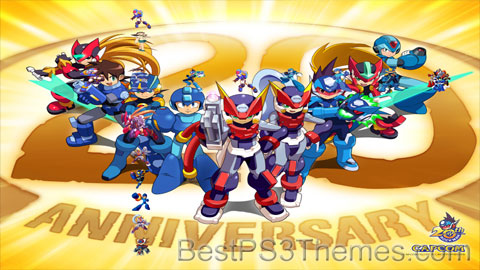
(3 backgrounds)
P3T Unpacker v0.12
Copyright (c) 2007. Anoop MenonThis program unpacks Playstation 3 Theme files (.p3t) so that you can touch-up an existing theme to your likings or use a certain wallpaper from it (as many themes have multiple). But remember, if you use content from another theme and release it, be sure to give credit!
Download for Windows: p3textractor.zip
Instructions:
Download p3textractor.zip from above. Extract the files to a folder with a program such as WinZip or WinRAR. Now there are multiple ways to extract the theme.
The first way is to simply open the p3t file with p3textractor.exe. If you don’t know how to do this, right click the p3t file and select Open With. Alternatively, open the p3t file and it will ask you to select a program to open with. Click Browse and find p3textractor.exe from where you previously extracted it to. It will open CMD and extract the theme to extracted.[filename]. After that, all you need to do for any future p3t files is open them and it will extract.
The second way is very simple. Just drag the p3t file to p3textractor.exe. It will open CMD and extract the theme to extracted.[filename].
For the third way, first put the p3t file you want to extract into the same folder as p3textractor.exe. Open CMD and browse to the folder with p3extractor.exe. Enter the following:
p3textractor filename.p3t [destination path]Replace filename with the name of the p3t file, and replace [destination path] with the name of the folder you want the files to be extracted to. A destination path is not required. By default it will extract to extracted.filename.Dante Vs Virgil
Dante Vs Virgil theme by Genesis
Download: DanteVsVirgil.p3t
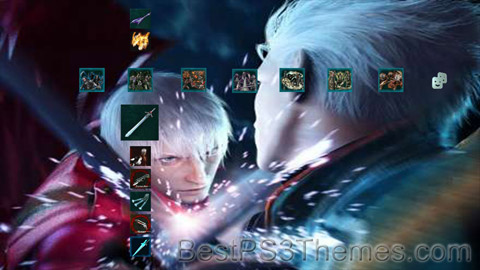
(3 backgrounds)
P3T Unpacker v0.12
Copyright (c) 2007. Anoop MenonThis program unpacks Playstation 3 Theme files (.p3t) so that you can touch-up an existing theme to your likings or use a certain wallpaper from it (as many themes have multiple). But remember, if you use content from another theme and release it, be sure to give credit!
Download for Windows: p3textractor.zip
Instructions:
Download p3textractor.zip from above. Extract the files to a folder with a program such as WinZip or WinRAR. Now there are multiple ways to extract the theme.
The first way is to simply open the p3t file with p3textractor.exe. If you don’t know how to do this, right click the p3t file and select Open With. Alternatively, open the p3t file and it will ask you to select a program to open with. Click Browse and find p3textractor.exe from where you previously extracted it to. It will open CMD and extract the theme to extracted.[filename]. After that, all you need to do for any future p3t files is open them and it will extract.
The second way is very simple. Just drag the p3t file to p3textractor.exe. It will open CMD and extract the theme to extracted.[filename].
For the third way, first put the p3t file you want to extract into the same folder as p3textractor.exe. Open CMD and browse to the folder with p3extractor.exe. Enter the following:
p3textractor filename.p3t [destination path]Replace filename with the name of the p3t file, and replace [destination path] with the name of the folder you want the files to be extracted to. A destination path is not required. By default it will extract to extracted.filename.Yakuza 3
Yakuza 3 theme by Final Doom
Download: Yakuza3.p3t

(1 background)
 This article may need to be rewritten to comply with Wikipedia's quality standards. (June 2021)
Yakuza 3  North American cover art
Developer(s) Sega CS1 R&D[a] Publisher(s) Sega Director(s) Daisuke Sato Producer(s) Masayoshi Kikuchi Designer(s) Kazuki Hosokawa Programmer(s) Tetsuya Kaku Artist(s) Kazuki Hosokawa Writer(s) Masayoshi Yokoyama Composer(s) Hidenori Shoji Series Yakuza Platform(s) Release PlayStation 3PlayStation 4 Windows, Xbox One- JP: August 9, 2018
- WW: August 20, 2019
- WW: January 28, 2021
Genre(s) Action-adventure Mode(s) Single-player Yakuza 3 (Japanese: 龍が如く3, Hepburn: Ryū ga Gotoku 3, "Like a Dragon 3") is the third main entry in the Like a Dragon series, released for the PlayStation 3 in 2009. It was developed and published by Sega.[1][2] It was released in Japan and South East Asia on February 26, 2009, and in North America and Europe on March 9, 2010, and March 12, 2010.[2] A remaster containing all cut content was released in Japan on August 9, 2018, and worldwide on August 20, 2019, for the PlayStation 4, and on January 28, 2021, for Windows and Xbox One.[3][4] A sequel, Yakuza 4, was released on March 18, 2010, in Japan.[5]
Gameplay[edit]
Features[edit]
Yakuza 3 introduces PlayStation Network Trophies to the series with 45 trophies[6] (50 in the Eastern releases).[7] It adds four gameplay elements:
- Seamless Battle (シームレスバトル shimuresu batoru): Seamless Battle is a streaming data-based loading-free system that allows the game to directly connect the adventure mode and the battle mode (called "Kenka") without the usual loading black screen.
- Chase Battle (チェイスバトル, cheisu batoru): Chase Battle is a new battle mode which replaces the regular brawling (Kenka) with a running sequence set within a certain area. Both the chaser and chased have a stamina gauge that decreases naturally as the character runs, by being hit with a thrown object or by colliding with a passer-by. When the stamina gauge is empty the exhausted character stops the chase. During the game a minor character, Mack Shinozuka, will train Kiryu to improve his running performance.
- Revelation (天啓, tenkei): Ten revelations, spread throughout the game, will allow Kazuma Kiryu to learn new Heat Actions (ヒートアクション) in Adventure mode; it is similar to the system introduced in the previous game Ryū ga Gotoku: Kenzan!. This time Kazuma uses the built-in camera on his cell phone to record new moves and techniques. These are acquired through hints and incidents spotted in First Person View. Learned Heat Actions are posted on Kazuma's personal blog, called "Kamuroblo", which uses the same template as general director Toshihiro Nagoshi's own blog.[8]
- First Person View: When pressing the DualShock 3's R3 button during the adventure mode, the standard third person view switches to a brand new first person mode. This perspective allows a better observation of the streets and people, but looking some people in the eyes using First Person View will provoke them and they will attack. First Person View is disabled in some indoor places and at certain angles.
Event Mode[edit]
The main story spans twelve chapters plus a prologue. As with the earlier games, each chapter is preceded by a cinematic, called an "event scene", which later becomes available in the Gallery mode. Skipping these scenes using the Start button can only be done after enabling the scene-skipping option in the menu, which is switched off by default. The western version of Yakuza 3 features 295 minutes of cutscenes according to the BBFC.[9]
Six sub-scenarios ("Date's Pride", "Two Fathers", "Hometown Girl", "The Finishing Touch", "Silver Screen Dragon", and "Murder at Café Alps") are special missions featuring "event scene" cinematics.
Adventure Mode[edit]
In the eastern releases, the main story is complemented with 123 unique side stories called "sub-scenarios" ("substory" in the original version, サブストーリー sabustori). These sub-scenarios are divided into two classes: Mission and Hitman. There are 103 standard missions, some of which are made up of different episodes, and 20 hitman sub-scenarios. Fifteen of these bounty hunter sidestories are located in Kamurocho, the remaining five in Ryukyu.
Twenty minigames are available within Adventure mode. These are aromatherapy massage (eastern releases only), darts, pool, karaoke, bowling, mahjong (eastern releases only), chinchirorin, shogi (eastern releases only), chō-han, koi-koi, oicho-kabu, roulette, poker, blackjack, Answer & Answer (eastern releases only), UFO Catcher, batting cage, golf, surf fishing and Boxcelios. 2-player support for some of these mini games and an expansion for Answer & Answer are added through DLC, as well as main menu direct access in the eastern releases. However, the quiz minigame's expansion was eventually removed from the western release and 2-player support became a time limited DLC exclusive to the North American release's Challenge Pack. Challenges like Mack Shinozuka's training, Inner Fighter 7 and Haruka's Request aren't considered either mini games or side stories.
Beating the game in "Hard" mode unlocks the "Ex-Hard" (extreme hard) extra difficulty level. Completing the game in any difficulty mode will create a "cleared data" save file and unlock "Premium New Game" and "Premium Adventure". The first allows to restart the game with all accumulated money, items, experience levels and fighting techniques. The latter is a free-run mode dedicated to exploration and completion as it doesn't include the main story, with only sub-scenarios remaining (though a small number of missions will only appear at a certain point in story mode, and cannot be triggered in Premium Adventure). Extra game contents are added through DLC.
Battle Mode[edit]
As with the previous games, the Underground Coliseum (闘技場, Tōgijō) is available. An illicit mixed martial arts competition sponsored by Majima is held in the area beneath Kamurocho Hills, formerly Purgatory. The arena is inspired by real life Japanese cage fighting competitions such as K-1 World Grand Prix; gameplay is similar to fighting games Toshihiro Nagoshi previously worked on such as Virtua Fighter 5 and SpikeOut. Single Tournament has 50 unique international fighters (a minor character with its own profile) and 11 grand prix tournaments to choose from. These 3-round competitions have various rings, rules and difficulty levels; the different types of tournament are Exhibition Tournament, Street Fight GP, Breakout GP, Heat GP, Bounding GP, Bomber GP, Golden Glove GP, Weapon Master GP, Hyper GP, Magnum Force GP and Maximum GP. Tag Tournament is a two-partner team match including 20 unique teams. Each team is made of paired Single Tournament fighters enhanced with a special duo attack. There are 2 available grand prix named Tag Match GP and Twin Dragon GP. Three Single Tournament fighters and two Encounter Battle characters will join Kazuma Kiryu's "Team Dragon" ("Team The Dragon" in the original release) as tag partners once he finds them in the Adventure Mode; these are boxer Maxim Soldatov (マクシム・ソルダドフ), kenpō Bruce Ebinuma (ブルース海老沼), puroresu Daiji Hiyama (桧山 大治), Keigo Kanno (神野 慶吾) and Masaki Hatae (波多江 真幸). Orders can be given to these partners using the DualShock 3's arrow keys.
Completing the story mode unlocks 35 additional Battle Missions gathered in a bonus mode called Final Competition (究極闘技, Kyōkyoku Tōgi, Ultimate Contest). The first competition has 10 missions and is called "Melee Competition" (乱戦闘技, Ransen Tōgi), the second has 5 missions and is called "Showdown Competition" (対決闘技, Taiketsu Tōgi), the third has 10 missions and is called "Trial Competition" (試練闘技, Shiren Tōgi), and fourth competition has 5 missions and is called "Cooperation Competition". Completing these four competitions unlocks a fifth competition called the Final Competition (究極闘技, Kyōkyoku Tōgi) which has 5 missions. Completing all 35 missions with an "S" rank, the highest rank possible, unlocks a special item delivered by Bob Utsunomiya, which is a talisman called the Fighting God's Talisman ((闘神の護符, Tatagami no Gofū) that, when equipped, permanently maintains the Heat Gauge at maximum level.
Once story mode is completed the player can start a Premium Adventure and meet a hidden minor character (a clairvoyant woman) who allows access to four exclusive modes (専用モード, Senyō mōdo) added through DLC, only available in a special edition of the game in Europe, and as a preorder bonus in North America.[10] In Survival Battle Kazuma Kiryu must find and defeat the "Last Boss" (ラスボス, rasu bosu), Yoshitaka Mine; eight bonus bosses are disseminated within Kamurocho. In Survival Onigokko, Kazuma Kiryu is chased by Bob Utsunomiya in Kamurocho, with ten missions to complete in 3 minutes. All Star Tournament is an extra Arena single tournament that involves all 8 boss characters plus Goh Hamazaki, the latter of which can only be fought in this mode. All Star Tag Tournament is an extra tag tournament that pits Kazuma Kiryu and his fighting partner Goro Majima against 7 teams of bosses and bonus characters such as Kazuki, Yuya, Goh Hamazaki and Komaki.
Completion[edit]
The quest for the disseminated 100 coin lockers (half of them hidden in Kamurocho, the others in Ryukyu) is rewarded with the "Key Collector" Silver PSN Trophy. The latter was called "Kagi no Hōrōsha" (鍵の放浪者) (lit. "vagrant keys") and was only Bronze level in the Eastern releases. As a mixed game including elements of the sandbox game and RPG genres, Yakuza 3 includes a "Completion" feature that sums up what percentage of the game was actually completed by the player.
Only 100% completion (Completion + Sub-Scenario) will unlock the final mission involving a recurring hidden all-black character named Jo Amon 亞門 丈 (Amon Jo), a.k.a. "Mysterious Hitman",[11] a returning character from the spinoff[12] and a secret boss available since the original Yakuza title.[13] In Yakuza 3, Jo Amon's weapon is dual light sabers.[14]
Plot[edit]
Setting[edit]
Unlike Ryū ga Gotoku Kenzan! (the previous game in the series, released only in Japan), which was a Miyamoto Musashi-based spinoff set in Edo-era Kyoto, this installment continues the adventures of Kazuma Kiryu from Yakuza and Yakuza 2. The game takes place both in Kamurocho, a fictional version of Tokyo's red-light district Kabukicho, from the first two games, and in a brand new location called Ryukyu.
The area of Okinawa where the story takes place is a fictional area, based upon Naha's Makishi. It includes real life landmarks such as the Ichiba Hondori[15] (linked to Mutsumibashi Dori and Heiwa Dori) covered shopping arcade renamed "Karyushi Arcade" (かりゅしアーケード, karyushi ākēdo) in the game as well as the popular Makishi Public Market shortened "Public Market" (公設市場, Kōsetsu Ichiba),[16] the famous entertainment strip Kokusai Street called "Ryukyu Street" (琉球通り, Ryūkyū Doori),[17] the Okinawa Monorail Kencho-mae Station as "Ryukyugai-mae Station" (琉球街前, Ryūkyūgai Mae) or the Mitsukoshi department store (Okinawa Mitsukoshi) which kept its actual name as part of the game's tie-in policy.
Compared with the earlier episodes, the Kamurocho area has some minor changes with additional backstreets and landmarks. South-East Kabukicho's European medieval castle-shaped karaoke box Royal Castle Bldg. (王城ビル) has been modeled and renamed "Kamuro Castle", and north-west Kamurocho love hotel Hotel Åland has been recreated in Kamurocho hotels quarter as the Hotel Tea Clipper.
Characters[edit]
Yakuza 3's main characters are Kazuma Kiryu (Takaya Kuroda) and Haruka Sawamura (Rie Kugimiya), with Rikiya Shimabukuro (Tatsuya Fujiwara) as a supporting character who can accompany Kiryu. Additional castings total up to three hundred and sixty unique characters, appearing in both the main story and over a hundred different sub-scenarios.
Story[edit]
Unlike previous episodes, the story is not written by Hase Seishu; instead, it was primarily penned by writer Masayoshi Yokoyama. Yakuza 3 takes a departure from the first two games with its choice of setting: instead of focusing on the gritty cityscapes of Tokyo and Osaka, it switches gears and sends Kazuma Kiryu to the rural Ryukyu Islands of Okinawa, where he runs the Morning Glory Orphanage ("Sunshine Orphanage" in the English PS3 version) with his adoptive daughter Haruka Sawamura (who calls him "Uncle Kaz").
Plot[edit]
 This section's plot summary may be too long or excessively detailed. (April 2021)
In February 2007, after ending the war with the Omi Alliance, Kiryu and Haruka visit the cemetery where his adopted father, Shintaro Kazama (Tetsuya Watari), rests. They are joined by Kaoru Sayama (Yū Daiki), who leaves for the United States. Kiryu accepts custody of an orphanage in Okinawa, hoping to raise orphans like Kazama raised him. Before leaving, he enlists his rival, Goro Majima (Hidenari Ugaki), to assist Daigo Dojima (Satoshi Tokushige), Kiryu's successor, in his duties as clan chairman. Majima agrees, after Kiryu defeats him.
Six months later, Kiryu has settled into the orphanage and is dealing with eviction notices from the Ryudo Family, who own the land it's built on. He confronts two members of the clan, including the boss's right-hand man, Rikiya Shimabukuro, and meets the clan's patriarch, Shigeru Nakahara (Shigeru Izumiya). Nakahara informs Kiryu that the land is wanted for a seaside resort. Kiryu refuses to close the orphanage, despite Nakahara's threats.
The following week, Rikiya asks Kiryu for help in finding Nakahara's daughter, Saki (Umeka Shōji). Kiryu and Rikiya learn that Saki's mother is working with Tetsuo Tamashiro (Unshō Ishizuka), the patriarch of a rival family, who plans to use Saki as leverage to seize Nakahara's territory. Kiryu defeats Tamashiro and banishes his gang, and Saki returns to Nakahara when her mother rejects her. Nakahara pledges an oath to Kiryu in return. Daigo reveals that Tamashiro was recruited to secure the land in a scheme tied to Defense Minister Ryuzo Tamiya's (Akio Otsuka) "Military Base Expansion Bill". Daigo refuses to involve the Tojo Clan with the resort.
In March 2009, Daigo and Nakahara are shot in separate incidents, leaving Daigo comatose, and the deed to the orphanage is stolen. Kiryu travels to Kamurocho and meets Osamu Kashiwagi (Shunsuke Sakuya), Kazama's successor, who is assassinated by a gunship. Fleeing, Kiryu is rescued by his old friend, Makoto Date (Kazuhiro Yamaji, who informs him of three suspects for Kashiwagi's death: Yoshitaka Mine (Nakamura Shidō II), chairman of the Hakuho Clan, Goh Hamazaki (George Takahashi), a patriarch with ties to the Yokohama triads, and Tsuyoshi Kanda (Hiroyuki Miyasako), who controls Akira Nishikiyama's former gang.
Kiryu and Rikiya interrogate Kanda, and learn he is uninvolved. Date informs Kiryu that Majima has been contracted to build the resort. After a rematch, Majima explains that Hamazaki got him the contract. Majima's associate, the Florist of Sai (Yoshiaki Fujiwara), informs Kiryu that his old enemy, Lau Ka Long (Shinichi Takizawa), is an ally of Hamazaki. Long has Rikiya kidnapped and forces Kiryu to fight him. Rikiya is saved by Nakahara's attacker, who kills Long. Kiryu later meets Mine, who presents him with Kanda's severed head and reveals that Hamazaki has disappeared, and his men have been killed, presumably by the triads.
Tamiya meets Kiryu, and reveals that the Military Base Expansion Bill is part of a CIA operation to eliminate an arms smuggling group known as "Black Monday", and Nakahara's attacker is senior CIA operative Joji Kazama (Shintaro Kazama's brother, also voiced by Tetsuya Watari). Tamiya agrees to stop the resort if Kiryu protects his former secretary from a planned hit by Joji. Kiryu intercepts Joji and defeats him. Returning home, Kiryu finds the orphanage in ruins; Mine had promised Tamashiro a share of the resort for securing the remaining land. Nakahara is trampled by bulls in Tamashiro's bullring hideout. Kiryu defeats Tamashiro, who then fires at him; Rikiya defends Kiryu and is fatally wounded. Joji kills Tamashiro, while the dying Rikiya asks Kiryu to stop Mine.
Joji has a jet fly Kiryu to Tokyo. Kiryu defeats the Hakuho Clan at the hospital where Daigo is being treated, then defeats a rogue CIA team led by Joji's colleague, Andre Richardson (Charles Glover). He locates Mine and Daigo on the hospital roof. Mine reveals that he idolizes Daigo, intending to euthanize him and take over the Tojo Clan. Kiryu defeats him. Richardson arrives with his team and reveals himself to be the leader of Black Monday. Before he can kill Mine and Kiryu, Daigo wakes up and kills Richardson's agents. Richardson attempts to kill Daigo and Kiryu, and Mine, inspired by Kiryu, sacrifices himself to save them by tackling Richardson off the roof to their deaths. Joji and Haruka arrive with a rescue chopper.
Kiryu bids farewell to his friends Kazuki (Hiroshi Tsuchida) and Yuya (Kenta Miyake) as he and Haruka meet before going home. Kiryu is confronted by Hamazaki, who blames him for his misfortune and stabs Kiryu for mine's death before Kazuki and Yuya subdue him. Badly wounded, Kiryu seemingly gives his dying words to Haruka.
In a post-credits scene, Kiryu is revealed to have survived as he rests at the orphanage.
Development[edit]
The game's default video output is 720p HD graphics rendering at a resolution of 1024x768 without anti-aliasing but it supports 1080p mode upscale.
Daisuke Tomoda, CS1 Team (Sega CS R&D) visual artist and character design team leader of the Yakuza series since the original episode,[18] partially unveiled Yakuza 3`s development at the 2009 Game Tools & Middleware Forum seminar held in Tokyo on June 15.[19] Yakuza 3 character designing began shortly after the completion of Ryū ga Gotoku Kenzan! in 2008 with a three-week project phase followed by an eight months production.[19] In the end, 110 high polygon characters, for they appear in Event Scene cinematics, plus 250 minor characters, were created by 60 teams producing a dozen characters each.[19] Thus, 360 characters were produced following a "one person one body" philosophy and a three-day-per-body target schedule.[19] As a comparison, the production of Yakuza on PlayStation 2 took ten months and had no more volume.[19] The series' production pace is one game per year since the original Yakuza in 2005.[19] CS1 used a slogan to describe the game's graphics: "Not Reality but Real (リアリティではなくリアル, Riariti de wa naku riaru).[20]
Magical V-Engine[edit]
As with the previous PlayStation 3 Ryū ga Gotoku game, main characters have their face scanned through Cyberware's head & face color 3D scanner (model PS).[20] As detailed at the GTMF 2009, Event Scene cinematics are real-time and render highly detailed XSI 6.5 2.5MB data size characters using 18,000~20,000 polygons each;[20] 3D model bones are made of 107 meshes with 64 used for the body and the remaining 43 used for the face.[19] In addition, the PlayStation 3 employs advanced graphics technologies without LOD, texture size 512×512 front buffer with 512×512 back buffer, diffuse map and normal map, multi map (ambient occlusion, specular mask, 8-bit specular power RGB) within cutscene.[19] These Event Scene cinematics fully exploit Sega's in-house facial expressions engine called Magical V-Engine.[19] This engine is based on a unique "wrinkle shader" technology 皺シェーダー (Shiwa shēdā)[19] that allows for advanced facial animation from voice recordings alone.[21] By animating based upon not only the phonetic lip syncing but tone, the software can emulate the basic human emotions in full facial expression.[21]
Audio[edit]
Yakuza 3 outputs uncompressed or compressed audio, respectively Linear PCM 2ch/5.1ch (stereo or surround) and Dolby Digital 5.1 surround.[22]
Cast[edit]
The game's main characters have their face modeled in 3D after their voice actors, who are Japanese celebrities. Softimage XSI 3D data is obtained by scanning a human head[23] with Cyberware Inc.'s latest scanner.[20] These include returning voice actors Takaya Kuroda (as Kazuma Kiryu), Rie Kugimiya (as Haruka Sawamura), Hidenari Ugaki as (Goro Majima), and TV actor Satoshi Tokushige (as Daigo Dojima).
New cast additions to this entry of the Yakuza series are: Tatsuya Fujiwara as Rikiya Shimabukuro. Who is best known for his role as Shuya Nanahara in Battle Royale and Battle Royale II: Requiem, Nakamura Shidō II as Yoshitaka Mine who featured in Ronny Yu's Jet Li is Fearless, actor Tetsuya Watari as Joji Kazama famous for his yakuza roles in Seijun Suzuki's Tokyo Drifter, Kinji Fukasaku's Graveyard of Honor and Takeshi Kitano's Brother, singers and tarento Shigeru Izumiya as Shigeru Nakahara and George Takahashi as Goh Hamazaki,
- From a miscapitalisation: This is a redirect from a capitalisation error. The correct form is given by the target of the redirect.





