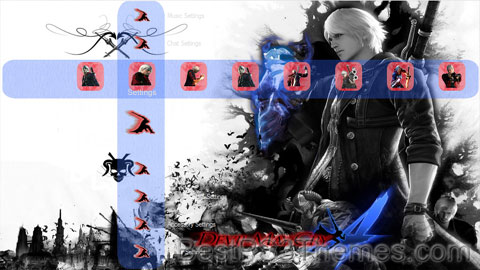
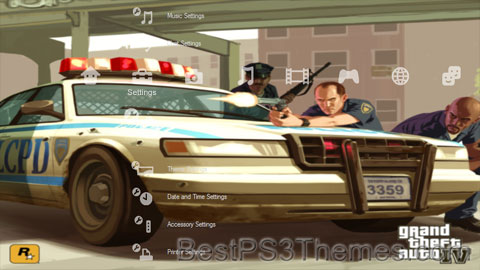
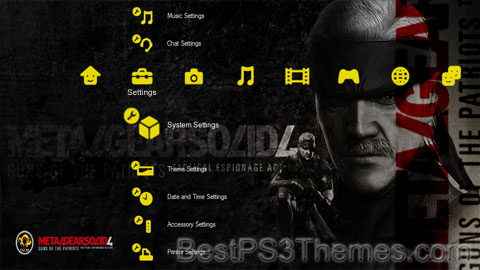
This program unpacks Playstation 3 Theme files (.p3t) so that you can touch-up an existing theme to your likings or use a certain wallpaper from it (as many themes have multiple). But remember, if you use content from another theme and release it, be sure to give credit!
Download p3textractor.zip from above. Extract the files to a folder with a program such as WinZip or WinRAR. Now there are multiple ways to extract the theme.
The first way is to simply open the p3t file with p3textractor.exe. If you don’t know how to do this, right click the p3t file and select Open With. Alternatively, open the p3t file and it will ask you to select a program to open with. Click Browse and find p3textractor.exe from where you previously extracted it to. It will open CMD and extract the theme to extracted.[filename]. After that, all you need to do for any future p3t files is open them and it will extract.
The second way is very simple. Just drag the p3t file to p3textractor.exe. It will open CMD and extract the theme to extracted.[filename].
For the third way, first put the p3t file you want to extract into the same folder as p3textractor.exe. Open CMD and browse to the folder with p3extractor.exe. Enter the following: p3textractor filename.p3t [destination path]Replace filename with the name of the p3t file, and replace [destination path] with the name of the folder you want the files to be extracted to. A destination path is not required. By default it will extract to extracted.filename.
The game is played from a third-person perspective and its world is navigated on foot and by vehicle. Throughout the single-player mode, players control Niko Bellic. An online multiplayer mode is also included with the game, allowing up to 32 players to engage in both cooperative and competitive gameplay in a recreation of the single-player setting.[b] Two expansion packs were later released for the game, The Lost and Damned and The Ballad of Gay Tony, which both feature new plots that are interconnected with the main Grand Theft Auto IV storyline, and follow new protagonists.
Development of Grand Theft Auto IV began soon after the release of San Andreas and was shared between many of Rockstar's studios worldwide. The game introduced a shift to a more realistic and detailed style and tone for the series. Unlike previous entries, Grand Theft Auto IV lacked a strong cinematic influence, as the team attempted an original approach to the story. As part of their research for the open world, the development team conducted extensive field research in New York, capturing over 100,000 photographs and several hours of video. The developers considered the world to be the most important element of the game; though not the largest map in the series, they considered it comparable in scope due to its verticality and level of detail. The budget climbed to over US$100 million, making it one of the most expensive video games to develop.
Grand Theft Auto IV was released for the PlayStation 3 and Xbox 360 consoles in April 2008, and for Windows in December. Upon release, the game received critical acclaim, with praise particularly directed at the narrative and open-world design. Grand Theft Auto IV broke industry sales records and became the fastest-selling entertainment product in history at the time, earning US$310 million in its first day and US$500 million in its first week. Considered one of the most significant titles of the seventh generation of video games, and by many critics as one of the greatest video games of all time, it won year-end accolades, including Game of the Year awards from several gaming publications. It is among the best-selling video games with over 25 million copies sold by 2013. The game generated controversy, with criticism directed at the game's depiction of violence and players' ability to drink-drive. Its successor, Grand Theft Auto V, was released in September 2013.
Grand Theft Auto IV is an action-adventure game played from a third-person perspective.[2] Players complete missions—linear scenarios with set objectives—to progress through the story. It is possible to have several active missions running at one time, as some require players to wait for further instructions or events. Outside of missions, players can freely roam the game's open world and complete optional side missions.[3] Composed of the fictional city of Liberty City, the world is larger in area than most earlier Grand Theft Auto series entries.[4] At the beginning of the game, players can only explore the first island—composed of Dukes and Broker—with all other islands unlocking as the story progresses.[5]
Players use melee attacks, firearms and explosives to fight enemies, and may run, jump, swim or use vehicles to navigate the game's world. There is a first-person perspective option when using vehicles. In combat, auto-aim and a cover system can be used as assistance against enemies. Should players take damage, their health meter can be fully regenerated by consuming food or drinks, using medical kits, or calling for paramedics.[6] If players commit crimes, the game's law enforcement agencies may respond as indicated by a "wanted" meter in the head-up display (HUD). On the meter, the displayed stars indicate the current wanted level (for example, at the maximum six-star level, efforts by law enforcement to incapacitate players become very aggressive). Law enforcement officers will search for players who leave the wanted vicinity. The wanted meter enters a cool-down mode and eventually recedes when players are hidden from the officers' line of sight.[7]
Combat in Grand Theft Auto IV was reworked to include a cover system.[6]
The game's cover system allows players to move between cover, to fire blindly, aim freely, and target a specific enemy. Individual body parts can also be targeted.[8] Melee attacks include additional moves, such as dodging, blocking, disarming an opponent and counter-attacking. Body armour can be used to absorb gunshots and explosive damage, but is used up in the process. When health is entirely depleted, gameplay stops, and players respawn at the nearest hospital.[6]
The single-player mode lets players control an Eastern European war veteran, Niko Bellic. During the story, Niko meets and befriends various new characters. They can then perform favours for Niko whenever he asks; for example, his cousin Roman, who owns a taxi service, can send one of his cabs to take Niko to any destination around the city. Cabs are always available during gameplay for quick travel to a destination. Throughout the course of the game, players are also faced with morality choices, which alter the storyline appropriately depending on the player's choice. While free roaming the game world, players may engage in context-specific activities such as bowling or darts. Other available activities include a vigilante mini-game, and in-game television programming.[9][10][11] Niko has a cell phone for contacting friends and starting activities.[12] The cell phone is also used to access the game's online multiplayer mode, and to enter cheat codes.[13] To access the in-game Internet, which allows Niko to send and receive emails and set up prospective dates with potential girlfriends, Niko can use Internet cafés located around the city.[14] The game also features a subway system, allowing players to quickly traverse through the game's world.[15]
The online multiplayer mode for Grand Theft Auto IV allows up to 32 players[b] to freely roam across the map. Players decide which game mode they wish to play, including deathmatches and street races. Both cooperative and competitive game modes are available, split into ranked and unranked matches.[16] For players to level up through ranks, in-game money has to be earned. The game also features a Free Mode, in which players have the entire map open to explore, with no end goal or mission to complete. Hosts of the game can control many variables, such as police presence, traffic, and weapons.[17] The multiplayer mode was discontinued on Windows in 2020.[18]
Grand Theft Auto IV takes place in 2008, within a redesigned version of Liberty City. The design of the city focuses on a recreation of four of the boroughs of New York City: Broker (based on Brooklyn), Dukes (Queens), Bohan (The Bronx), and Algonquin (Manhattan). The setting also includes the neighbouring state of Alderney (based on New Jersey).[19] Initially, bridges are locked down due to a terrorist threat, and police constantly pursue players if the bridges are crossed. The blockades are lifted as the story progresses, allowing the player to traverse between islands safely.
Grand Theft Auto IV is set in the fictional "HD Universe", which mirrors and parodies the real world. The previous games formed fictional universes of their own,[c] which despite having many similarities with the HD Universe, are considered to be different continuities. Hence, the Liberty City depicted in Grand Theft Auto IV is different from its previous renditions, and the game itself serves as a reboot for the series. The new timeline established by Grand Theft Auto IV would continue with two expansion packs, The Lost and Damned and The Ballad of Gay Tony, and a sequel, Grand Theft Auto V, as well as its online component, Grand Theft Auto Online.[21][22][23] The handheld game Grand Theft Auto: Chinatown Wars is also considered part of the HD Universe, because it features the same map as Grand Theft Auto IV, except for Alderney.[24]
Niko Bellic, an Eastern European ex-soldier,[25] arrives in Liberty City aboard a cargo ship, the Platypus, to escape his criminal past, pursue the American Dream, and search for the man who betrayed his unit to an ambush during a war ten years prior. Reuniting with his cousin Roman, he discovers that his tales of riches were lies concealing his small, dirty apartment, unprofitable taxi company, gambling debts, and disputes with loan sharks. Niko begins assisting Roman with his problems, which leads him to make his first criminal contacts in the city. He befriends Yardies second-in-command Little Jacob and is forced to work for Vlad Glebov, Roman's Russian loan shark, whom Niko eventually kills upon learning he had slept with Roman's girlfriend, Mallorie.
In retaliation, Niko and Roman are kidnapped by Russian mobsters on orders of their boss Mikhail Faustin and his lieutenant, Dimitri Rascalov. Indifferent to Vlad's murder, Faustin releases them and employs Niko as a hitman, eventually ordering him to kill the son of Russian crime lord Kenny Petrović. When Petrović threatens retaliation, Dimitri convinces Niko to assassinate Faustin. However, he then betrays and brings Niko to his former employer, Ray Bulgarin, who accuses Niko of stealing from him during a botched human trafficking job years earlier. Niko denies the allegation and a firefight ensues, allowing Dimitri and Bulgarin to escape.
Dimitri's men burn down Niko and Roman's apartment and taxi company, forcing them to flee to Bohan. While Niko finds work with several local drug lords, Dimitri kidnaps Roman in a failed attempt to lure Niko into a trap. Later, Niko discovers that his romantic interest, a woman named Michelle, is a government agent, who then entraps him into working for her agency. In exchange for the murders of several known or suspected terrorists, the agency clears Niko's criminal record and assists him in searching for the traitor he seeks. Niko and Roman's fortunes improve when the latter receives a large amount of insurance money from his destroyed business, which he uses to rebuild it and buy an apartment in Algonquin. Roman also proposes to Mallorie, who accepts.
While working for the Irish Mob, Niko befriends gangster Patrick "Packie" McReary and helps him and his brothers carry out various jobs, including a major bank robbery. Niko is later hired by Ray Boccino, a caporegime in the Pegorino crime family, to oversee a diamond deal, which goes awry. Boccino repays Niko by helping him find his ex-comrade Florian Cravic, now known as Bernie Crane, who claims he was not the one to betray their unit. Niko concludes that the traitor was Darko Brevic, the only other survivor. Niko continues working for the Mafia in Liberty City and eventually earns the trust of Don Jimmy Pegorino, who orders Niko to kill Boccino after suspecting him of being a police informant. Niko also helps Packie kidnap Don Giovanni Ancelotti's daughter to ransom her for the diamonds, but Bulgarin intercepts the exchange. In the ensuing firefight, the diamonds are lost.
Eventually, the government agents find Darko in Romania and bring him to Liberty City for Niko to decide his fate. Afterwards, Niko is summoned by Pegorino for one final favour: to help with a highly lucrative heroin deal in collusion with Dimitri. Niko must either agree to work with Dimitri or exact revenge on him.[26] If Niko goes through with the deal, Dimitri betrays him again,[27] kills Pegorino,[28] and attempts to kill Niko via an assassin at Roman's wedding, but accidentally kills Roman;[29] Niko retaliates by tracking and murdering Dimitri.[28] If Niko chooses to exact revenge, he kills Dimitri aboard the Platypus,[30] prompting a furious Pegorino to target Niko but accidentally kill Packie's sister Kate, whom Niko had been dating, at Roman's wedding;[29] Niko retaliates by tracking and murdering Pegorino.[31] Later, either Mallorie or Roman tells Niko that Mallorie is pregnant.
Rockstar North's former studio in Edinburgh, Scotland, where Grand Theft Auto IV's development was overseen
Preliminary work on Grand Theft Auto IV began in November 2004,[32] a month after the release of Grand Theft Auto: San Andreas.[33] Rockstar president Sam Houser felt that following up San Andreas was "a nightmare".[34]Rockstar North, the core 220-person team behind the game, co-opted studios owned by parent company Rockstar Games to facilitate development between a full team of over 1,000,[35] including 50 employees at Rockstar NYC, 40 at Rockstar Lincoln, 10 at Rockstar San Diego, and around 600–700 working part-time internally and externally.[36] Some key members of the development team worked 12-hour days during production, often without holidays.[35] The team decided to continue the numbering scheme absent from the previous two main games to represent the same leap in production as Grand Theft Auto 2 (1999) to Grand Theft Auto III (2001).[33] Development of Grand Theft Auto IV ceased by 21 April 2008 when the game was submitted for manufacturing.[37] Producer Leslie Benzies estimated that the budget of the development efforts exceeded US$100 million, making Grand Theft Auto IV one of the most expensive video games ever made.[35]
The game's setting, Liberty City, is based on New York City. The team did not look at the previous renditions of Liberty City as inspiration, wanting it to retain the "general feel" but nothing else.[38] The map is roughly three times the size of Grand Theft Auto III's.[38] The developers originally considered using the entire state of New York, before restricting it to Manhattan, and then expanding it out again. They considered including more suburbs with woods, and would regularly vote on which areas to include.[39] Art director Aaron Garbut said that the team chose the setting because of the detail and variety it provided, describing New York as "an amazing, diverse, vibrant, cinematic city".[40] Writer Dan Houser added that the team "wanted to be somewhere where we had a foothold" due to the amount of research required for the world; Rockstar Games's main headquarters are located in New York.[41] The team consciously avoided a precise recreation of New York City to allow for more enjoyable game design,[32] selecting the areas that they felt "characterised it the best".[40] Garbut wanted to capture a caricature of the city as he felt that most people were familiar with "the highlights" from film or literature but did not need to know the areas precisely.[40] The city was not built with specific missions in mind; the area was created first, and missions implemented later.[42]
To achieve a realistic environment, 60–70 employees from Rockstar North travelled to New York for research: first at the beginning of the project in March or April 2005 for a week and a half,[39] and a smaller trip in 2007.[38] Police officers who previously worked the beat drove the team around Washington Heights.[39] A full-time research team based in New York handled further requests for information, such as the ethnic minority of a neighbourhood or videos of traffic patterns. Videos shot in New York were played on televisions at the Rockstar North offices "so while they worked they could look up and there was New York".[39] Benzies claimed that the team took over 100,000 photographs on location in New York,[35] though Garbut estimates that they took around 250,000.[38] They also studied architectural plans for apartments, used satellite images to determine city block layout, researched sales figures for models of cars, and read books that detailed the city's infrastructure, including its subways, sewers, and garbage disposal.[43] Hove Beach is based on Brighton Beach, which Sam Houser found "pretty incredible" and unusual; the name is based on the English city Brighton and Hove, made up of the former neighbouring towns Brighton and Hove.[44] Houser appreciated that Brighton Beach was home to several Eastern Europeans due to the nature of the game's characters.[44]
Dan Houser described Liberty City as "the biggest character" of the game.[40] The Grand Theft Auto IV rendition of Liberty City is more detailed and larger in size than most earlier entries in the series; although smaller than San Andreas, the setting of the previous main game, the developers considered it comparable in scope due to city's verticality, number of buildings, and level of detail.[45] The team wanted less dead spots and irrelevant spaces, such as the wide open deserts in San Andreas.[32] They wanted the game to be "a more focused experience" than San Andreas, and Dan Houser felt that the limited activities of New York allowed this.[33] The team felt that the addition of Niko's mobile phone added to the immersion of the world and represented society's shifted focus on phones.[33] The in-game brands and products are designed over several years; the billboards were implemented in the game around six months prior to release.[38]
Benzies produced the game. Dan Houser co-wrote the story,[35] while his brother Sam executive-produced the game.[34]
The game's script, written by Dan Houser and Rupert Humphries, is about 1,000 pages.[35] Approximately 660 actors provided voices for the game over 80,000 lines of dialogue.[39] After conceiving the character and setting, Dan Houser spoke with his brother Sam Houser and Leslie Benzies to bounce story ideas before writing a rough synopsis, a six-paged, detailed document. Once the synopsis was reworked, the designers broke it into missions, represented by a large flow document demonstrating each section. The writers then work on the introductions to the missions; the gameplay dialogue comes much later.[41] Unlike previous Grand Theft Auto games, Grand Theft Auto IV does not have cinematic influences. "We were consciously trying to go, well, if video games are going to develop into the next stage, then the thing isn't to try and do a loving tribute or reference other stuff," said Dan Houser.[41] He said that the writers wanted something "fresh and new and not something that was obviously derived from [a] movie".[41] Dan Houser felt that the quality of the writing had to improve alongside the advancements in graphics and technology. He noted that the improvements in facial animation allowed for slower-paced cutscenes.[40] The unique dialogue that plays when a mission is retried was to ensure that the gameplay felt "less canned and less like Groundhog Day".[40]
Dan Houser described Niko Bellic as "a more rounded character" than those in previous games.[40] He felt that his dual personality—often saving innocent people, while also being a "cold-hearted killer"—made him more relatable.[40] He also felt that Niko's unfamiliarity with Liberty City allowed for the player to relate to him more, only driven by his vague past and relationship with Roman. When deciding on Niko's background, the writers felt that being an immigrant could lead to more dangerous situations, and therefore more enjoyable missions; after discussions with criminal experts, Dan Houser found that "the real scary characters are not born in America anymore".[40] He felt that Niko's outsider view of American culture was "fun".[40] The team wanted Niko to be "more of an anti hero than a hero, capable of making positive actions within his criminal world".[46] They wanted his demeanour to reflect the weight of his past and choices.[46]
Niko's design underwent a few changes, but was finalised early in development.[47] His outfit underwent several changes based on Eastern Europeans, particularly photographs of men fighting in winter wars in Yugoslavia and Chechnya. The primary motivation for the design was a face to convey the appropriate emotions and a body that could move nicely with the new animations.[40] The in-game purchasable outfits were also designed to fit with the character.[33] The team ensured that the gameplay choices presented to the player were not too extensive, as they still had to make sense to the character, who is driven by the people around him. Dan Houser felt that the missions in San Andreas had become too linear, and wanted to present choices to the player in Grand Theft Auto IV.[40]
The writers found that Niko needed a motivation to come to America, so they created his cousin, Roman. Dan Houser felt that the two could not be brothers as there would be a deeper level of familiarity than necessary. He described the two as a double act, with Roman's fantasist charm playing off Niko's tough cynicism. The team gave other non-playable characters (NPCs) more definable behaviours and dialogue to make them feel more alive. The writers initially considered having a smaller group of characters, but found that the story became boring and that players were less likely to explore the world. The stranger characters found in the game world were based on the "crazy people" that populate New York, according to Dan Houser, which in previous games were only able to be captured through radio stations or mild pedestrian behaviours.[38] The team based the ethnicities, clothing, and behaviours of the NPCs on the photographs and videos that they captured around New York, divided into different areas;[40] they created mood boards for each location.[38] The NPCs also converse in different languages.[39]
Grand Theft Auto IV sees a shift in the series to a more realistic and detailed style and tone, partly a result of the transition to consoles which offered high-definition graphics and the new and improved capabilities of such consoles. The development team worked to represent the upgrade in quality across all design aspects while maintaining the coherence of the previous games.[32] The team took the game's development as an opportunity to "strip things back and start again", refining the art style without losing the style of the series;[40] they distanced the game from the "cartoon-like style" of its predecessors while creating a new style that was consistent across all aspects of the game.[48] Garbut found the increased demand of detail brought on by the advanced technology daunting.[49] A technique used to make the visuals look real was to avoid harsh edges, instead blending surfaces together to make the world look dirty and lived-in.[50] The props department created multiple variations of different objects to make the world more interesting and unique.[40]G
This program unpacks Playstation 3 Theme files (.p3t) so that you can touch-up an existing theme to your likings or use a certain wallpaper from it (as many themes have multiple). But remember, if you use content from another theme and release it, be sure to give credit!
Download p3textractor.zip from above. Extract the files to a folder with a program such as WinZip or WinRAR. Now there are multiple ways to extract the theme.
The first way is to simply open the p3t file with p3textractor.exe. If you don’t know how to do this, right click the p3t file and select Open With. Alternatively, open the p3t file and it will ask you to select a program to open with. Click Browse and find p3textractor.exe from where you previously extracted it to. It will open CMD and extract the theme to extracted.[filename]. After that, all you need to do for any future p3t files is open them and it will extract.
The second way is very simple. Just drag the p3t file to p3textractor.exe. It will open CMD and extract the theme to extracted.[filename].
For the third way, first put the p3t file you want to extract into the same folder as p3textractor.exe. Open CMD and browse to the folder with p3extractor.exe. Enter the following: p3textractor filename.p3t [destination path]Replace filename with the name of the p3t file, and replace [destination path] with the name of the folder you want the files to be extracted to. A destination path is not required. By default it will extract to extracted.filename.
This program unpacks Playstation 3 Theme files (.p3t) so that you can touch-up an existing theme to your likings or use a certain wallpaper from it (as many themes have multiple). But remember, if you use content from another theme and release it, be sure to give credit!
Download p3textractor.zip from above. Extract the files to a folder with a program such as WinZip or WinRAR. Now there are multiple ways to extract the theme.
The first way is to simply open the p3t file with p3textractor.exe. If you don’t know how to do this, right click the p3t file and select Open With. Alternatively, open the p3t file and it will ask you to select a program to open with. Click Browse and find p3textractor.exe from where you previously extracted it to. It will open CMD and extract the theme to extracted.[filename]. After that, all you need to do for any future p3t files is open them and it will extract.
The second way is very simple. Just drag the p3t file to p3textractor.exe. It will open CMD and extract the theme to extracted.[filename].
For the third way, first put the p3t file you want to extract into the same folder as p3textractor.exe. Open CMD and browse to the folder with p3extractor.exe. Enter the following: p3textractor filename.p3t [destination path]Replace filename with the name of the p3t file, and replace [destination path] with the name of the folder you want the files to be extracted to. A destination path is not required. By default it will extract to extracted.filename.
This program unpacks Playstation 3 Theme files (.p3t) so that you can touch-up an existing theme to your likings or use a certain wallpaper from it (as many themes have multiple). But remember, if you use content from another theme and release it, be sure to give credit!
Download p3textractor.zip from above. Extract the files to a folder with a program such as WinZip or WinRAR. Now there are multiple ways to extract the theme.
The first way is to simply open the p3t file with p3textractor.exe. If you don’t know how to do this, right click the p3t file and select Open With. Alternatively, open the p3t file and it will ask you to select a program to open with. Click Browse and find p3textractor.exe from where you previously extracted it to. It will open CMD and extract the theme to extracted.[filename]. After that, all you need to do for any future p3t files is open them and it will extract.
The second way is very simple. Just drag the p3t file to p3textractor.exe. It will open CMD and extract the theme to extracted.[filename].
For the third way, first put the p3t file you want to extract into the same folder as p3textractor.exe. Open CMD and browse to the folder with p3extractor.exe. Enter the following: p3textractor filename.p3t [destination path]Replace filename with the name of the p3t file, and replace [destination path] with the name of the folder you want the files to be extracted to. A destination path is not required. By default it will extract to extracted.filename.
This program unpacks Playstation 3 Theme files (.p3t) so that you can touch-up an existing theme to your likings or use a certain wallpaper from it (as many themes have multiple). But remember, if you use content from another theme and release it, be sure to give credit!
Download p3textractor.zip from above. Extract the files to a folder with a program such as WinZip or WinRAR. Now there are multiple ways to extract the theme.
The first way is to simply open the p3t file with p3textractor.exe. If you don’t know how to do this, right click the p3t file and select Open With. Alternatively, open the p3t file and it will ask you to select a program to open with. Click Browse and find p3textractor.exe from where you previously extracted it to. It will open CMD and extract the theme to extracted.[filename]. After that, all you need to do for any future p3t files is open them and it will extract.
The second way is very simple. Just drag the p3t file to p3textractor.exe. It will open CMD and extract the theme to extracted.[filename].
For the third way, first put the p3t file you want to extract into the same folder as p3textractor.exe. Open CMD and browse to the folder with p3extractor.exe. Enter the following: p3textractor filename.p3t [destination path]Replace filename with the name of the p3t file, and replace [destination path] with the name of the folder you want the files to be extracted to. A destination path is not required. By default it will extract to extracted.filename.
In Gears of War 2, the COG continues its fight against the Locust, who are attempting to sink all of the cities on the planet Sera. SergeantMarcus Fenix leads Delta Squad into the depths of the planet to try to stop the Locust during the assault upon Locust territory. The player controls Fenix in the main mission campaign, with the ability to play cooperatively with a second player controlling Fenix's best friend and fellow Squad member Dominic "Dom" Santiago. The game includes several existing and new multiplayer modes including five-on-five battles between human and Locust forces, and a "Horde" mode that challenges up to five players against waves of Locust forces with ever-increasing strength. New weapons and gameplay mechanics such as "chainsaw duels" and the ability to use downed foes as "meatshields" were added to the game.
On its release weekend, Gears of War 2 sold over two million copies, and within two months of release, had sold four million copies. It was the seventh best selling video game of 2009 and received several accolades. The game received similar praise as its predecessor, with the new gameplay and multiplayer modes seen as outstanding additions. Gears of War 2, along with its predecessor, is considered one of the best games ever made. It was followed by Gears of War 3 in 2011.
Gears of War 2 is a third-person shooter with an emphasis on the tactical use of cover, and retains much of the same gameplay from the first game. The player, playing as either Marcus or Dominic in the campaign mode, or as any of the human or Locust characters in multiplayer mode, can only carry a pistol, one type of grenade, and two other weapons at any time, though they may swap these for weapons found in strategic locations or left by downed foes or fallen allies. Each weapon can be used for normal fire as well as for melee attacks; the game's signature Lancer Assault Rifle can be used to instantly kill foes in melee with its mounted chainsaw bayonet. The game introduces the ability to engage in chainsaw duels should the player attempt to chainsaw an opponent also using the Lancer; the player is presented with a controller button to press rapidly to try to win the duel and avoid death.[1]Gears of War 2 rebalances the power of the existing weapons while introducing five new ones: a flamethrower, a chain gun, a mortar cannon, a "Gorgon" Pistol, and the Ink Grenade. The chain gun and the mortar are heavy weapons, forcing the player to move at walking speed while carrying it in both hands. The Gorgon Pistol is an SMG-like machine pistol that fires four four-shot bursts per magazine. The Ink Grenade doesn't damage with its detonation, but instead temporarily poisons the area it was thrown, making it very useful for driving enemies out of cover. Grenades can be planted on walls or floors as proximity traps that go off when an enemy nears, but only fragmentation grenades have the ability to kill foes when they go off.[2]
The player's health is represented by a red "Crimson Omen" that fades onto the screen the more damage the player takes; staying out of the line of fire allows the player to recover their health. Depending on the game mode or difficulty, if the player takes too much damage, they enter a downed state where they can crawl around the map to get out of battle and seek help. During this time, a teammate can revive him, an enemy may brutally execute the downed player, or the player may bleed out if too much time has passed. The player can also grab a downed character and use them as a meatshield, allowing the body to absorb damage but forcing the player to use a one-handed pistol.[3] Explosive weapons will simply destroy the character they strike.[4] Like its predecessor, Gears of War 2 features an optional mature content filter, which, when active, makes blood appear as sparks and removes harsh language from the dialogue.[5] Furthermore, progress towards most of the Xbox achievements for the game can be earned in either campaign or multiplayer modes.[1]
The campaign mode in Gears of War 2 allows for a single player or two players playing cooperatively as Marcus or Dom. A new "Normal" difficulty was added between the game's "Casual" and "Hardcore" difficulties. There is also an 'Insane' difficulty that is unlocked after the player completes the game at least once. Players in co-op mode can select different difficulties, and a "communal combat system" will adjust the game's artificial intelligence to give both players a fair challenge.[1] The co-op campaign can be played in a drop in/drop out manner, with the second player able to join the first player's game in progress.[6] As well as collecting some COG tags as in the first game, players can search other story-based items such as personal letters and medical records, with discovered items being added to a war journal.[1]
The campaign features a deeper story with new characters, new weapons, and new enemies according to John DiMaggio, the voice actor for Marcus Fenix.[7] New vehicles have been added to the game, such as the Centaur Tank, which lead designer Cliff Bleszinski describes as a "tank with monster truck wheels."[8] Players will also ride a Brumak and Reavers in the game.[9] Cut-scenes use the better facial rendering technology of Epic's Unreal engine, and engage in more dramatic angles for the conversation, as well as using a video screen on Jack (the all-purpose robot used by Delta squad) to talk with their commanders face-to-face.[1]
Gears of War 2 features an upgraded multiplayer mode that allows up to ten users to simultaneously play in teams of five-on-five.[10]Gears of War 2 includes most of the multiplayer modes, including Execution, Warzone, Annex and King of the Hill, and adds in three new modes.[2][10] Guardian is a modified version of Assassination from the original Gears of War, but allows players to continue fighting after the leader has been killed, but losing the ability to respawn.[10] Wingman splits all ten players into five teams of two, where both members of a team play as the same character.[10] Submission, formerly known as Meat Flag,[2] is a version of capture the flag in which players attempt to "down" an enemy controlled by the game's AI and move its body to their team's base or objective to earn points. The 10 maps shipped with the game originally are Avalanche, Blood Drive, Day One, Hail, Jacinto, Pavilion, River, Ruins, Security and Stasis.[10] A Halo-like matchmaking system has been utilized for the online multiplayer.[1] Players can now engage in multiplayer scenarios with any combination of human players and artificial intelligence controlled by the game, with the ability to set the AI's intelligence level.[11] Horde is a new co-op mode for five players, fighting off waves of attacking Locust together, with each wave becoming more difficult.[9] Horde Mode does not feature bot support as in competitive multiplayer, and can be played alone.[12]
Players can pan around a map as the camera focuses on areas of intense fighting, and the Ghost Cam allows a player to roam freely around a map. The ability to take photographs is also featured, which enables the player to take a photo, which can be uploaded to the Gears of War website and is rated on the quality of action in the shot.[2]
Gears of War 2 takes place six months after the detonation of the Lightmass Bomb at the end of the first game. Though most of the underground army of the Locust Horde was destroyed, the explosion also caused much of the liquid Imulsion underground to vaporize, causing a fatal disease called Rustlung to spread among the diminished human population. After months of peace, the cities of Tollen and Montevado suddenly and mysteriously disappear underground, leading the Coalition of Ordered Governments (COG) to suspect the resurgence of the Locust.[13] Soon after, the once impenetrable Jacinto, one of the last remaining safe havens for humans, begins to show signs that the same fate awaits it. To stop the fall of Jacinto, the COG responds with a large-scale counter-offensive against the Locust.[1][13] Senior Producer Rod Fergusson says "In order to save Jacinto, [the COG] have no choice but to take the war to the Locust."[1]
Returning characters includes the main protagonists of the series Marcus Fenix and Dominic Santiago and others from the first game, including Marcus and Dom's fellow Delta Squad COG soldiers, Augustus 'Cole Train' Cole and Damon Baird. Also returning in supporting roles are radio dispatcher Anya Stroud and senior officer Colonel Hoffman. Lead designer Cliff Bleszinski confirmed that the character Carmine would be returning, but did not reveal how or in what capacity as Carmine was killed in the original Gears of War.[14] It was later revealed that the original Anthony Carmine would not be present in the Gears of War 2 campaign, but rather his brother, Benjamin,[15] would make an appearance.[16] The game also introduces several new characters. They include Chairman Prescott, the noble, yet near-dictatorial military leader of COG; Tai Kaliso, "a spiritual and meditative warrior from a tradition of honor bound fighters;" and Dizzy Wallin, a former Stranded who joined the COG to keep his family safe. Dom's wife Maria also makes an appearance, and Dom's search for her plays an important part in the story.[1]
As Gears of War 2 begins, the COG army mobilizes forces to deploy into the depths of Sera, known as the "Hollow", to assault the Locust directly. Delta Squad, consisting of Marcus Fenix, Dom Santiago, Benjamin Carmine, Tai Kaliso, Augustus Cole and Damon Baird; fight the Locust alongside thousands of Gears. During the battle, Tai is taken prisoner by Locust general Skorge and is tortured to the point of insanity, resulting in him committing suicide after being freed by Delta. They discover that the Locust are using a giant Riftworm to sink the human cities. The Locust plan to destroy the rock structures in the outskirts of Jacinto, the last major human city, in hopes of sinking it underground. Delta kills the Riftworm from within before it can sink Jacinto, but they lose Carmine in the process.
After returning to the surface, Colonel Hoffman admits the COG failed in locating the Locust stronghold. Chairman Prescott declassifies an intel file that reveals a nearby abandoned COG outpost that has a lead on the location of the Locust capital and their queen. Delta is ordered to investigate. Inside, Delta learns that the outpost is "New Hope", a genetics lab dedicated to studying human children of Imulsion miners suffering from Rustlung, resulting in mutated experiments called "Sires". Delta finds that the scientists relocated to the nearby caverns of Mount Kadar to continue their research. As Delta infiltrates Mount Kadar to infiltrate the Locust stronghold, Dom gets a lead on his missing wife, Maria, located at a nearby prison camp. Dom finds Maria in a vegetative state due to the aggressive and invasive torture techniques of the Locust. Dom euthanizes Maria and continues on the mission.
Delta locates Locust capital, Nexus, and sets off the beacon to initiate the second wave. The COG sees the Locust have been facing an epidemic against the "Lambent", Locust who have been exposed to Imulsion, and have been forcing the Locust out of the Hollow and onto the surface. Locust Queen Myrrah, who appears human, reveals to Marcus that the Locust are trying to sink Jacinto based on a proposal by Adam Fenix, his father, that the surrounding seawater could flood the Hollow and drown the Lambent. After a battle where they succeed in killing Skorge, but failing to kill Myrrah, Marcus decides to destroy both the Locust and Lambent forces by sinking Jacinto themselves before the Locust can evacuate. Jacinto is sunk by the COG and seawater floods into the crater, destroying the remaining Locust forces. After the credits, the voice of Adam Fenix is heard on a radio transmission, revealing he is still alive.[4][17]
Screenshot from the first Gears of War 2 trailer shown at the 2008 Game Developers Conference, depicting Marcus Fenix executing a Locust with the chainsaw bayonet
Gears of War designer Cliff Bleszinski has done several interviews to highlight improvements to the game. Heavy Netcode optimization has been done to negate the host advantage problem in the first title[18] and hundreds of tweaks have gone into improving the cover system and movement.[19] To provide a deeper story, the team brought aboard novelist Joshua Ortega as to incorporate more personal drama within the sci-fi setting.[1]Steve Jablonsky provided the music for the game.[20] Epic Games also considered making the game easier after complaints about Gears of War. Senior producer Rod Fergusson admitted that — for the first game — "We overshot on [the Casual] difficulty and a game that was a little harder than we intended."[1]
A teaser image posted to the Gears of War 2 website on July 8, 2008, suggested that the game was to be released on November 9, 2008, but it was confirmed during the Microsoft E3 2008 press conference that the game would be released on November 7, 2008.[9][21] On July 14, 2008, the teaser image was removed and the website relaunched and updated for Gears of War 2.[22]
Gears of War 2 was a focal point during Microsoft's E32008 presentation on July 15, 2008, which included a "hands-on" demo.[23][24] A second trailer, entitled "Rendezvous," was made available on July 14, 2008, as a part of E3. The Joseph Kosinski-directed trailer,[25] which features the Trans Am track "Diabolical Cracker" from the album Red Line, takes its title and spoken words from Alan Seeger's World War I poem I Have a Rendezvous with Death.[26] The game's release date was also set, with a worldwide release to occur on November 7, 2008.[9] Microsoft and Epic Games announced on October 10, 2008, that Gears of War 2 had gone gold.[27] It was stated by Cliff Bleszinski that, unlike Gears of War, the previous installment, Gears of War 2 will not feature a PC port.[28]
Comparison of the map "Gridlock" in Gears of War and Gears of War 2
At the 2008 Game Developers Conference in San Francisco, California, as a showcase for the functionality of the Unreal Engine 3, Gears of War creators Epic Games showed various improvements to the engine with specific reference to the sequel itself. The video showed several demonstrations of the improvements, the initial being improvements to the in-game lighting through Screen Space Ambient Occlusion, in which dynamic shadows could be generated through the use of a pixel shading technique to render more realistically lit and shaded objects and actors, illustrated through comparison between character and environment models in the original game engine to that of Unreal Engine 3. Also showcased was the ability of the engine to render hordes of actors within the engine, as demonstrated with a large crowd of locust flocking through the "Gridlock" multiplayer map from the original game. Alongside this technology was improvements to "Matinee," an artistic tool used for the rendering and editing 3-dimensional scenes within the game.[29]
Other physics-related features included improvements to the rendering of water in which specular light and physical interactions with were displayed more realistically, improvements to soft body entities demonstrated with a "Meat Cube" and a floating ball possessing properties similar to that of liquid helium. The largest of these physics engine related changes was the introduction of destructible environments due to the implementation of real-timestructural analysis tools to generate the damage of the materials and subsequently their deformed shapes based upon resultant forces placed upon them. This was demonstrated with the use of explosive arrows fired from the "Torque Bow" of the original game causing damage to wooden planks, and also revealing rebar present after destroying areas of a stone structure.[29]
On February 20, 2008, coinciding with the game's announcement at the Game Developers Conference, a free set of gamer pictures and a dashboard theme, as well as a teaser trailer titled "Duel," were made available via the Xbox Live Marketplace.[30] The first footage of gameplay from the campaign, highlighting new features of the game, was released online and to the Marketplace on May 9, 2008.[31] After the Microsoft E3 press conference, the "Rendezvous" trailer and the press conference demonstration was available for download as well as a new free set of gamer pictures and a dashboard theme.[26] Upon release, every new copy of Gears of War 2 features a code to download the "Flashback Map Pack," which includes five enhanced multiplayer maps from the original game. Customers who attended the GameStopMidnight Madness game release event received a code to unlock a gold-plated Hammerburst rifle for use in multiplayer and a code for an exclusive Xbox 360 Dashboard theme optimized for the New Xbox Experience.[32]
The first downloadable content released after Gears of War 2 was the "Combustible Map Pack," which consists of three new multiplayer maps. This add-on was announced and released on December 15, 2008.[33] The second title update was released on January 21, 2009, featuring several adjustments to gameplay and adding additional Achievements, the patch attempts to correct many of the "glitches" that players have discovered since the game's release.[34][35]
A third update was applied to Gears of War 2 on March 24, 2009. The update added an experience-based ranking system in which the player is given a numerical value based on their number of experience points, which are gained by shooting or killing enemies in public multiplayer. The update also addressed several issues with matchmaking, including adding bots in place of players who have quit or lost connection to the game.[36]
In early July 2009, Epic Games applied a fourth update to Gears of War 2, which added the ability to gain experience from the multiplayer Horde Mode, as well as applying several more gameplay fixes.[37][38] On July 28, 2009, the "Dark Corners" add-on was released. This add-on consisted of seven new multiplayer maps, and an additional campaign chapter that was originally deleted from the game.[39] The deleted scene takes place after Maria's death, where the user can choose to either sneak into the stronghold as Theron Guards or charge in as in the original game, though the level is different from the one that appeared in the final game and features a cameo from a Stranded character from the original Gears.
On May 6, 2009, Microsoft and Epic Games issued a joint press release announcing the Gears of War 2: All Fronts Collection, to be released on July 28, 2009. The All Fronts Collection was to be sold as a retail package, and would have included all add-ons released for Gears of War 2, a poster, and a strategy guide for the game.[40] In response to complaints that the All Fronts Collection had identical pricing to the Dark Corners add-on, but significantly more content, as well as the All Fronts Collection retail package not being made available in certain regions, Epic Games adjusted the release plan; the All Fronts Collection was released digitally via Xbox Live and the Dark Corners add-on was reduced in price.[41]
In June 2010 during the Electronic Entertainment Expo 2010 Mark Rein (vice president of Epic Games) was showcasing a tech demo of Gears of War 2 in stereoscopic 3D running on an Xbox 360 thanks to the TriOviz for Games Technology. "This technology's great because it works on normal HD TVs, as well as the very high end 3DTVs," Rein commented to Computer and Video Games. "We're not planning to re-release this in 3D - unless Microsoft want us to - but I'm sure its technology may be keen to put in the games developed by our partners."[42]
A Limited Edition of the game was confirmed on February 20, 2008.[45] On July 14, 2008, more information about the Limited Edition's contents was revealed. The edition features alternative cover art, a SteelBook case with a bonus content DVD, a book entitled Beneath the Surface: An Inside Look at Gears of War 2, which includes concept art and story-related information, a keepsake photo of Dominic and Maria, and an exclusive Xbox Live code to unlock a gold-plated Lancer for online play.[46][47] As a bonus item promoted by electronics store Best Buy, customers who preordered the Limited Edition also received a bonus Remote Control Centaur Tank replica, just like the new vehicle introduced in the game, free of charge.[48]
This page is a redirect. The following categories are used to track and monitor this redirect:
From a merge: This is a redirect from a page that was merged into another page. This redirect was kept in order to preserve the edit history of this page after its content was merged into the content of the target page. Please do not remove the tag that generates this text (unless the need to recreate content on this page has been demonstrated) or delete this page.
For redirects with substantive page histories that did not result from page merges use {{R with history}} instead.
From a related word or phrase: This is a redirect from a word or phrase (term) to a page title that is related in some way. This redirect might be a good search term, or it could be a candidate for a Wiktionary link.
Redirects from related words are not properly redirects from alternative spellings of the same word. They are also different from redirects that are subtopics or related topics, because unlike those, a related word or phrase probably does not warrant its own subtopic section in the target page or possess the possibility of ever becoming an article, template, project page, and so forth.
When appropriate, protection levels are automatically sensed, described and categorized.
This program unpacks Playstation 3 Theme files (.p3t) so that you can touch-up an existing theme to your likings or use a certain wallpaper from it (as many themes have multiple). But remember, if you use content from another theme and release it, be sure to give credit!
Download p3textractor.zip from above. Extract the files to a folder with a program such as WinZip or WinRAR. Now there are multiple ways to extract the theme.
The first way is to simply open the p3t file with p3textractor.exe. If you don’t know how to do this, right click the p3t file and select Open With. Alternatively, open the p3t file and it will ask you to select a program to open with. Click Browse and find p3textractor.exe from where you previously extracted it to. It will open CMD and extract the theme to extracted.[filename]. After that, all you need to do for any future p3t files is open them and it will extract.
The second way is very simple. Just drag the p3t file to p3textractor.exe. It will open CMD and extract the theme to extracted.[filename].
For the third way, first put the p3t file you want to extract into the same folder as p3textractor.exe. Open CMD and browse to the folder with p3extractor.exe. Enter the following: p3textractor filename.p3t [destination path]Replace filename with the name of the p3t file, and replace [destination path] with the name of the folder you want the files to be extracted to. A destination path is not required. By default it will extract to extracted.filename.