Resident Evil theme by Yann Green
Download: ResidentEvil_5.p3t
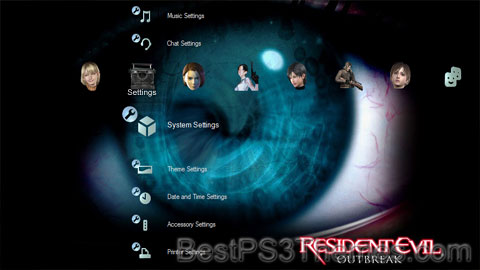
(3 backgrounds)
| Resident Evil | |
|---|---|
 | |
| Created by | Shinji Mikami Tokuro Fujiwara |
| Original work | Resident Evil (1996) |
| Owner | Capcom |
| Years | 1996–present |
| Print publications | |
| Novel(s) | Novel list |
| Comics | Comic list |
| Films and television | |
| Film(s) | |
| Television series | Television list |
| Games | |
| Video game(s) | Video game list |
| Official website | |
| game | |
Resident Evil is a Japanese horror game series and media franchise created by Capcom. It consists of survival horror, third-person shooter and first-person shooter games, with players typically surviving in post-apocalyptic urban environments infested with mutant humanoids and bizarre animals (such as mutated dogs), zombies and other lethal creatures. The franchise has expanded into other media, most notably a live-action film series, as well as animated films, television series, comic books, novels, audiobooks, and merchandise including clothing, costumes, action figures and toys. Resident Evil is the highest-grossing horror franchise.
The first Resident Evil game was created by Shinji Mikami and Tokuro Fujiwara for PlayStation, and released in 1996.[1][2] It is credited for defining the survival horror genre and returning zombies to popular culture. By the time of Resident Evil 4 (2005), the franchise shifted to more dynamic shooting action, achieved critical acclaim, and influenced the evolution of the survival horror and third-person genres, popularizing the "over-the-shoulder" third-person view.[3]
The franchise returned to survival horror with Resident Evil 7: Biohazard (2017) and Resident Evil Village (2021), which used a first-person perspective. Capcom has also released four Resident Evil remakes: Resident Evil (2002), Resident Evil 2 (2019), Resident Evil 3 (2020) and Resident Evil 4 (2023). Resident Evil is Capcom's best-selling franchise and the best-selling horror game series, with 154 million copies sold worldwide, as of December 2023.[4]
The first Resident Evil action film was released in 2002, starring Milla Jovovich, followed by five further sequels and a reboot, Welcome to Raccoon City (2021). The films have received mostly negative critical reviews, including on Rotten Tomatoes and some on Metacritic; however, some of the films have received mixed reviews on Metacritic. Nevertheless, the films have grossed more than $1.2 billion, making Resident Evil the third-highest-grossing video game film series.
History[edit]
The development of the first Resident Evil, released as Biohazard in Japan, began in 1993 when Capcom's Tokuro Fujiwara told Shinji Mikami and other co-workers to create a game using elements from Fujiwara's 1989 game Sweet Home on the Family Computer (Famicom) in Japan.[5][6] When in late 1994 marketing executives were setting up to release Biohazard in the United States, it was pointed out that securing the rights to the name Biohazard would be very difficult as a DOS game had been registered under that name, as well as a New York hardcore punk band called Biohazard. A contest was held among company personnel to choose a new name; this competition turned up Resident Evil, the name under which it was released in the west.[7] Resident Evil made its debut on the PlayStation in 1996 and was later ported to the Sega Saturn.
The first entry in the series was the first game to be dubbed a "survival horror", a term coined for the new genre it initiated,[8] and its critical and commercial success[9] led to the production of two sequels, Resident Evil 2 in 1998 and Resident Evil 3: Nemesis in 1999, both for the PlayStation. A port of Resident Evil 2 was released for the Nintendo 64. In addition, ports of all three were released for Windows. The fourth game in the series, Resident Evil – Code: Veronica, was developed for the Dreamcast and released in 2000, followed by ports of Resident Evil 2 and Resident Evil 3: Nemesis. Resident Evil – Code: Veronica was later re-released for Dreamcast in Japan in an updated form as Code: Veronica Complete, which included slight changes, many of which revolved around story cutscenes. This updated version was later ported to the PlayStation 2 and GameCube under the title Code: Veronica X.
Despite earlier announcements that the next game in the series would be released for the PlayStation 2, which resulted in the creation of an unrelated game titled Devil May Cry, series' creator and producer Shinji Mikami decided to make the series exclusively for the GameCube.[10] The next three games in the series—a remake of the original Resident Evil and the prequel Resident Evil Zero, both released in 2002, as well as Resident Evil 4 (2005)—were all released initially as GameCube exclusives. Resident Evil 4 was later released for Windows, PlayStation 2, and Wii.
A trilogy of GunCon-compatible light gun games known as the Gun Survivor series featured first-person gameplay. The first, Resident Evil Survivor, was released in 2000 for the PlayStation and PC but received mediocre reviews.[11] The subsequent games, Resident Evil Survivor 2 – Code: Veronica and Resident Evil: Dead Aim, fared somewhat better.[12] Dead Aim is the fourth Gun Survivor game in Japan, with Gun Survivor 3 being the Dino Crisis spin-off Dino Stalker. In a similar vein, the Chronicles series features first-person gameplay, albeit on an on-rails path. Resident Evil: The Umbrella Chronicles was released in 2007 for the Wii, with a sequel, Resident Evil: The Darkside Chronicles released in 2009 (both were later ported to the PlayStation 3 in 2012).[13]
Resident Evil Outbreak is an online game for the PlayStation 2, released in 2003, depicting a series of episodic storylines in Raccoon City set during the same period as Resident Evil 2 and Resident Evil 3: Nemesis. It was the first in the series and the first survival horror title to feature cooperative gameplay.[14] It was followed by a sequel, Resident Evil Outbreak: File #2. Raccoon City is a metropolis located in the Arklay Mountains of the Midwestern United States that succumbed to the deadly T-virus outbreak and was consequently destroyed via a nuclear missile attack issued by the United States government. The town served as a critical junction for the series' progression as one of the main catalysts to Umbrella's downfall and the entry point for some of the series' most notable characters.
Resident Evil Gaiden is an action-adventure game for the Game Boy Color featuring a role-playing-style combat system. There have been several downloadable mobile games based on the Resident Evil series in Japan. Some of these mobile games have been released in North America and Europe through T-Mobile. At the Sony press conference during E3 2009, Resident Evil Portable was announced for the PlayStation Portable,[15][16][17] described as an all-new title being developed with "the PSP Go in mind" and "totally different for a Resident Evil game". No further announcements have been made, and the game is considered to have been canceled.[18][19]
In 2009, Resident Evil 5 was released for PlayStation 3, Windows and Xbox 360, becoming the best selling game of the franchise despite mixed fan reception. Capcom revealed the third-person shooter Resident Evil: Operation Raccoon City, which was developed by Slant Six Games for the PlayStation 3, Xbox 360 and Windows and released in March 2012. A survival horror game for the Nintendo 3DS, Resident Evil: Revelations, was released in February 2012.[20] In October of the same year, the next numbered entry in the main series, Resident Evil 6, was released to mixed reviews,[21] but enthusiastic pre-order sales.[22]
In 2013, producer Masachika Kawata said the Resident Evil franchise would return to focus on elements of horror and suspense over action, adding that "survival horror as a genre is never going to be on the same level, financially, as shooters and much more popular, mainstream games. At the same time, I think we need to have the confidence to put money behind these projects, and it doesn't mean we can't focus on what we need to do as a survival horror game to meet fan's needs."[23] Resident Evil: Revelations 2, an episodic game set between Resident Evil 5 and Resident Evil 6, was released in March 2015. A series of team-based multiplayer games were developed beginning with the poorly received Umbrella Corps, which was released in June 2016.[24] Resident Evil: Resistance was released in April 2020, followed by Resident Evil Re:Verse in October 2022, with both being available for free to those who bought Resident Evil 3 and Village respectively.[25][26]
Using the new RE Engine, which would develop the next generation of Resident Evil games, the series continued to shift back towards more horror elements. The next mainline game, Resident Evil 7: Biohazard was released for Windows, PlayStation 4 and Xbox One in January 2017.[27][28] Set in a dilapidated mansion in Louisiana, the game uses a first-person perspective and emphasizes horror and exploration over action, unlike previous installments.[29][30][31][32] The first-person perspective continued in the eighth mainline game Resident Evil Village. Released in May 2021, the game, set in a mysterious European village, is a direct sequel to Resident Evil 7: Biohazard although it incorporates more action elements inspired from Resident Evil 4.[33][34] The game also marked the franchise's debut on PlayStation 5 and Xbox Series X/S[35]
A new generation of remakes of older entries began in 2019 with a remake of Resident Evil 2, being released for the PlayStation 4, Windows, and Xbox One. The remake outsold the original game within a year, selling over five million copies.[36] Following in the success of the Resident Evil 2 remake, Capcom revealed a remake of Resident Evil 3: Nemesis in December 2019, known as Resident Evil 3. It was released in April 2020.[37] In June 2022, a remake of Resident Evil 4 was announced and released on March 24, 2023 for PlayStation 4, PlayStation 5, Xbox Series X/S, and PC.[38]
Story overview[edit]

The early Resident Evil games focused on the Umbrella Corporation, an international pharmaceutical company that secretly develops mutagenic viruses to further their "bio-organic weapons" (BOW) research. The company's viruses can transform humans into mindless zombies while also mutating plants and animals into horrifying monstrosities. The Umbrella Corporation uses its vast resources to effectively control Raccoon City, a fictional midwestern American city. In the original Resident Evil, members of an elite police task force, Special Tactics and Rescue Service (STARS), are lured to a derelict mansion on the outskirts of Raccoon City. The STARS team is mostly decimated by zombies and other BOWs, leaving only a handful of survivors, including Chris Redfield, Jill Valentine, and Albert Wesker. Chris and Jill explore the zombie-infested mansion and uncover a secret underground Umbrella research facility. Wesker reveals himself to be a double agent for Umbrella and betrays his comrades. However, Wesker is seemingly murdered by a Tyrant, a special BOW that is the culmination of the Umbrella Corporation's research.[39][40]
Chris and Jill escape the mansion, but their testimony is ridiculed by Raccoon City's officials due to Umbrella's influence. Meanwhile, a separate viral outbreak occurs in another Umbrella research facility underneath Raccoon City. Most of the city's residents are infected and become zombies. Resident Evil 2 introduces two new protagonists, Leon S. Kennedy, a rookie police officer and Claire Redfield, the younger sister of Chris. Leon and Claire arrive in Raccoon City amidst the chaos of the viral outbreak. Leon is aided by Ada Wong, a corporate spy posing as an FBI agent, while Claire rescues Sherry Birkin, the daughter of two prominent Umbrella researchers. At the same time, Jill makes her escape from the city in Resident Evil 3: Nemesis. She is relentlessly pursued by a new Tyrant, Nemesis, who is deployed by Umbrella to eliminate all surviving STARS members. The U.S. Government destroys Raccoon City with a missile strike to sterilize the viral outbreak.[41] Leon, Claire, Sherry, Ada, and Jill escape the city before its eradication. Claire continues to look for Chris, whereas Leon is recruited to work for the U.S. Government. Resident Evil – Code: Veronica follows Claire as she escapes from a prison camp in the Southern Ocean and later reunites with Chris at an Umbrella research facility in Antarctica. Resident Evil 4 is set six years after the Raccoon City incident and focuses on Leon as he tries to rescue the U.S. President's daughter from a cult in Spain.[39][40]
A government investigation into the Umbrella Corporation reveals its involvement in the Raccoon City disaster and leads to the company's dissolution. Despite the downfall of the Umbrella Corporation, the company's research and BOWs proliferate across the black market and lead to the rise of bioterrorism. Chris and Jill establish the Bioterrorism Security Assessment Alliance (BSAA) to combat these ever-growing threats on a global scale. Wesker is revealed to be alive and involved in the development of new potent viral agents and BOWs. In Resident Evil 5, Wesker seeks to unleash a highly mutagenic virus that will infect all of humanity. Chris and the BSAA confront and kill Wesker in Africa before he can fulfill his mission.[42] Resident Evil 6 features Leon and Chris meeting for the first time in the video game series.[43] The two work separately to triage bioterrorist attacks in the United States, Eastern Europe, and China. They are assisted by Sherry, Wesker's illegitimate son Jake Muller, Ada, and many members of the BSAA and U.S. government.
Resident Evil 7: Biohazard and Resident Evil Village introduce a new protagonist, Ethan Winters, who becomes entangled in a bioterrorism incident while searching for his missing wife. He encounters Chris and the BSAA, who help him rescue his wife and defeat Eveline, a powerful BOW. Ethan, Mia, and their newborn daughter, Rosemary, are relocated to Eastern Europe but are abducted by a cult. Ethan ultimately sacrifices himself to destroy a fungal colony being weaponized by bioterrorists and save his family.[39][40][44]
Gameplay[edit]
The Resident Evil franchise has had a variety of control schemes and gameplay mechanics throughout its history. Puzzle-solving has figured prominently throughout the series.[45]
Tank controls[edit]
The first game introduced a control scheme that the player community has come to refer to as "tank controls" to the series. In a game with tank controls, players control movement relative to the position of the player character, rather than relative to the fixed virtual camera from which the player views the current scene.[46] Pressing up (for example on a D-pad, analog stick, or cursor movement keys) on the game controller moves the character in the direction being faced, pressing down backpedals, and left and right rotates the character.[46] This can feel counter-intuitive when the character is facing the camera, as the controls are essentially reversed in this state. This differs from many 3D games, in which characters move in the direction the player pushes the controls from the perspective of the camera.[46] Some critics have posited that the control scheme is intentionally clumsy, meant to enhance stress and exacerbate difficulty.[47]
While the first three entries in the series featured this control scheme, the third, Resident Evil 3: Nemesis, saw some action-oriented additions. These included a 180 degree turn and dodge command that, according to GameSpot, "hinted at a new direction that the series would go in." Later games in the series, like Resident Evil 4, would feature a more fluid over-the-shoulder third-person camera instead of a fixed camera for each room, while Resident Evil 7 and Resident Evil Village are played from the first-person perspective.
Third-person shooter gameplay[edit]
Resident Evil 4 saw significant changes to the established gameplay, including switching from fixed camera perspectives to a tracking camera, and more action-oriented gameplay and mechanics. This was complemented by an abundance of ammunition and revised aiming and melee mechanics. Some critics claimed that this overhauled control scheme "made the game less scary."[47] The next two games in the franchise furthered the action-oriented mechanics: Resident Evil 5 featured cooperative play and added strafing, while Resident Evil 6 allowed players to move while aiming and shooting for the first time, fully abandoning the series' signature tank controls.[47]
First-person shooter gameplay and VR[edit]
Resident Evil 7 is the first main Resident Evil game to use the first-person perspective and to use virtual reality. It drew comparisons to modern survival horror games such as Outlast and PT.[47] The eighth main-series game, Resident Evil Village, also features a first-person perspective.[48] A VR version of Resident Evil 4 was released on the Oculus Quest 2 on October 21, 2021.[49]
Other media[edit]
The Resident Evil franchise features video games and tie-in merchandise and products, including various live-action and animated films, comic books, and novels.
Films[edit]
Live-action films[edit]
.png)
From 2002 to 2016, six live-action Resident Evil films were produced, all written and produced by Paul W. S. Anderson. The films do not follow the games' premise but feature some game characters. The series' protagonist is Alice, an original character created for the films portrayed by Milla Jovovich. Despite a negative reaction from critics, the live-action film series has made over $1 billion worldwide.[50] They are, to date, the only video game adaptations to increase the amount of money made with each successive film.[51] The series holds the record for the "Most Live-Action Film Adaptations of a Video Game" in the 2012 Guinness World Records Gamer's Edition, which also described it as "the most successful movie series to be based on a video game."[14]
A reboot, Resident Evil: Welcome to Raccoon City, was released on November 24, 2021, with Johannes Roberts as writer/director.[52]
Animated films[edit]
The first computer animated film for the franchise was Biohazard 4D-Executer. It was a short 3D film produced for Japanese theme parks and did not feature any characters from the game.[53]
Starting in 2008, a series of feature-length computer-animated films have been released. These films take place in the same continuity with the games of the series, and feature characters such as Leon Kennedy, Claire Redfield, Ada Wong, Chris Redfield,
Ghost Recon Advanced Warfighter 2 version 2 theme by Blu-Ray-Cool Download: GRAW2_V2.p3t P3T Unpacker v0.12 This program unpacks Playstation 3 Theme files (.p3t) so that you can touch-up an existing theme to your likings or use a certain wallpaper from it (as many themes have multiple). But remember, if you use content from another theme and release it, be sure to give credit! Download for Windows: p3textractor.zip Instructions: Download p3textractor.zip from above. Extract the files to a folder with a program such as WinZip or WinRAR. Now there are multiple ways to extract the theme. The first way is to simply open the p3t file with p3textractor.exe. If you don’t know how to do this, right click the p3t file and select Open With. Alternatively, open the p3t file and it will ask you to select a program to open with. Click Browse and find p3textractor.exe from where you previously extracted it to. It will open CMD and extract the theme to extracted.[filename]. After that, all you need to do for any future p3t files is open them and it will extract. The second way is very simple. Just drag the p3t file to p3textractor.exe. It will open CMD and extract the theme to extracted.[filename]. For the third way, first put the p3t file you want to extract into the same folder as p3textractor.exe. Open CMD and browse to the folder with p3extractor.exe. Enter the following: Ghost Recon Advanced Warfighter 2 theme by Blu-Ray-Cool Download: GRAW2_2.p3t Redirect to: BioShock theme by Kevin Daniel Download: BioShock.p3t
BioShock is a 2007 first-person shooter game developed by 2K Boston (later Irrational Games) and 2K Australia, and published by 2K. The first game in the BioShock series, it was released for Microsoft Windows and Xbox 360 platforms in August 2007; a PlayStation 3 port by Irrational, 2K Marin, 2K Australia and Digital Extremes was released in October 2008. The game follows player character Jack, who discovers the underwater city of Rapture, built by business magnate Andrew Ryan to be an isolated utopia. The discovery of ADAM, a genetic material which grants superhuman powers, initiated the city's turbulent decline. Jack attempts to escape Rapture, fighting its mutated and mechanical denizens, while engaging with the few sane survivors left and learning of the city's past. The player can defeat foes in several ways by using weapons, utilizing plasmids that give unique powers, and by turning Rapture's defenses against them.
BioShock's concept was developed by Irrational's creative lead, Ken Levine, and incorporates ideas by 20th century dystopian and utopian thinkers such as Ayn Rand, George Orwell, and Aldous Huxley, as well as historical figures such as John D. Rockefeller Jr. and Walt Disney. The game includes role-playing elements, giving the player different approaches in engaging enemies such as by stealth, as well as moral choices of saving or killing characters. Additionally, the game borrows concepts from the survival horror genre, notably the Resident Evil series. BioShock is considered a spiritual successor to the System Shock series, on which many of Irrational's team, including Levine, had worked previously.
BioShock received universal acclaim and was particularly praised by critics for its narrative, themes, visual design, setting, and gameplay. It is considered to be one of the greatest video games ever made and a demonstration of video games as an art form. BioShock was followed by two sequels, BioShock 2 and BioShock Infinite, released in 2010 and 2013, respectively. Ports of BioShock were released for macOS and mobile following its console releases. A remastered version of the game was released on Microsoft Windows, PlayStation 4, Xbox One, and Nintendo Switch as part of BioShock: The Collection.
BioShock takes place in Rapture,[5][6] a large underwater city planned and constructed in the 1940s by individualist business magnate Andrew Ryan, who wanted to create a utopia for society's elite to flourish outside of government control and "petty morality". This philosophy resulted in remarkable advances in the arts and sciences, which included the discovery of "ADAM": a potent gene-altering substance which is created by a species of sea slug on the ocean floor. ADAM led to the creation of "Plasmids", mutagenic serums that grant users super-human powers such as telekinesis and pyrokinesis. To protect and isolate Rapture, Ryan outlawed any contact with the surface world.[7]
As Rapture flourished, wealth disparities grew, and criminal Frank Fontaine used his influence over the disenfranchised working class to establish illegal enterprises and obtain power—enough to rival Ryan. With doctors Brigid Tenenbaum and Yi Suchong, Fontaine created his own company dedicated to researching plasmids and gene tonics. As ADAM became addictive and demand skyrocketed, Fontaine secretly mass-produced ADAM through slugs implanted in the stomachs of orphaned girls, nicknamed "Little Sisters". Fontaine was killed in a shootout with police, and Ryan took the opportunity to seize his assets, including control of the Little Sisters.
In the months that followed, a man amongst the poor named Atlas rose up and began a violent revolution against Ryan, with both sides using plasmid-enhanced humans (known as "Splicers") to wage war on one another. To protect the Little Sisters, Ryan created the "Big Daddies": genetically enhanced humans surgically grafted into gigantic lumbering diving suits designed to escort the sisters as they scavenged ADAM from dead bodies.[5] Tensions came to a head on New Year's Eve of 1958 when Atlas ordered an all-out assault on Ryan and his supporters. The conflict turns Rapture into a war-torn crumbling dystopia, resulting in societal collapse, countless deaths, many Splicers becoming disfigured and insane from ADAM abuse, and the few sane survivors barricading themselves away from the chaos.[8]
In 1960, the protagonist, Jack, is a passenger on a plane that crashes in the Atlantic Ocean.[10][11] The only survivor, Jack makes his way to a nearby lighthouse; inside is a bathysphere that takes him to Rapture.[12] Jack is contacted via radio by Atlas, who helps guide him through the ruined city.
Atlas requests Jack's help in saving his family, who he says are in a docked bathysphere. When Jack first encounters the Little Sisters, Atlas urges him to kill them to harvest their ADAM. Dr. Brigid Tenenbaum intervenes and insists Jack should spare them, providing him with a plasmid that can remove the sea slug from their bodies and free them of their brainwashing.[13] Jack works his way to the bathysphere, but Ryan destroys it before Jack can reach it. Infuriated, Atlas has Jack fight his way through various districts toward Ryan's lair, forcing Jack to contend with Rapture's deranged citizens along the way, such as the surgical doctor J.S. Steinman and artist and musician Sander Cohen.
Jack enters Ryan's office. Ryan reveals the truth of Jack's origins: he is actually Ryan's illegitimate son, sold by Ryan's mistress as an embryo to Fontaine, who had Tenenbaum and Suchong rapidly age Jack into adulthood and turned into an obedient assassin, capable of accessing any of Rapture's systems locked to Ryan's genetic code and thus ensure Fontaine's victory in the war. Jack was smuggled to the surface with false memories of a normal life, waiting to be called back to Rapture when needed. Ryan takes control of Jack's actions by asking, "Would you kindly?"; a phrase that has preceded many of Atlas' commands as a hypnotic trigger, forcing him to follow any orders without question. Jack also realizes he was responsible for the plane crash, having read a letter onboard containing the same trigger phrase.[14]
Ryan chooses to die by his own will and compels Jack to beat him to death with a golf club. Atlas reveals himself to be Fontaine, having faked his death and used "Atlas" as an alias to hide his identity while providing a heroic figure for the poor to rally behind. With Ryan dead, Fontaine takes control of the city and leaves Jack to be killed by hostile security drones. Jack is saved by Dr. Tenenbaum, who helps remove Fontaine's mental conditioning, including one that would have stopped Jack's heart. Jack pursues Fontaine to his lair, where Fontaine transforms himself into a hulking humanoid creature by injecting himself with a large supply of ADAM. The Little Sisters aid Jack in draining the ADAM from Fontaine's body and eventually kill him.
The ending depends on how the player interacts with the Little Sisters:
BioShock is a first-person shooter with role-playing customization and stealth elements, and is similar to System Shock 2. The player takes the role of Jack as he is guided through Rapture towards various objectives. The player collects multiple weapons and plasmids as they work their way through enemy forces. The player can switch between one active weapon and one active plasmid at any time, allowing them to find combination attacks that can be effective against certain enemies, such as first shocking a Splicer then striking them down with a wrench. Weapons are limited by ammunition that the player collects; many weapons have secondary ammo types that can be used instead for additional benefits, such as bullets that inflict fire damage. Plasmid use consumes a serum called EVE which can be restored using EVE syringes collected by the player or by consuming cigarettes and alcohol.[18] The player has a health meter that decreases when they take damage. The player can restore their health with food or medical packs found throughout Rapture. If the player's health is reduced to zero, they will be regenerated at the last Vita-Chamber that they passed with limited amounts of health and EVE. A patch for the game allows the Vita-Chambers to be turned off, requiring players to restart a saved game if the character dies.[19]
The game provides several options to face challenges. In addition to direct combat, the player can use plasmids to lure enemies into traps or to turn enemies against each other, or employ stealth tactics to avoid detection by hostiles including the security systems and turrets.[20] The player can hack into any of Rapture's automated systems; the hacking process is done via a mini-game similar to Pipe Mania where the player must connect two points on opposite sides of a grid with a limited set of piping within a fixed amount of time, with failure to complete in time costing health and potentially sounding alarms.[21][22] Early in the game, the player is given a research camera; by taking photographs of enemies, the player will cumulatively gain knowledge about the individual foes which translates into attack boosts and other benefits when facing that enemy type in the future.[23]
The player collects money by exploring Rapture and from the bodies of defeated foes; this money can be used at vending machines to restock on ammunition, health and EVE, and other items; like security cameras, vending machines can be hacked to reduce the costs of items from it.[22] The player will receive rewards in the form of ADAM from completing some tasks, as well as from either saving or killing the Little Sisters after defeating their Big Daddy guardian. ADAM is used to purchase plasmids from Gatherer's Garden machines scattered around Rapture.[24] In addition to plasmids, the player can collect and buy tonics that provide passive bonuses, such as increasing Jack's strength, using EVE more efficiently, or making Jack more resistant to damage. The player can only have a limited number of plasmids and tonics active at any time, and can swap between the various plasmids and tonics at certain stations located throughout Rapture.[5]
Lead developer Ken Levine had created Irrational Games in 1997 out of former members from Looking Glass Studios.[25][26] Their first game was System Shock 2, a sequel to Looking Glass's System Shock, and was met with critical success, though it did not prove a financial one. Levine had attempted to pitch a sequel to System Shock 2 to Electronic Arts, but the publisher rejected the idea based on the poor performance of the earlier game.[27] Irrational developed other games, including Freedom Force, Tribes: Vengeance, the canceled title Deep Cover, and the completed The Lost which was never released due to legal complications. At this point, Levine wanted to return to a game in the same style as System Shock 2, a more free-form game with strong narrative.[27][28]
In 2002, the team had come up with a core gameplay mechanic idea based on three groups of forces; drones that would carry a desirable resource, protectors that would guard the drones, and harvesters that would attempt to take the resource from the drones; these would eventually bear out as the Little Sisters, Big Daddies, and Splicers in the final game, but at the time of the concept, there was no set theme.[28] They began working on creating a setting as to be able to pitch the idea to publishers.[28] A 2002 demonstration version was based on the Unreal Engine 2 for the Xbox.[27] This demonstration was primarily set aboard a space station overtaken with genetically mutated monsters; the main character was Carlos Cuello, a "cult deprogrammer"—a person charged with rescuing someone from a cult, and mentally and psychologically readjusting that person to a normal life.[27][29] Ken Levine cites an example of what a cult deprogrammer does: "[There are] people who hired people to [for example] deprogram their daughter who had been in a lesbian relationship. They kidnap her and reprogram her, and it was a really dark person, and that was the [kind of] character that you were."[30] This story would have been more political in nature, with the character hired by a Senator.[30] The team collectively agreed that this game was not what they had set out to make, and were having trouble finding a publisher.[27] They considered ending development, but as news about their efforts to create a spiritual successor to System Shock 2 began to appear in gaming magazines and websites, the team opted to continue development, performing a full revamp.[27]
By 2004, 2K Games, a subsidiary of Take-Two Interactive, offered to publish the game primarily based on the drone/protector/harvester concept, giving Irrational the freedom to develop the story and setting.[28][31][32] By this point, the story and setting had changed significantly, taking place in an abandoned World War II-era Nazi laboratory that had been recently unearthed by 21st-century scientists. Over the decades, the genetic experiments within the labs had gradually formed themselves into an ecosystem centered on the three groups.[33] This version included many of the gameplay elements that would remain in the final BioShock, themselves influenced by concepts from System Shock 2. These elements included the use of plasmids and EVE, the need to use stealth or other options to deal with automated security systems, direction through the environment from a non-player character relayed over a radio, and story elements delivered through audio recordings and "ghosts" of deceased characters.[34][35][36]
While the gameplay with the 2004 reveal was similar to what resulted in the released version of BioShock, both design and story changed, consistent with what Levine says was then-Irrational Games' guiding principle of putting game design first.[29] These areas were also issued due to some internal strife and lack of communication between the various teams within Irrational, part of the result of having to expand the team from six to sixty members for the scope of the project.[27] The environment was considered bland, and there were difficulties by the team's artists to come up with a consistent vision to meet the level designer's goals.[27] A critical junction was a short experiment performed by level designer Jean Paul LeBreton and artist Hoagy de la Plante, setting themselves aside to co-develop a level that became part of the "Tea Garden" area in the released game, which Levine used as a prime example of a "great BioShock space", emphasizing the need for departments to work together.[27] Levine found that the cyberpunk theme had been overplayed considering their initial reject from Electronic Arts for System Shock 3, leading towards the underwater setting of Rapture.[27]
The game's lead level designer was Bill Gardner.[37] He cited Capcom's survival horror series Resident Evil as a significant influence on BioShock, stating there are "all these nods and all these little elements that I think you can see where Resident Evil inspired us". The team were particularly influenced by Resident Evil 4, including its approach to the environments, combat, and tools, its game design and tactical elements, its "gameplay fuelled storytelling" and inventory system, and its opening village level in terms of how it "handled the sandbox nature of the combat" and in terms of "the environment".[38]
The thematic core of BioShock was born when Levine was walking at Rockefeller Center near the GE Building in New York City. He saw the uniqueness of the art deco styling of the building along with imagery around the building such as the statue of Atlas near it, and recognized that these were spaces that had not been experienced in the first-person shooter genre.[28] The history of the Rockefeller Center also fed into the story concept; Levine noted how the center had started construction prior to the Great Depression; when the primary financiers had pulled out, John D. Rockefeller Jr. backed the remaining construction to complete the project himself, as stated by Edge magazine "a great man building an architectural triumph against all the odds".[28] The history of Rapture and the character of Andrew Ryan is loosely based on Rockefeller's story.[28] He also considered that many of the characters of Rapture were all people who were oppressed once before in their lives and now free of that oppression, have turned around and become the oppressors, a fact he felt resonated throughout human history.[39]
At this point in the development, the backdrop of Rapture had been fleshed out, but they had yet to come on how to represent the drones, protectors, and harvesters from their original game idea. The Big Daddy concept as the protector class was developed early in the process, but the team had yet to reach a satisfying design for the drones, having used several possible designs including bugs and dogs in wheelchairs.[28] The team wanted to have the player care for the drones in some way and create pathos for these characters. The idea of using little girls came out of brainstorming, but was controversial and shocking within the team at first, recognizing that they could easily be killed and make the game more horrific in the style of Night Trap.[28] However, as Levine worked on the story, he started to incorporate the ideas of dystopian and utopian thinkers from the twentieth century, including Ayn Rand, Aldous Huxley, and George Orwell, and considered their ideas "fascinating".[40] He brought in the ideas of Objectivism that Rand primarily outlined in the book Atlas Shrugged, that man should be driven by selfishness and not altruism, and used this to inform the philosophy behind the city of Rapture and Andrew Ryan's work, viewing them as quite ludicrous, and primed to be applied to an antagonist, tied in with his previous observations on Rockefeller and his writings.[28] This was extended to the use of the little girls as drones (now Little Sisters), particularly the question whether the player should try to save the girls or harvest the ADAM for their benefit.[28] 2K Games expressed concern about the initial mechanic of the Little Sisters, where the player would actively prey on the Little Sister, which would have alerted a Big Daddy and set up the fight with the player. This approach did not sit well with Levine, and 2K Games asserted that they would not ship a game "where the player gets punished for doing the right thing".[27] They altered this approach where the Little Sisters would be invulnerable until the player had dealt with their Big Daddy, though LeBreton considered this "a massive kludge" into the game's fiction.[27][28] The idea of creating the Little Sisters and presenting the player with this choice became a critical part of the game's appeal to the broader gaming market, although it was met with criticism from some outlets.[28] Levine desired only to have one ending to the game, something that would have left the fate of the characters "much more ambiguous", but publisher pressure directed them to craft multiple endings depending on the choice of harvesting Little Sisters.[39] Levine also noted that "it was never my intention to do two endings for the game. It sort of came very late and it was something that was requested by somebody up the food chain from me."[41]
Other elements came into the story design. Levine had an interest in "stem cell research and the moral issues that go around [it]".[40] Regarding artistic influences, Levine cited the books Nineteen Eighty-Four and Logan's Run, representing societies that have "really interesting ideas screwed up by the fact that we're people".[42] The idea of the mind control used on Jack was offered by LeBreton, inspired by films like The Manchurian Candidate, as a means to provide a better reason to limit the player's actions as opposed to the traditional use of locked doors to prevent them exploring areas they should not. The team had agreed that Jack's actions would be controlled by a key phrase but struggled with coming up with one that would not reveal Atlas' true nature. Levine happened upon "Would you kindly" after working on marketing materials for the game that asked the reader hypothetical questions such as "Would you kill people, even innocent people, to survive?", later working that phrase into the first script for the game.[27]
Numerous tensions within the team and from publisher 2K Games continued during the development process. According to LeBreton, Levine was distrustful of some of the more egotistical newer hires and was often arguing with them to enforce his vision of BioShock.[27] 2K Games was concerned with the growing budget for the title, and told Levine to market the title more as a first-person shooter rather than the first-person shooter/role playing game hybrid they set out for.[27] Near the targeted release date, Levine ordered the team into round-the-clock development, creating more strife in the team.[27] Paul Hellquist, the game's lead designer, was often omitted from key design meetings, which he later recounted was due to his contrary nature to Levine, questioning several of his choices; he used his frustration to put into the design efforts for the Medical Pavilion level that he was in charge of at that time.[27] Near the anticipated completion date, 2K decided to give Irrational another three months to polish up the game, extending the current crunch time the studio was already under.[27] This left some hard-to-discover bugs and issues in the game undiscovered. One such case was an apparent Easter egg found in the remastered version in 2018, where under certain conditions, the player can end up looking at an object with the description "Paul Hellquist did not do his Job". Both Levine and Chris Kline, the game's lead programmer confirmed the message was a cheeky jab at Hellquist left as a debugging message; Kline and Hellquist were developing the systems to show descriptions of objects to players when looked at, and Hellquist offered to complete all the necessary descriptions in-game; to jokingly help prod Hellquist along, Kline put "Paul Hellquist did not do his Job" as the default message within the executable code. While the code message was changed for the original release, the remastered version likely used a pre-final version of the BioShock code, according to Kline.[43] Hellquist took the revelation in good humor and tweeted that other Easter eggs should have been added to the game to display: "If you are enjoying this, Paul Hellquist did his job."[44]
A critical playtest of the game occurred in January 2007, where initial feedback from the players was mostly negative, including issues of the setting being too dark, having no idea where to go, and distrusting Atlas, who at the time was voiced in a southern drawl, described as a "lecherous Colonel Sanders".[27] The team took this criticism to heart, revamping several elements during those extra months such as improving the lighting, implementing a quest marker, and using an Irish voice for Atlas to make him sound more trustworthy.[27] During another late-stage playtest with the title "ninety-nine percent" complete according to Levine, the playtesters did not like the game at all as they felt no connection to the player-character Jack, and the person overseeing the tests told Levine that the game was likely to be a failure. At this point, BioShock did not have many cutscenes, as Levine was ideologically opposed to them. However, the following day, Levine and the lead group came up with a "cheap" way to correct this, by adding the initial cut scene within the plane and the subsequent plane crash, as this helped to set the time frame, place the player in the role of the character, and alluded to the "would you kindly" line later in the game.[39] Levine likened this approach to the initial aircraft crash at the onset of the television show Lost to quickly establish character and setting.[28]
The game was successfully released in August 2007 with a final budget of about $25 million.[27] In a 2016 interview, Levine felt that the game could have used about six more months of development to improve the gun combat system and fix lagging issues that occurred during the final boss fight.[39] Despite the critical success of the title, many of those on the team would leave Irrational to pursue other projects due to late development strife that occurred.[27]
In an interview in 2018, Levine had come to recognize that BioShock reflected several Jewish themes, though this was not intentional. Levine, who considers himself culturally Jewish but does not follow Judaism, had grown up in New Jersey but spent much of his childhood time with his father who worked in Manhattan's Diamond District and visiting his grandparents in Queens, a neighborhood with a large proportion of Eastern European immigrants. Thus, Levine was exposed to much of the Jewish culture that flourished in the area following World War II and understood some of the anxiety Jewish people faced.[45] In the 2018 interview, Levine recognized several of the characters, including Andrew Ryan (who was inspired by Ayn Rand who was also Jewish), Sander Cohen, and Brigid Tenenbaum, were written all as Jewish, and all seeking to escape a world they felt they did not fit into by going to Rapture; Levine said: "'There's literal displacement and then there's a feeling of not fitting in, of 'I don't really belong here'. I think Jews are always going to feel a little bit like they don't belong wherever they are. There's always that 'what if we have to flee' mentality."[45]
BioShock uses a heavily modified Unreal Engine 2.5 with some of the advanced technologies from Unreal Engine 3.[4] Irrational had previous experience with modifying and expanding on the Unreal Engine in SWAT 4, and continued this advancement of the engine within BioShock. One significant improvement they added was improved water effects, given the nature of the game's setting, hiring a programmer and artist to focus on the water effects.[46] This graphical enhancement has been lauded by critics, with GameSpot saying: "Whether it's standing water on the floor or sea water rushing in after an explosion, it will blow you away every time you see it."[47] BioShock also uses the Havok Physics engine that allows for an enhancement of in-game physics, the integration of ragdoll physics, and allows for more lifelike movement by elements of the environment.[48] The Windows version was built to work in both Direct3D 10 (DirectX 10) and DirectX 9, with the DirectX 10 version supporting additional water and par Grand Theft Auto IV theme by SvenDLier Download: GTAIV_7.p3t
Grand Theft Auto IV is a 2008 action-adventure game developed by Rockstar North and published by Rockstar Games. It is the sixth main entry in the Grand Theft Auto series, following 2004's Grand Theft Auto: San Andreas, and the eleventh entry overall. Set in the fictional Liberty City, based on New York City, the single-player story follows Eastern European war veteran Niko Bellic and his attempts to escape his past while under pressure from high-profile criminals. The open world design lets players freely roam Liberty City, consisting of three main islands, and the neighbouring state of Alderney, which is based on New Jersey.
The game is played from a third-person perspective and its world is navigated on foot and by vehicle. Throughout the single-player mode, players control Niko Bellic. An online multiplayer mode is also included with the game, allowing up to 32 players to engage in both cooperative and competitive gameplay in a recreation of the single-player setting.[b] Two expansion packs were later released for the game, The Lost and Damned and The Ballad of Gay Tony, which both feature new plots that are interconnected with the main Grand Theft Auto IV storyline, and follow new protagonists.
Development of Grand Theft Auto IV began soon after the release of San Andreas and was shared between many of Rockstar's studios worldwide. The game introduced a shift to a more realistic and detailed style and tone for the series. Unlike previous entries, Grand Theft Auto IV lacked a strong cinematic influence, as the team attempted an original approach to the story. As part of their research for the open world, the development team conducted extensive field research in New York, capturing over 100,000 photographs and several hours of video. The developers considered the world to be the most important element of the game; though not the largest map in the series, they considered it comparable in scope due to its verticality and level of detail. The budget climbed to over US$100 million, making it one of the most expensive video games to develop.
Grand Theft Auto IV was released for the PlayStation 3 and Xbox 360 consoles in April 2008, and for Windows in December. Upon release, the game received critical acclaim, with praise particularly directed at the narrative and open-world design. Grand Theft Auto IV broke industry sales records and became the fastest-selling entertainment product in history at the time, earning US$310 million in its first day and US$500 million in its first week. Considered one of the most significant titles of the seventh generation of video games, and by many critics as one of the greatest video games of all time, it won year-end accolades, including Game of the Year awards from several gaming publications. It is among the best-selling video games with over 25 million copies sold by 2013. The game generated controversy, with criticism directed at the game's depiction of violence and players' ability to drink-drive. Its successor, Grand Theft Auto V, was released in September 2013.
Grand Theft Auto IV is an action-adventure game played from a third-person perspective.[2] Players complete missions—linear scenarios with set objectives—to progress through the story. It is possible to have several active missions running at one time, as some require players to wait for further instructions or events. Outside of missions, players can freely roam the game's open world and complete optional side missions.[3] Composed of the fictional city of Liberty City, the world is larger in area than most earlier Grand Theft Auto series entries.[4] At the beginning of the game, players can only explore the first island—composed of Dukes and Broker—with all other islands unlocking as the story progresses.[5]
Players use melee attacks, firearms and explosives to fight enemies, and may run, jump, swim or use vehicles to navigate the game's world. There is a first-person perspective option when using vehicles. In combat, auto-aim and a cover system can be used as assistance against enemies. Should players take damage, their health meter can be fully regenerated by consuming food or drinks, using medical kits, or calling for paramedics.[6] If players commit crimes, the game's law enforcement agencies may respond as indicated by a "wanted" meter in the head-up display (HUD). On the meter, the displayed stars indicate the current wanted level (for example, at the maximum six-star level, efforts by law enforcement to incapacitate players become very aggressive). Law enforcement officers will search for players who leave the wanted vicinity. The wanted meter enters a cool-down mode and eventually recedes when players are hidden from the officers' line of sight.[7]
The game's cover system allows players to move between cover, to fire blindly, aim freely, and target a specific enemy. Individual body parts can also be targeted.[8] Melee attacks include additional moves, such as dodging, blocking, disarming an opponent and counter-attacking. Body armour can be used to absorb gunshots and explosive damage, but is used up in the process. When health is entirely depleted, gameplay stops, and players respawn at the nearest hospital.[6]
The single-player mode lets players control an Eastern European war veteran, Niko Bellic. During the story, Niko meets and befriends various new characters. They can then perform favours for Niko whenever he asks; for example, his cousin Roman, who owns a taxi service, can send one of his cabs to take Niko to any destination around the city. Cabs are always available during gameplay for quick travel to a destination. Throughout the course of the game, players are also faced with morality choices, which alter the storyline appropriately depending on the player's choice. While free roaming the game world, players may engage in context-specific activities such as bowling or darts. Other available activities include a vigilante mini-game, and in-game television programming.[9][10][11] Niko has a cell phone for contacting friends and starting activities.[12] The cell phone is also used to access the game's online multiplayer mode, and to enter cheat codes.[13] To access the in-game Internet, which allows Niko to send and receive emails and set up prospective dates with potential girlfriends, Niko can use Internet cafés located around the city.[14] The game also features a subway system, allowing players to quickly traverse through the game's world.[15]
The online multiplayer mode for Grand Theft Auto IV allows up to 32 players[b] to freely roam across the map. Players decide which game mode they wish to play, including deathmatches and street races. Both cooperative and competitive game modes are available, split into ranked and unranked matches.[16] For players to level up through ranks, in-game money has to be earned. The game also features a Free Mode, in which players have the entire map open to explore, with no end goal or mission to complete. Hosts of the game can control many variables, such as police presence, traffic, and weapons.[17] The multiplayer mode was discontinued on Windows in 2020.[18]
Grand Theft Auto IV takes place in 2008, within a redesigned version of Liberty City. The design of the city focuses on a recreation of four of the boroughs of New York City: Broker (based on Brooklyn), Dukes (Queens), Bohan (The Bronx), and Algonquin (Manhattan). The setting also includes the neighbouring state of Alderney (based on New Jersey).[19] Initially, bridges are locked down due to a terrorist threat, and police constantly pursue players if the bridges are crossed. The blockades are lifted as the story progresses, allowing the player to traverse between islands safely.
Grand Theft Auto IV is set in the fictional "HD Universe", which mirrors and parodies the real world. The previous games formed fictional universes of their own,[c] which despite having many similarities with the HD Universe, are considered to be different continuities. Hence, the Liberty City depicted in Grand Theft Auto IV is different from its previous renditions, and the game itself serves as a reboot for the series. The new timeline established by Grand Theft Auto IV would continue with two expansion packs, The Lost and Damned and The Ballad of Gay Tony, and a sequel, Grand Theft Auto V, as well as its online component, Grand Theft Auto Online.[21][22][23] The handheld game Grand Theft Auto: Chinatown Wars is also considered part of the HD Universe, because it features the same map as Grand Theft Auto IV, except for Alderney.[24]
Niko Bellic, an Eastern European ex-soldier,[25] arrives in Liberty City aboard a cargo ship, the Platypus, to escape his criminal past, pursue the American Dream, and search for the man who betrayed his unit to an ambush during a war ten years prior. Reuniting with his cousin Roman, he discovers that his tales of riches were lies concealing his small, dirty apartment, unprofitable taxi company, gambling debts, and disputes with loan sharks. Niko begins assisting Roman with his problems, which leads him to make his first criminal contacts in the city. He befriends Yardies second-in-command Little Jacob and is forced to work for Vlad Glebov, Roman's Russian loan shark, whom Niko eventually kills upon learning he had slept with Roman's girlfriend, Mallorie.
In retaliation, Niko and Roman are kidnapped by Russian mobsters on orders of their boss Mikhail Faustin and his lieutenant, Dimitri Rascalov. Indifferent to Vlad's murder, Faustin releases them and employs Niko as a hitman, eventually ordering him to kill the son of Russian crime lord Kenny Petrović. When Petrović threatens retaliation, Dimitri convinces Niko to assassinate Faustin. However, he then betrays and brings Niko to his former employer, Ray Bulgarin, who accuses Niko of stealing from him during a botched human trafficking job years earlier. Niko denies the allegation and a firefight ensues, allowing Dimitri and Bulgarin to escape.
Dimitri's men burn down Niko and Roman's apartment and taxi company, forcing them to flee to Bohan. While Niko finds work with several local drug lords, Dimitri kidnaps Roman in a failed attempt to lure Niko into a trap. Later, Niko discovers that his romantic interest, a woman named Michelle, is a government agent, who then entraps him into working for her agency. In exchange for the murders of several known or suspected terrorists, the agency clears Niko's criminal record and assists him in searching for the traitor he seeks. Niko and Roman's fortunes improve when the latter receives a large amount of insurance money from his destroyed business, which he uses to rebuild it and buy an apartment in Algonquin. Roman also proposes to Mallorie, who accepts.
While working for the Irish Mob, Niko befriends gangster Patrick "Packie" McReary and helps him and his brothers carry out various jobs, including a major bank robbery. Niko is later hired by Ray Boccino, a caporegime in the Pegorino crime family, to oversee a diamond deal, which goes awry. Boccino repays Niko by helping him find his ex-comrade Florian Cravic, now known as Bernie Crane, who claims he was not the one to betray their unit. Niko concludes that the traitor was Darko Brevic, the only other survivor. Niko continues working for the Mafia in Liberty City and eventually earns the trust of Don Jimmy Pegorino, who orders Niko to kill Boccino after suspecting him of being a police informant. Niko also helps Packie kidnap Don Giovanni Ancelotti's daughter to ransom her for the diamonds, but Bulgarin intercepts the exchange. In the ensuing firefight, the diamonds are lost.
Eventually, the government agents find Darko in Romania and bring him to Liberty City for Niko to decide his fate. Afterwards, Niko is summoned by Pegorino for one final favour: to help with a highly lucrative heroin deal in collusion with Dimitri. Niko must either agree to work with Dimitri or exact revenge on him.[26] If Niko goes through with the deal, Dimitri betrays him again,[27] kills Pegorino,[28] and attempts to kill Niko via an assassin at Roman's wedding, but accidentally kills Roman;[29] Niko retaliates by tracking and murdering Dimitri.[28] If Niko chooses to exact revenge, he kills Dimitri aboard the Platypus,[30] prompting a furious Pegorino to target Niko but accidentally kill Packie's sister Kate, whom Niko had been dating, at Roman's wedding;[29] Niko retaliates by tracking and murdering Pegorino.[31] Later, either Mallorie or Roman tells Niko that Mallorie is pregnant.
Preliminary work on Grand Theft Auto IV began in November 2004,[32] a month after the release of Grand Theft Auto: San Andreas.[33] Rockstar president Sam Houser felt that following up San Andreas was "a nightmare".[34] Rockstar North, the core 220-person team behind the game, co-opted studios owned by parent company Rockstar Games to facilitate development between a full team of over 1,000,[35] including 50 employees at Rockstar NYC, 40 at Rockstar Lincoln, 10 at Rockstar San Diego, and around 600–700 working part-time internally and externally.[36] Some key members of the development team worked 12-hour days during production, often without holidays.[35] The team decided to continue the numbering scheme absent from the previous two main games to represent the same leap in production as Grand Theft Auto 2 (1999) to Grand Theft Auto III (2001).[33] Development of Grand Theft Auto IV ceased by 21 April 2008 when the game was submitted for manufacturing.[37] Producer Leslie Benzies estimated that the budget of the development efforts exceeded US$100 million, making Grand Theft Auto IV one of the most expensive video games ever made.[35]
The game's setting, Liberty City, is based on New York City. The team did not look at the previous renditions of Liberty City as inspiration, wanting it to retain the "general feel" but nothing else.[38] The map is roughly three times the size of Grand Theft Auto III's.[38] The developers originally considered using the entire state of New York, before restricting it to Manhattan, and then expanding it out again. They considered including more suburbs with woods, and would regularly vote on which areas to include.[39] Art director Aaron Garbut said that the team chose the setting because of the detail and variety it provided, describing New York as "an amazing, diverse, vibrant, cinematic city".[40] Writer Dan Houser added that the team "wanted to be somewhere where we had a foothold" due to the amount of research required for the world; Rockstar Games's main headquarters are located in New York.[41] The team consciously avoided a precise recreation of New York City to allow for more enjoyable game design,[32] selecting the areas that they felt "characterised it the best".[40] Garbut wanted to capture a caricature of the city as he felt that most people were familiar with "the highlights" from film or literature but did not need to know the areas precisely.[40] The city was not built with specific missions in mind; the area was created first, and missions implemented later.[42]
To achieve a realistic environment, 60–70 employees from Rockstar North travelled to New York for research: first at the beginning of the project in March or April 2005 for a week and a half,[39] and a smaller trip in 2007.[38] Police officers who previously worked the beat drove the team around Washington Heights.[39] A full-time research team based in New York handled further requests for information, such as the ethnic minority of a neighbourhood or videos of traffic patterns. Videos shot in New York were played on televisions at the Rockstar North offices "so while they worked they could look up and there was New York".[39] Benzies claimed that the team took over 100,000 photographs on location in New York,[35] though Garbut estimates that they took around 250,000.[38] They also studied architectural plans for apartments, used satellite images to determine city block layout, researched sales figures for models of cars, and read books that detailed the city's infrastructure, including its subways, sewers, and garbage disposal.[43] Hove Beach is based on Brighton Beach, which Sam Houser found "pretty incredible" and unusual; the name is based on the English city Brighton and Hove, made up of the former neighbouring towns Brighton and Hove.[44] Houser appreciated that Brighton Beach was home to several Eastern Europeans due to the nature of the game's characters.[44]
Dan Houser described Liberty City as "the biggest character" of the game.[40] The Grand Theft Auto IV rendition of Liberty City is more detailed and larger in size than most earlier entries in the series; although smaller than San Andreas, the setting of the previous main game, the developers considered it comparable in scope due to city's verticality, number of buildings, and level of detail.[45] The team wanted less dead spots and irrelevant spaces, such as the wide open deserts in San Andreas.[32] They wanted the game to be "a more focused experience" than San Andreas, and Dan Houser felt that the limited activities of New York allowed this.[33] The team felt that the addition of Niko's mobile phone added to the immersion of the world and represented society's shifted focus on phones.[33] The in-game brands and products are designed over several years; the billboards were implemented in the game around six months prior to release.[38]
The game's script, written by Dan Houser and Rupert Humphries, is about 1,000 pages.[35] Approximately 660 actors provided voices for the game over 80,000 lines of dialogue.[39] After conceiving the character and setting, Dan Houser spoke with his brother Sam Houser and Leslie Benzies to bounce story ideas before writing a rough synopsis, a six-paged, detailed document. Once the synopsis was reworked, the designers broke it into missions, represented by a large flow document demonstrating each section. The writers then work on the introductions to the missions; the gameplay dialogue comes much later.[41] Unlike previous Grand Theft Auto games, Grand Theft Auto IV does not have cinematic influences. "We were consciously trying to go, well, if video games are going to develop into the next stage, then the thing isn't to try and do a loving tribute or reference other stuff," said Dan Houser.[41] He said that the writers wanted something "fresh and new and not something that was obviously derived from [a] movie".[41] Dan Houser felt that the quality of the writing had to improve alongside the advancements in graphics and technology. He noted that the improvements in facial animation allowed for slower-paced cutscenes.[40] The unique dialogue that plays when a mission is retried was to ensure that the gameplay felt "less canned and less like Groundhog Day".[40]
Dan Houser described Niko Bellic as "a more rounded character" than those in previous games.[40] He felt that his dual personality—often saving innocent people, while also being a "cold-hearted killer"—made him more relatable.[40] He also felt that Niko's unfamiliarity with Liberty City allowed for the player to relate to him more, only driven by his vague past and relationship with Roman. When deciding on Niko's background, the writers felt that being an immigrant could lead to more dangerous situations, and therefore more enjoyable missions; after discussions with criminal experts, Dan Houser found that "the real scary characters are not born in America anymore".[40] He felt that Niko's outsider view of American culture was "fun".[40] The team wanted Niko to be "more of an anti hero than a hero, capable of making positive actions within his criminal world".[46] They wanted his demeanour to reflect the weight of his past and choices.[46]
Niko's design underwent a few changes, but was finalised early in development.[47] His outfit underwent several changes based on Eastern Europeans, particularly photographs of men fighting in winter wars in Yugoslavia and Chechnya. The primary motivation for the design was a face to convey the appropriate emotions and a body that could move nicely with the new animations.[40] The in-game purchasable outfits were also designed to fit with the character.[33] The team ensured that the gameplay choices presented to the player were not too extensive, as they still had to make sense to the character, who is driven by the people around him. Dan Houser felt that the missions in San Andreas had become too linear, and wanted to present choices to the player in Grand Theft Auto IV.[40]
The writers found that Niko needed a motivation to come to America, so they created his cousin, Roman. Dan Houser felt that the two could not be brothers as there would be a deeper level of familiarity than necessary. He described the two as a double act, with Roman's fantasist charm playing off Niko's tough cynicism. The team gave other non-playable characters (NPCs) more definable behaviours and dialogue to make them feel more alive. The writers initially considered having a smaller group of characters, but found that the story became boring and that players were less likely to explore the world. The stranger characters found in the game world were based on the "crazy people" that populate New York, according to Dan Houser, which in previous games were only able to be captured through radio stations or mild pedestrian behaviours.[38] The team based the ethnicities, clothing, and behaviours of the NPCs on the photographs and videos that they captured around New York, divided into different areas;[40] they created mood boards for each location.[38] The NPCs also converse in different languages.[39]
Grand Theft Auto IV sees a shift in the series to a more realistic and detailed style and tone, partly a result of the transition to consoles which offered high-definition graphics and the new and improved capabilities of such consoles. The development team worked to represent the upgrade in quality across all design aspects while maintaining the coherence of the previous games.[32] The team took the game's development as an opportunity to "strip things back and start again", refining the art style without losing the style of the series;[40] they distanced the game from the "cartoon-like style" of its predecessors while creating a new style that was consistent across all aspects of the game.[48] Garbut found the increased demand of detail brought on by the advanced technology daunting.[49] A technique used to make the visuals look real was to avoid harsh edges, instead blending surfaces together to make the world look dirty and lived-in.[50] The props department created multiple variations of different objects to make the world more interesting and unique.[40] G Race Driver: Grid version 1 theme by SvenDLier Download: RaceDriverGridV1.p3t P3T Unpacker v0.12 This program unpacks Playstation 3 Theme files (.p3t) so that you can touch-up an existing theme to your likings or use a certain wallpaper from it (as many themes have multiple). But remember, if you use content from another theme and release it, be sure to give credit! Download for Windows: p3textractor.zip Instructions: Download p3textractor.zip from above. Extract the files to a folder with a program such as WinZip or WinRAR. Now there are multiple ways to extract the theme. The first way is to simply open the p3t file with p3textractor.exe. If you don’t know how to do this, right click the p3t file and select Open With. Alternatively, open the p3t file and it will ask you to select a program to open with. Click Browse and find p3textractor.exe from where you previously extracted it to. It will open CMD and extract the theme to extracted.[filename]. After that, all you need to do for any future p3t files is open them and it will extract. The second way is very simple. Just drag the p3t file to p3textractor.exe. It will open CMD and extract the theme to extracted.[filename]. For the third way, first put the p3t file you want to extract into the same folder as p3textractor.exe. Open CMD and browse to the folder with p3extractor.exe. Enter the following: HOME version 1 theme by SvenDLier Download: HOMEv1.p3t P3T Unpacker v0.12 This program unpacks Playstation 3 Theme files (.p3t) so that you can touch-up an existing theme to your likings or use a certain wallpaper from it (as many themes have multiple). But remember, if you use content from another theme and release it, be sure to give credit! Download for Windows: p3textractor.zip Instructions: Download p3textractor.zip from above. Extract the files to a folder with a program such as WinZip or WinRAR. Now there are multiple ways to extract the theme. The first way is to simply open the p3t file with p3textractor.exe. If you don’t know how to do this, right click the p3t file and select Open With. Alternatively, open the p3t file and it will ask you to select a program to open with. Click Browse and find p3textractor.exe from where you previously extracted it to. It will open CMD and extract the theme to extracted.[filename]. After that, all you need to do for any future p3t files is open them and it will extract. The second way is very simple. Just drag the p3t file to p3textractor.exe. It will open CMD and extract the theme to extracted.[filename]. For the third way, first put the p3t file you want to extract into the same folder as p3textractor.exe. Open CMD and browse to the folder with p3extractor.exe. Enter the following: Tomb Raider theme by Dillydonkey Download: TombRaider_4.p3t
Tomb Raider, known as Lara Croft: Tomb Raider from 2001 to 2008, is a media franchise that originated with an action-adventure video game series created by British video game developer Core Design. The franchise is currently owned by CDE Entertainment; it was formerly owned by Eidos Interactive, then by Square Enix Europe after Square Enix's acquisition of Eidos in 2009 until Embracer Group purchased the intellectual property alongside Eidos in 2022. The franchise focuses on the fictional British archaeologist Lara Croft, who travels around the world searching for lost artefacts and infiltrating dangerous tombs and ruins. Gameplay generally focuses on exploration, solving puzzles, navigating hostile environments filled with traps, and fighting enemies. Additional media has been developed for the franchise in the form of film adaptations, comics and novels.
Development of the first Tomb Raider began in 1994; it was released two years later. Its critical and commercial success prompted Core Design to develop a new game annually for the next four years, which put a strain on staff. The sixth game, Tomb Raider: The Angel of Darkness, faced difficulties during development and was considered a failure at release. This prompted Eidos to switch development duties to Crystal Dynamics, which has been the series' primary developer since. Other developers have contributed to spin-off titles and ports of mainline entries.
Tomb Raider games have sold over 95 million copies worldwide by 2022.[1] while the entire franchise generated close to $1.2 billion in revenue by 2002.[2] The series has received generally positive reviews from critics, and Lara Croft has become one of the most recognisable video game protagonists, winning accolades and earning places on the Walk of Game and Guinness World Records.
The first six Tomb Raider games were developed by Core Design, a British video game development company owned by Eidos Interactive. After the sixth game in the series was released to a mixed reception in 2003, development was transferred to American studio Crystal Dynamics, who have handled the main series since.[3] Since 2001, other developers have contributed either to ports of mainline games or with the development of spin-off titles.[3][4][5][6][7][8]
The first entry in the series Tomb Raider was released in 1996 for personal computers (PC), PlayStation and Sega Saturn consoles.[9][10] The Saturn and PlayStation versions were released in Japan in 1997.[11][12] Its sequel, Tomb Raider II, launched in 1997, again for Microsoft Windows and PlayStation. A month before release, Eidos finalised a deal with Sony Computer Entertainment to keep the console version of Tomb Raider II and future games exclusive to PlayStation until the year 2000.[9][10] The PlayStation version was released in Japan in 1998.[13] Tomb Raider III launched in 1998.[10] As with Tomb Raider II, the PlayStation version released in Japan the following year.[14] The fourth consecutive title in the series, Tomb Raider: The Last Revelation, released in 1999. In 2000, with the end of the PlayStation exclusivity deal, the game also released on the Dreamcast.[9][15] In Japan, both console versions released the following year.[16][17] Tomb Raider: Chronicles released in 2000 on the same platforms as The Last Revelation, with the PlayStation version's Japanese release as before coming the following year.[9][15][18]
After a three-year gap, Tomb Raider: The Angel of Darkness was released on Microsoft Windows and PlayStation 2 (PS2) in 2003. The PlayStation 2 version was released in Japan that same year.[15][19] The next entry, Tomb Raider: Legend, was released worldwide in 2006 for the Microsoft Windows, PlayStation 2, Xbox, Xbox 360, PlayStation Portable (PSP), GameCube, Game Boy Advance (GBA) and Nintendo DS.[8][20][21] The Xbox 360, PlayStation 2 and PlayStation Portable versions were released in Japan the same year.[22] A year later, a remake of the first game titled Tomb Raider: Anniversary was released worldwide in 2007 for Microsoft Windows, PlayStation 2, PlayStation Portable, Xbox 360 and the Wii.[23] The next entry, Tomb Raider: Underworld, was released in 2008 on Microsoft Windows, PlayStation 3 (PS3), PlayStation 2, Xbox 360, Wii and DS.[24][25][26] The PlayStation 3, PlayStation 2, Xbox 360 and Wii versions were released in Japan in 2009.[27][28][29][30]
In 2011, The Tomb Raider Trilogy was released for PlayStation 3 as a compilation release that included Anniversary and Legend remastered in HD resolution, along with the PlayStation 3 version of Underworld. The disc includes avatars for PlayStation Home, a Theme Pack, new Trophies, Developer's Diary videos for the three games, and trailers for Lara Croft and the Guardian of Light as bonus content.
A reboot of the series, titled Tomb Raider, was released worldwide in 2013 for Microsoft Windows, PlayStation 3 and Xbox 360.[31][32] Its sequel, Rise of the Tomb Raider, was released in 2015 on the Xbox 360 and Xbox One.[33][34] The game was part of a timed exclusivity deal with Microsoft.[35] Versions for the PlayStation 4 and Microsoft Windows were released in 2016.[36] Another sequel, Shadow of the Tomb Raider,[37] was released worldwide on PlayStation 4, Xbox One, and Microsoft Windows in 2018.[38] An arcade game based on this incarnation was released by Bandai Namco Amusement in Europe in 2018.[39]
Core Design developed two Game Boy Colour titles in the early 2000s. The first, a side-scrolling game simply titled Tomb Raider was released in 2000.[7][40] The second, its sequel, Tomb Raider: Curse of the Sword, was released in 2001.[7][41] A Game Boy Advance title called Tomb Raider: The Prophecy, was released in 2002. Unlike the first two Game Boy titles, this was developed by Ubi Soft Milan and published by Ubi Soft, adopting an isometric perspective and moving away from the side-scrolling platform-based gameplay.[7][42]
From 2010 to 2015, a subseries simply titled Lara Croft was in development at Crystal Dynamics, with different gameplay than the main series and existing in its own continuity.[43][44] The first game, Lara Croft and the Guardian of Light, was released in 2010 as a downloadable title for PC, PS3 and Xbox 360.[43] It was followed by Lara Croft and the Temple of Osiris, released for retail and download in 2014 for PC, PS4 and Xbox One.[45] Both titles were released in a compilation entitled The Lara Croft Collection for Nintendo Switch in 2023.[46] An entry for mobile devices, an endless runner platformer titled Lara Croft: Relic Run, was released in 2015.[44] Square Enix Montreal also released a platform-puzzler for mobile devices, Lara Croft Go in 2015.[47]
In 2003, four Tomb Raider titles for mobile phones were released.[48] Developed by Emerald City Games for iOS and Android devices, Tomb Raider Reloaded is an action arcade and free-to-play game released by CDE Entertainment in 2022.[49]
After the release of The Angel of Darkness in 2003, Core Design continued working on the franchise for another three years, but both of the projects under development in that period were cancelled. A sequel titled The Lost Dominion was undergoing preliminary development that year, but the negative reception of The Angel of Darkness caused it and a wider trilogy to be scrapped.[9][50] With Eidos's approval, Core Design then began development of an updated edition of the first game for the PSP called Tomb Raider: 10th Anniversary in late 2005, with a projected release date of Christmas 2006. Development continued while other Core Design staff were working on the platformer Free Running. When Core Design was sold to Rebellion Developments in June 2006,[51] Eidos requested the project's cancellation. It was suggested by staff that Eidos did not want to let outside developers handle the franchise.[52][53] An Indiana Jones "reskin" of the game was never completed, and Free Running was ultimately the studio's final title in 2007. Core Design—by then named Rebellion Derby—shut down in 2010. A January 2006 build of 10th Anniversary was leaked online in 2020, and remains available on the Internet Archive.[54][55][56]
Lara Croft is the main protagonist and playable character of the video game series. She travels around the world in search of many forgotten artefacts and locations, frequently connected to supernatural powers.[59][60][61] While her biography has changed throughout the series, her shared traits are her origins as the only daughter and heir of the aristocratic Croft family.[59][62][63] She is portrayed as intelligent, athletic, elegant, fluent in multiple languages, and determined to fulfil her own goals at any cost. She has brown eyes and brown hair worn in a braid or ponytail. The character's classic outfit consists of a turquoise singlet, light brown shorts, calf-high boots, and tall white socks. Recurring accessories include fingerless gloves, a backpack, a utility belt with holsters on either side, and twin pistols. Later games have multiple new outfits for her.[58][64][65][66]
Lara Croft has been voiced by five actresses in the video game series: Shelley Blond, Judith Gibbins, Jonell Elliott, Keeley Hawes, and Camilla Luddington. In other media, Croft was also voiced by Minnie Driver in the animated series and portrayed by Angelina Jolie and Alicia Vikander in feature films. Multiple models and body doubles have portrayed Croft in promotional material until the reboot in 2013. Eight different real-life models have portrayed her at promotional events.[67][68]
In January 2023, The Hollywood Reporter reported that Phoebe Waller-Bridge was set to write a TV show adaptation[69] of the video game franchise for Amazon. It was also reported that this would involve a tie-in video game and film in an interconnected universe, likened to the Marvel Cinematic Universe.[70]
The circumstances of her first adventures, along with the drive behind her adventures, differ depending on the continuity. In the original continuities, she is on a plane that crashes in the Himalayas: her journey back to civilization against the odds help to begin her journey towards her adult life as an adventuress and treasure hunter.[59][62] In the original continuity, after her ordeal in the Himalayas, she left behind her privileged life and made a living writing about her exploits as an adventurer, mercenary, and cat burglar. Shortly after these books she was disowned by her family.[71][72] In The Last Revelation, Lara was caught in a collapsing pyramid at the game's end, leaving her fate unknown: this was because the staff, exhausted from four years of non-stop development, wanted to move on from the character.[67] Chronicles was told through a series of flashbacks at a wake for Lara, while The Angel of Darkness was set an unspecified time after The Last Revelation, with Lara revealed to have survived. The circumstances of her survival were originally part of the game but were cut due to time constraints and the pushing of the publisher Eidos.[67][73]
In the Legend continuity, her mother Amelia was involved in the crash, and she is partially driven by the need to discover the truth behind her mother's disappearance and vindicate her father's theories about Amelia's disappearance.[74] This obsession with the truth is present in Anniversary, and ends up bringing the world to the brink of destruction during the events of Underworld.[75][76] Her father is referred to as Lord Henshingly Croft in the original games and Lord Richard Croft in the Legend continuity.[59][62] The Lara Croft subseries take place within their own separate continuity, devoting itself to adventures similar to earlier games while the main series goes in a different stylistic direction.[44]
In the 2013 reboot continuity, Lara's mother vanished at an early age, and her father became obsessed with finding the secrets of immortality, eventually resulting in an apparent suicide. Lara distanced herself from her father's memory, believing like many others that his obsession had caused him to go mad. After studying at university, Lara gets an opportunity to work on an archaeology program, in the search for the mythic kingdom of Yamatai. The voyage to find the kingdom results in a shipwreck on an island, which is later discovered to be Yamatai, but the island is also home to savage bandits, who were victims of previous wrecks. Lara's attempts to find a way off the island lead her to discover that the island itself is stopping them from leaving, which she discovered is linked to the still-living soul of the Sun Queen Himiko. Lara tries to find a way to banish the spirit of the sun queen in order to get home. The aftermath of the events of the game causes Lara to see that her father was right, and that she had needlessly distanced herself from him. She decides to finish his work, and uncover the mysteries of the world. The game's sequels portray Lara Croft in conflict with an ancient organization Trinity, in their quest to obtain supernatural items for their world domination.
The gameplay of Tomb Raider is primarily based around an action-adventure framework, with Lara navigating environments and solving mechanical and environmental puzzles, in addition to fighting enemies and avoiding traps. These puzzles, primarily set within ancient tombs and temples, can extend across multiple rooms and areas within a level. Lara can swim through water, a rarity in games at the time that has continued through the series.[20][67][77][78] According to original software engineer and later studio manager Gavin Rummery, the original set-up of interlinking rooms was inspired by Egyptian multi-roomed tombs, particularly the tomb of Tutankhamun.[67] The feel of the gameplay was intended to evoke that of the 1989 video game Prince of Persia.[79] In the original games, Lara utilised a "bulldozer" steering set-up, with two buttons pushing her forward and back and two buttons steering her left and right, and in combat Lara automatically locked onto enemies when they came within range. The camera automatically adjusts depending on Lara's action, but defaults to a third-person perspective in most instances. This basic formula remained unchanged through the first series of games. Angel of Darkness added stealth elements.[77][78][80][81]
For Legend, the control scheme and character movement was redesigned to provide a smooth and fluid experience. One of the key elements present was how buttons for different actions cleanly transitioned into different actions, along with these moves being incorporated into combat to create effects such as stunning or knocking down enemies. Quick-time events were added into certain segments within each level, and many of the puzzles were based around sophisticated in-game physics.[20][67][82][83] Anniversary, while going through the same locales of the original game, was rebuilt using the gameplay and environmental puzzles of Legend.[84] For Underworld, the gameplay was redesigned around a phrase the staff had put to themselves: "What Could Lara Do?". Using this set-up, they created a greater variety of moves and greater interaction with the environment, along with expanding and improving combat.[85]
The gameplay underwent another major change for the 2013 reboot. Gameplay altered from progression through linear levels to navigating an open world, with hunting for supplies and upgrading equipment and weapons becoming a key part of gameplay, yet tombs were mostly optional, and platforming was less present in comparison to combat. The combat was redesigned to be similar to the Uncharted series: the previous reticle-based lock-on mechanics were replaced by a free-roaming aim.[86] Rise of the Tomb Raider built on the 2013 reboot's foundation, adding dynamic weather systems, reintroducing swimming, and increasing the prevalence of non-optional tombs with more platforming elements.[87]
The concept for Tomb Raider originated in 1994 at Core Design, a British game development studio.[88] One of the people involved in its creation was Toby Gard, who was mostly responsible for creating the character of Lara Croft. Gard originally envisioned the character as a man: company co-founder Jeremy Heath-Smith was worried the character would be seen as derivative of Indiana Jones, so Gard changed the character's gender. Her design underwent mult Suikoden theme by KaiserAlucard Download: Suikoden.p3t
Suikoden (Japanese: 幻想水滸伝, Hepburn: Gensō Suikoden, lit. "Fantasy Water Margin") is a series of role-playing video games created by Yoshitaka Murayama. The games are loosely based on the classical Chinese novel Water Margin,[1] whose title is rendered as Suikoden (水滸伝) in Japanese. Each individual game centers on themes of politics, corruption, revolution, mystical crystals known as True Runes, and the "108 Stars of Destiny"—the 108 protagonists who are loosely interpreted from the source material.
Although the events of the games are not chronological, the entire series (except for Tierkreis and Tsumugareshi Hyakunen no Toki) takes place within the same world, among continuing and overlapping histories. In some cases, several characters appear in multiple installments.
A spiritual successor to the series titled Eiyuden Chronicle: Hundred Heroes was released on April 23, 2024.[2] A high-definition remaster of the first two games under the title Suikoden I & II HD Remaster: Gate Rune and Dunan Unification Wars is set to release later in 2024.[3]
Japan
North America
PAL region
Japan
North America
PAL region
Japan
North America
PAL region
In the Suikoden series, the player takes control of a battle party having a maximum of six people (consisting of the protagonist and 5 other characters), Suikoden IV, however, reduces the party to four fighters and one support. The goal of the game is for the protagonist to defeat the opponents who are trying to oppose his/her team. This becomes possible as every game in the series revolves around the recruitment of the 108 Stars of Destiny; wherein the fighter characters recruited from the bunch can be used as members for the battle party; every game in the series has their respective Stars of Destiny. The series practically makes use of running around towns on different islands and into dungeons filled with monsters or enemies. A base or headquarters will also be obtained by the player which is usually abandoned, monster-infested castles which turns into bustling communities when captured.
The most typical form of battle in the series is the turn-based battle wherein the 6-man team faces the opponents. However, it is not the sole form of battle featured in the games. There are 3 different types of battle present which recurs and have been accustomed to every game. They are: 'Basic Battle', 'One-on-one Duel' and 'Strategic War Battle'.
The Suikoden series was created, written, produced, and overseen by Yoshitaka Murayama, who left Konami near the end of Suikoden III's development. Noritada Matsukawa took over as Senior Director of Suikoden III following Murayama's departure. Suikoden IV was directed by Matsukawa as well but was produced by Junko Kawano, who was the chief designer in Suikoden I. Suikoden V was directed by Takahiro Sakiyama, a relative newcomer to RPGs.
In an interview conducted by Japanese website 4gamers.net regarding the RPG Frontier Gate, Konami developers revealed that the Suikoden development team has been disbanded with members scattered about teams within Konami and elsewhere. This led to speculation that the franchise had indeed been abandoned following disappointing sales of the latest entries in the series.[4]
Despite these rumours, Konami presented a trailer for a new Suikoden game on Tokyo Game Show 2011: Genso Suikoden: The Woven Web of a Century (Genso Suikoden Tsumugareshi Hyakunen no Toki).[5] It came out in Japan for PSP on 12 February 2012 to generally lackluster reviews.
According to an article published by The Nikkei in 2015, development on the series has been halted.[6]
In 2020, one of Suikoden's development crew left Konami and named a new studio called Rabbit & Bear, founded by some of the key creative minds behind the classic PlayStation-era roleplaying series, including Yoshitaka Murayama, director and writer on the first two Suikoden games, and the creative team also includes Junko Kawano, the lead artist on Suikoden 1 and 4; Junichi Murakami, art director on Castlevania: Aria of Sorrow; Suikoden Tactics director Osamu Komuta; and composers Motoi Sakuraba and Michiko Naruke. Murayama directed to a Suikoden follow-up game called Eiyuden Chronicle: Hundred Heroes, slated to release worldwide in 2024.[7]
Essentially, each game follows the plot formula of a coup d'état by corrupt power holder(s) and the protagonist is an exile from his/her home. The plot also follows the disastrous misuse of the "True Runes" while the hero struggles, despite overwhelming odds, to bring peace to the land alongside his/her friends, and the climactic showdown with the corrupted True Rune incarnation.
The 27 True Runes are powerful sources of all magic and primal forces in the world of Suikoden. Wholly sentient and possessing their own will, the True Runes hold immeasurable power, and are the equivalents of gods in the Suikoden world. Many wars have been fought over them in the past, some instigated by the will of the runes themselves. True Runes are often sought by the powerful and influential due to their shared property of granting immortality to those who will bear them. All bearers of True Runes stop aging and become immune to disease and all other natural causes of death, though they can still die from physical trauma such as accidents or murder.
The True Runes often attach themselves to living beings. Doing so gives the True Rune holder great power over the aspect of nature the Rune governs, as well as immortality so long as they bear the Rune. Bearing a True Rune can also have negative consequences, as in the case of the bearer of the Moon Rune being transformed into a vampire. A True Rune can also take the shape of a physical object, as is the case with the Star Dragon Sword being a manifestation of the Night Rune. They can also incarnate themselves unattached from a host, as the Beast Rune did during the Highland-Jowston conflict, self-activating and then feeding of its own will.[8]
Origin of True Runes and the Creation of the Suikoden Universe
The story of the creation of the Suikoden universe can be found in books discovered in most games. The story from "Old Book Vol.1" from Suikoden I reads:
In the beginning...there was "Darkness". "Darkness" lived for eons in a rift in time. Suffering in solitude for so long, "Darkness" finally dropped a "Tear". Two brothers were born of "Tear". "Sword" and "Shield". "Sword" said he could cut anything to pieces. "Shield" swore he could protect anything. And so, the two went to battle. The battle lasted seven days and seven nights. "Sword" cut apart "Shield", and "Shield" broke "Sword" into pieces.
Fragments of "Sword" fell and became the sky. Fragments of "Shield" fell and became the earth. Sparks from the battle became the stars. The 27 jewels that adorned "Sword" and "Shield" became the "27 True Runes," and the World went into motion. Known True Runes[9]
A concept borrowed from the Chinese novel Shui Hu Zhuan, each Suikoden game has featured 108 characters who band together to ward off a threat. In each main Suikoden game (excluding the Suikogaiden games and Suikoden Tactics), there are 108 notable characters, all of which are recruitable except for in Suikoden III, where several of the stars of destiny were the antagonist characters. While recruiting all of the Stars of Destiny is not a requirement to finishing the game, recruiting all of them gives certain bonuses that affect the story of the game.[citation needed]
The Suikoden series is set in a world with many countries. The political geography has changed over the series chronology; while the most recent game in the setting is Suikoden V, chronologically, Suikoden IV is the earliest game while Suikoden III occurs latest within the time span of the series.
Suikoden, Suikoden II and Suikoden III are set on the Northern Continent, a land mass composed of several regions. Suikoden takes place in the Scarlet Moon Empire, which is located on southeastern coast of the Northern Continent, and is composed primarily of the Toran region, with Lake Toran at its centre. Notable locations in this area include Gregminister, the empire's capital situated in Arlus, the Warrior's Village in the Lorimar region, and the Great Forest. At the end of Suikoden, the empire is replaced by the Toran Republic.
Suikoden II is set in the Dunan region, north-west of the Toran Republic, and initially comprises the Highland Kingdom in the east and the Jowston City-States, a confederation of politically autonomous states, in the west. Significant locations in Jowston include the cities-states of South Window, Greenhill, Muse, and Two River, and the Knightdom of Matilda. Following the Dunan Unification War, the Highland Kingdom falls and it, along with the Jowston City-States unite to form the Dunan Republic. The Tinto region lying in the west, separated from Dunan by mountains, chooses to remain politically independent and becomes the Tinto Republic.
Sharing Dunan's western border and north of Tinto are the Grasslands, which stretch from the centre of the Northern Continent to a small portion of the continent's west coast. The area is composed of the six clans: the Lizard, Duck, Karaya, Chisha, Safir, and the Alma Kinan. Directly west of the Grasslands and bordered in the east by Tinto is the Zexen Confederacy, located on the west coast of the Northern Continent and historically an offshoot of the Grasslands. Important locations include the Zexen capital Vinay del Zexay and Budehuc Castle, which lies close to the Grasslands border in northwest Zexen. The primary conflict of Suikoden III occurs in these areas. The northwestern portion of the continent, due north of the Grasslands and Zexen, is the Knightdom of Camaro and the surrounding Nameless Lands.
The largest country in the north is the Holy Kingdom of Harmonia, located in the northeastern portion of the continent. Since its establishment, it has assimilated various neighbouring countries, such as Sanadia, as well as a portion of the Grasslands – the Kanaa clan of the Grasslands became Le Buque under Harmonian rule after the First Fire Bringer War. Notably, the Scarlet Moon Empire originally formed after obtaining political autonomy from Harmonia and taking Harmonia's old capital as its own, renaming it Gregminister, resulting in Harmonia establishing a new capital at the Crystal Valley. Harmonia is also home to the Tower, a location reserved for training and housing members of the Howling Voice Guild.
Other major areas on the Northern Continent include the Kooluk region and Kanakan. The Kooluk region was originally the Kooluk Empire during the course of Suikoden IV and eventually dissolved in Suikoden Tactics to be left as a group of independent settlements. It takes up most of the southern edge of the Northern continent and directly borders the Toran Republic in the east and the Dunan Republic in the north. Off the eastern coast of Toran is the island of Kanakan.
Lying directly south of the Northern Continent is the ocean and several islands, including Obel, Middleport, and Razril. At the end of Suikoden IV, most of these islands are unified to become the Island Nations Federation. The largest island in the area, the Dukedom of Gaien, remains independent. West of Gaien is the island nation of the Kingdom of Zelant.
Due south of the Island Nations is the Southern Continent, a landmass composed primarily of three countries: the Queendom of Falena, and its neighbours, the theocracy of Nagarea in the southwest and the New Armes Kingdom in the southeast. As the setting for Suikoden V, Falena has a large network of rivers and lakes throughout the country and the Ashtwal Mountains in its northern region. Key locations include the cities of Stormfist and Doraat in the west; Rainwall, Estrise, and Sable, located on the Armes border, in the east; Lelcar, Lordlake, and Sauronix in the south; and the Falenan capital, Sol-Falena, and the holy land of Lunas, governed by the Oracle, in the north. Falena has been protected from the militant theocracy Nagarea since the mountain pass between the nations was destroyed, though Armes continues to remain a threat throughout Suikoden V.
Northeast of Falena also appears portion of a landmass of considerable size. West of the Northern and Southern Continents and the Island Nations is a landmass referred to as the Western Continent, of which few details are known. Scattered across the world are mysterious ruins attributed to the lost Sindar race, which is a recurring theme throughout the Suikoden series.
The Suikoden games have generally been considered to have soundtracks very well liked by the gaming community, though they have only been released in Japan as of 2007.
A series of arranged soundtracks were released from late 2001–2004. Despite the first being released slightly before Suikoden III and the last at around the same time as Suikoden IV, the music was always taken from music in Suikoden, Suikoden II, Suikoden III, and (rarely) the Suikogaiden side-stories.
Many publications, such as the Suikoden World Guide and Suikoden Encyclopedia, exist for the Suikoden series, though the majority are only in Japanese. Suikoden and Suikoden II have light novel adaptations written by Shinjiro Hori released only in Japan. Suikoden III was adapted into a manga by Aki Shimizu, which was released in English markets by Tokyopop.
The protagonist of Suikoden I is one of the characters in this game.
The protagonist of Suikoden I is one of the selectable characters in this game.
Lunar: The Silver Star and Silver Star Story Complete theme by LiquidPolicenaut Download: LunarTSSandSSSC.p3t P3T Unpacker v0.12 This program unpacks Playstation 3 Theme files (.p3t) so that you can touch-up an existing theme to your likings or use a certain wallpaper from it (as many themes have multiple). But remember, if you use content from another theme and release it, be sure to give credit! Download for Windows: p3textractor.zip Instructions: Download p3textractor.zip from above. Extract the files to a folder with a program such as WinZip or WinRAR. Now there are multiple ways to extract the theme. The first way is to simply open the p3t file with p3textractor.exe. If you don’t know how to do this, right click the p3t file and select Open With. Alternatively, open the p3t file and it will ask you to select a program to open with. Click Browse and find p3textractor.exe from where you previously extracted it to. It will open CMD and extract the theme to extracted.[filename]. After that, all you need to do for any future p3t files is open them and it will extract. The second way is very simple. Just drag the p3t file to p3textractor.exe. It will open CMD and extract the theme to extracted.[filename]. For the third way, first put the p3t file you want to extract into the same folder as p3textractor.exe. Open CMD and browse to the folder with p3extractor.exe. Enter the following:Ghost Recon Advanced Warfighter 2 V2
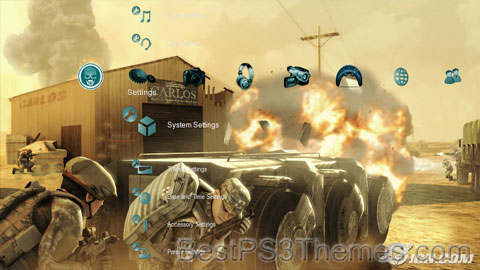
(2 backgrounds)
Copyright (c) 2007. Anoop Menon
p3textractor filename.p3t [destination path]Replace filename with the name of the p3t file, and replace [destination path] with the name of the folder you want the files to be extracted to. A destination path is not required. By default it will extract to extracted.filename.Ghost Recon Advanced Warfighter 2 #2
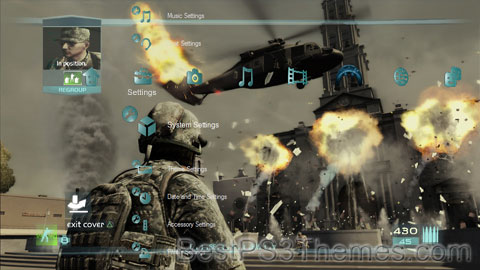
(2 backgrounds)
BioShock
(8 backgrounds)
BioShock 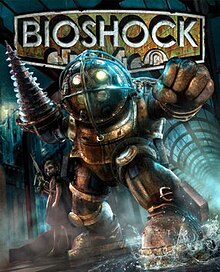
Developer(s) Publisher(s) 2K Director(s) Ken Levine Designer(s) Paul Hellquist Programmer(s) Artist(s) Scott Sinclair Writer(s) Ken Levine Composer(s) Garry Schyman Series BioShock Engine Unreal Engine 2.5[4] Platform(s) Release Genre(s) First-person shooter Mode(s) Single-player Synopsis[edit]
Setting[edit]
Plot[edit]
Gameplay[edit]
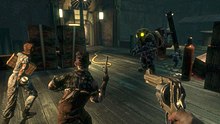
Development[edit]
Game design[edit]
Story and theme development[edit]
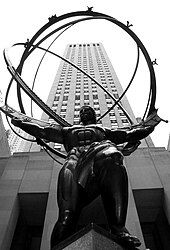
Game engine[edit]
Grand Theft Auto IV #7
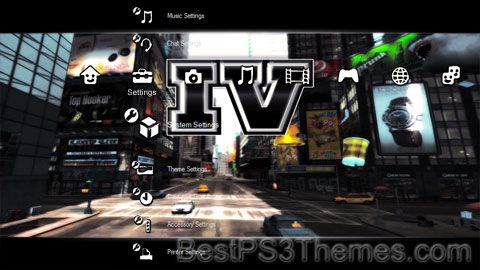
(12 backgrounds)
Grand Theft Auto IV 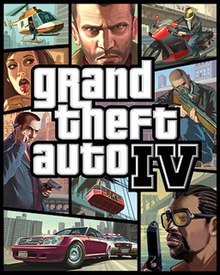
Developer(s) Rockstar North[a] Publisher(s) Rockstar Games Producer(s) Leslie Benzies Programmer(s) Artist(s) Aaron Garbut Writer(s) Composer(s) Michael Hunter Series Grand Theft Auto Engine RAGE Platform(s) Release PlayStation 3, Xbox 360 Genre(s) Action-adventure Mode(s) Single-player, multiplayer Gameplay[edit]

Synopsis[edit]
Setting[edit]
Plot[edit]
Development[edit]

Research and open world design[edit]
Story and character development[edit]
Art design[edit]
Race Driver: Grid V1
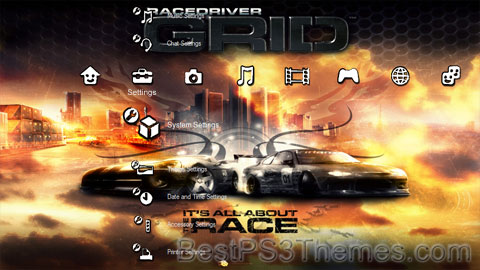
(3 backgrounds)
Copyright (c) 2007. Anoop Menon
p3textractor filename.p3t [destination path]Replace filename with the name of the p3t file, and replace [destination path] with the name of the folder you want the files to be extracted to. A destination path is not required. By default it will extract to extracted.filename.HOME v1
(1 background)
Copyright (c) 2007. Anoop Menon
p3textractor filename.p3t [destination path]Replace filename with the name of the p3t file, and replace [destination path] with the name of the folder you want the files to be extracted to. A destination path is not required. By default it will extract to extracted.filename.Tomb Raider #4
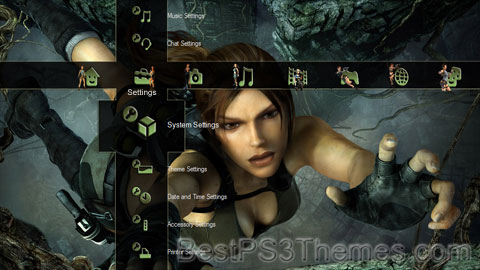
(1 background)
Tomb Raider 
Genre(s) Action-adventure Developer(s) Publisher(s) Platform(s) First release Tomb Raider
25 October 1996Latest release Tomb Raider I–III Remastered
14 February 2024Titles[edit]

1996 Tomb Raider 1997 Tomb Raider II 1998 Tomb Raider III 1999 Tomb Raider: The Last Revelation 2000 Tomb Raider Tomb Raider: Chronicles 2001 Tomb Raider: Curse of the Sword 2002 Tomb Raider: The Prophecy 2003 Tomb Raider: The Angel of Darkness 2004–2005 2006 Tomb Raider: Legend 2007 Tomb Raider: Anniversary 2008 Tomb Raider: Underworld 2009 2010 Lara Croft and the Guardian of Light 2011–2012 2013 Tomb Raider 2014 Lara Croft and the Temple of Osiris 2015 Lara Croft: Relic Run Lara Croft Go Rise of the Tomb Raider 2016–2017 2018 Shadow of the Tomb Raider 2019–2022 2023 Tomb Raider Reloaded The Lara Croft Collection 2024 Tomb Raider I–III Remastered Main series[edit]
Game Boy spin-offs[edit]
Lara Croft subseries[edit]
Other spin-offs[edit]
Cancelled games[edit]
Common elements[edit]
Lara Croft[edit]

Continuity[edit]
Gameplay[edit]

History[edit]
Original series at Core Design (1994–2006)[edit]
Suikoden
(1 background, different for HD and SD)

Suikoden 
Genre(s) Role-playing Developer(s) Konami, Hudson Soft Publisher(s) Konami Creator(s) Yoshitaka Murayama Platform(s) First release Suikoden
December 15, 1995Latest release Genso Suikoden: Tsumugareshi Hyakunen no Toki
February 9, 2012Games[edit]
Main series[edit]
Title
Original release date
Suikoden
December 15, 1995
December 23, 1996
April 11, 1997
Notes:
Suikoden II
December 17, 1998
September 29, 1999
July 28, 2000
Notes:
Suikoden III
July 11, 2002
October 24, 2002
June 23, 2015 (PlayStation Network)
Notes:
Suikoden IV
August 19, 2004
January 11, 2005
February 25, 2005
Notes:
Suikoden V
February 23, 2006
March 21, 2006
September 22, 2006
Notes:
Spin-offs[edit]
Title
Original release date
Gensō Suikogaiden Vol. 1 – Swordsman of Harmonia
September 21, 2000
none
none
Notes:
Gensō Suikogaiden Vol. 2 – Duel at Crystal Valley
March 22, 2001
none
none
Notes:
Gensō Suikoden Card Stories
September 13, 2001
none
none
Notes:
Suikoden Tactics
September 22, 2005
November 8, 2005
February 23, 2006
Notes:
Suikoden Tierkreis
December 18, 2008
March 13, 2009
March 19, 2009
Notes:
Gensō Suikoden: Tsumugareshi Hyakunen no Toki
February 9, 2012
none
none
Notes:
Compilations[edit]
Title
Original release date
Suikoden I & II
February 23, 2006
TBA (remaster)
TBA (remaster)
Notes:
Elements[edit]
Gameplay[edit]
Battle modes[edit]
Development[edit]
Future[edit]
World, setting, and concepts[edit]
The 27 True Runes[edit]
The 108 Stars of Destiny[edit]
Geography[edit]
Music collections[edit]
Publications, adaptations, and other material[edit]
Cameos[edit]
Lunar: The Silver Star and Silver Star Story Complete
(3 backgrounds)
Copyright (c) 2007. Anoop Menon
p3textractor filename.p3t [destination path]Replace filename with the name of the p3t file, and replace [destination path] with the name of the folder you want the files to be extracted to. A destination path is not required. By default it will extract to extracted.filename.