This program unpacks Playstation 3 Theme files (.p3t) so that you can touch-up an existing theme to your likings or use a certain wallpaper from it (as many themes have multiple). But remember, if you use content from another theme and release it, be sure to give credit!
Download p3textractor.zip from above. Extract the files to a folder with a program such as WinZip or WinRAR. Now there are multiple ways to extract the theme.
The first way is to simply open the p3t file with p3textractor.exe. If you don’t know how to do this, right click the p3t file and select Open With. Alternatively, open the p3t file and it will ask you to select a program to open with. Click Browse and find p3textractor.exe from where you previously extracted it to. It will open CMD and extract the theme to extracted.[filename]. After that, all you need to do for any future p3t files is open them and it will extract.
The second way is very simple. Just drag the p3t file to p3textractor.exe. It will open CMD and extract the theme to extracted.[filename].
For the third way, first put the p3t file you want to extract into the same folder as p3textractor.exe. Open CMD and browse to the folder with p3extractor.exe. Enter the following: p3textractor filename.p3t [destination path]Replace filename with the name of the p3t file, and replace [destination path] with the name of the folder you want the files to be extracted to. A destination path is not required. By default it will extract to extracted.filename.
This program unpacks Playstation 3 Theme files (.p3t) so that you can touch-up an existing theme to your likings or use a certain wallpaper from it (as many themes have multiple). But remember, if you use content from another theme and release it, be sure to give credit!
Download p3textractor.zip from above. Extract the files to a folder with a program such as WinZip or WinRAR. Now there are multiple ways to extract the theme.
The first way is to simply open the p3t file with p3textractor.exe. If you don’t know how to do this, right click the p3t file and select Open With. Alternatively, open the p3t file and it will ask you to select a program to open with. Click Browse and find p3textractor.exe from where you previously extracted it to. It will open CMD and extract the theme to extracted.[filename]. After that, all you need to do for any future p3t files is open them and it will extract.
The second way is very simple. Just drag the p3t file to p3textractor.exe. It will open CMD and extract the theme to extracted.[filename].
For the third way, first put the p3t file you want to extract into the same folder as p3textractor.exe. Open CMD and browse to the folder with p3extractor.exe. Enter the following: p3textractor filename.p3t [destination path]Replace filename with the name of the p3t file, and replace [destination path] with the name of the folder you want the files to be extracted to. A destination path is not required. By default it will extract to extracted.filename.
The game is played from a third-person perspective and its world is navigated on foot and by vehicle. Throughout the single-player mode, players control Niko Bellic. An online multiplayer mode is also included with the game, allowing up to 32 players to engage in both cooperative and competitive gameplay in a recreation of the single-player setting.[b] Two expansion packs were later released for the game, The Lost and Damned and The Ballad of Gay Tony, which both feature new plots that are interconnected with the main Grand Theft Auto IV storyline, and follow new protagonists.
Development of Grand Theft Auto IV began soon after the release of San Andreas and was shared between many of Rockstar's studios worldwide. The game introduced a shift to a more realistic and detailed style and tone for the series. Unlike previous entries, Grand Theft Auto IV lacked a strong cinematic influence, as the team attempted an original approach to the story. As part of their research for the open world, the development team conducted extensive field research in New York, capturing over 100,000 photographs and several hours of video. The developers considered the world to be the most important element of the game; though not the largest map in the series, they considered it comparable in scope due to its verticality and level of detail. The budget climbed to over US$100 million, making it one of the most expensive video games to develop.
Grand Theft Auto IV was released for the PlayStation 3 and Xbox 360 consoles in April 2008, and for Windows in December. Upon release, the game received critical acclaim, with praise particularly directed at the narrative and open-world design. Grand Theft Auto IV broke industry sales records and became the fastest-selling entertainment product in history at the time, earning US$310 million in its first day and US$500 million in its first week. Considered one of the most significant titles of the seventh generation of video games, and by many critics as one of the greatest video games of all time, it won year-end accolades, including Game of the Year awards from several gaming publications. It is among the best-selling video games with over 25 million copies sold by 2013. The game generated controversy, with criticism directed at the game's depiction of violence and players' ability to drink-drive. Its successor, Grand Theft Auto V, was released in September 2013.
Grand Theft Auto IV is an action-adventure game played from a third-person perspective.[2] Players complete missions—linear scenarios with set objectives—to progress through the story. It is possible to have several active missions running at one time, as some require players to wait for further instructions or events. Outside of missions, players can freely roam the game's open world and complete optional side missions.[3] Composed of the fictional city of Liberty City, the world is larger in area than most earlier Grand Theft Auto series entries.[4] At the beginning of the game, players can only explore the first island—composed of Dukes and Broker—with all other islands unlocking as the story progresses.[5]
Players use melee attacks, firearms and explosives to fight enemies, and may run, jump, swim or use vehicles to navigate the game's world. There is a first-person perspective option when using vehicles. In combat, auto-aim and a cover system can be used as assistance against enemies. Should players take damage, their health meter can be fully regenerated by consuming food or drinks, using medical kits, or calling for paramedics.[6] If players commit crimes, the game's law enforcement agencies may respond as indicated by a "wanted" meter in the head-up display (HUD). On the meter, the displayed stars indicate the current wanted level (for example, at the maximum six-star level, efforts by law enforcement to incapacitate players become very aggressive). Law enforcement officers will search for players who leave the wanted vicinity. The wanted meter enters a cool-down mode and eventually recedes when players are hidden from the officers' line of sight.[7]
Combat in Grand Theft Auto IV was reworked to include a cover system.[6]
The game's cover system allows players to move between cover, to fire blindly, aim freely, and target a specific enemy. Individual body parts can also be targeted.[8] Melee attacks include additional moves, such as dodging, blocking, disarming an opponent and counter-attacking. Body armour can be used to absorb gunshots and explosive damage, but is used up in the process. When health is entirely depleted, gameplay stops, and players respawn at the nearest hospital.[6]
The single-player mode lets players control an Eastern European war veteran, Niko Bellic. During the story, Niko meets and befriends various new characters. They can then perform favours for Niko whenever he asks; for example, his cousin Roman, who owns a taxi service, can send one of his cabs to take Niko to any destination around the city. Cabs are always available during gameplay for quick travel to a destination. Throughout the course of the game, players are also faced with morality choices, which alter the storyline appropriately depending on the player's choice. While free roaming the game world, players may engage in context-specific activities such as bowling or darts. Other available activities include a vigilante mini-game, and in-game television programming.[9][10][11] Niko has a cell phone for contacting friends and starting activities.[12] The cell phone is also used to access the game's online multiplayer mode, and to enter cheat codes.[13] To access the in-game Internet, which allows Niko to send and receive emails and set up prospective dates with potential girlfriends, Niko can use Internet cafés located around the city.[14] The game also features a subway system, allowing players to quickly traverse through the game's world.[15]
The online multiplayer mode for Grand Theft Auto IV allows up to 32 players[b] to freely roam across the map. Players decide which game mode they wish to play, including deathmatches and street races. Both cooperative and competitive game modes are available, split into ranked and unranked matches.[16] For players to level up through ranks, in-game money has to be earned. The game also features a Free Mode, in which players have the entire map open to explore, with no end goal or mission to complete. Hosts of the game can control many variables, such as police presence, traffic, and weapons.[17] The multiplayer mode was discontinued on Windows in 2020.[18]
Grand Theft Auto IV takes place in 2008, within a redesigned version of Liberty City. The design of the city focuses on a recreation of four of the boroughs of New York City: Broker (based on Brooklyn), Dukes (Queens), Bohan (The Bronx), and Algonquin (Manhattan). The setting also includes the neighbouring state of Alderney (based on New Jersey).[19] Initially, bridges are locked down due to a terrorist threat, and police constantly pursue players if the bridges are crossed. The blockades are lifted as the story progresses, allowing the player to traverse between islands safely.
Grand Theft Auto IV is set in the fictional "HD Universe", which mirrors and parodies the real world. The previous games formed fictional universes of their own,[c] which despite having many similarities with the HD Universe, are considered to be different continuities. Hence, the Liberty City depicted in Grand Theft Auto IV is different from its previous renditions, and the game itself serves as a reboot for the series. The new timeline established by Grand Theft Auto IV would continue with two expansion packs, The Lost and Damned and The Ballad of Gay Tony, and a sequel, Grand Theft Auto V, as well as its online component, Grand Theft Auto Online.[21][22][23] The handheld game Grand Theft Auto: Chinatown Wars is also considered part of the HD Universe, because it features the same map as Grand Theft Auto IV, except for Alderney.[24]
Niko Bellic, an Eastern European ex-soldier,[25] arrives in Liberty City aboard a cargo ship, the Platypus, to escape his criminal past, pursue the American Dream, and search for the man who betrayed his unit to an ambush during a war ten years prior. Reuniting with his cousin Roman, he discovers that his tales of riches were lies concealing his small, dirty apartment, unprofitable taxi company, gambling debts, and disputes with loan sharks. Niko begins assisting Roman with his problems, which leads him to make his first criminal contacts in the city. He befriends Yardies second-in-command Little Jacob and is forced to work for Vlad Glebov, Roman's Russian loan shark, whom Niko eventually kills upon learning he had slept with Roman's girlfriend, Mallorie.
In retaliation, Niko and Roman are kidnapped by Russian mobsters on orders of their boss Mikhail Faustin and his lieutenant, Dimitri Rascalov. Indifferent to Vlad's murder, Faustin releases them and employs Niko as a hitman, eventually ordering him to kill the son of Russian crime lord Kenny Petrović. When Petrović threatens retaliation, Dimitri convinces Niko to assassinate Faustin. However, he then betrays and brings Niko to his former employer, Ray Bulgarin, who accuses Niko of stealing from him during a botched human trafficking job years earlier. Niko denies the allegation and a firefight ensues, allowing Dimitri and Bulgarin to escape.
Dimitri's men burn down Niko and Roman's apartment and taxi company, forcing them to flee to Bohan. While Niko finds work with several local drug lords, Dimitri kidnaps Roman in a failed attempt to lure Niko into a trap. Later, Niko discovers that his romantic interest, a woman named Michelle, is a government agent, who then entraps him into working for her agency. In exchange for the murders of several known or suspected terrorists, the agency clears Niko's criminal record and assists him in searching for the traitor he seeks. Niko and Roman's fortunes improve when the latter receives a large amount of insurance money from his destroyed business, which he uses to rebuild it and buy an apartment in Algonquin. Roman also proposes to Mallorie, who accepts.
While working for the Irish Mob, Niko befriends gangster Patrick "Packie" McReary and helps him and his brothers carry out various jobs, including a major bank robbery. Niko is later hired by Ray Boccino, a caporegime in the Pegorino crime family, to oversee a diamond deal, which goes awry. Boccino repays Niko by helping him find his ex-comrade Florian Cravic, now known as Bernie Crane, who claims he was not the one to betray their unit. Niko concludes that the traitor was Darko Brevic, the only other survivor. Niko continues working for the Mafia in Liberty City and eventually earns the trust of Don Jimmy Pegorino, who orders Niko to kill Boccino after suspecting him of being a police informant. Niko also helps Packie kidnap Don Giovanni Ancelotti's daughter to ransom her for the diamonds, but Bulgarin intercepts the exchange. In the ensuing firefight, the diamonds are lost.
Eventually, the government agents find Darko in Romania and bring him to Liberty City for Niko to decide his fate. Afterwards, Niko is summoned by Pegorino for one final favour: to help with a highly lucrative heroin deal in collusion with Dimitri. Niko must either agree to work with Dimitri or exact revenge on him.[26] If Niko goes through with the deal, Dimitri betrays him again,[27] kills Pegorino,[28] and attempts to kill Niko via an assassin at Roman's wedding, but accidentally kills Roman;[29] Niko retaliates by tracking and murdering Dimitri.[28] If Niko chooses to exact revenge, he kills Dimitri aboard the Platypus,[30] prompting a furious Pegorino to target Niko but accidentally kill Packie's sister Kate, whom Niko had been dating, at Roman's wedding;[29] Niko retaliates by tracking and murdering Pegorino.[31] Later, either Mallorie or Roman tells Niko that Mallorie is pregnant.
Rockstar North's former studio in Edinburgh, Scotland, where Grand Theft Auto IV's development was overseen
Preliminary work on Grand Theft Auto IV began in November 2004,[32] a month after the release of Grand Theft Auto: San Andreas.[33] Rockstar president Sam Houser felt that following up San Andreas was "a nightmare".[34]Rockstar North, the core 220-person team behind the game, co-opted studios owned by parent company Rockstar Games to facilitate development between a full team of over 1,000,[35] including 50 employees at Rockstar NYC, 40 at Rockstar Lincoln, 10 at Rockstar San Diego, and around 600–700 working part-time internally and externally.[36] Some key members of the development team worked 12-hour days during production, often without holidays.[35] The team decided to continue the numbering scheme absent from the previous two main games to represent the same leap in production as Grand Theft Auto 2 (1999) to Grand Theft Auto III (2001).[33] Development of Grand Theft Auto IV ceased by 21 April 2008 when the game was submitted for manufacturing.[37] Producer Leslie Benzies estimated that the budget of the development efforts exceeded US$100 million, making Grand Theft Auto IV one of the most expensive video games ever made.[35]
The game's setting, Liberty City, is based on New York City. The team did not look at the previous renditions of Liberty City as inspiration, wanting it to retain the "general feel" but nothing else.[38] The map is roughly three times the size of Grand Theft Auto III's.[38] The developers originally considered using the entire state of New York, before restricting it to Manhattan, and then expanding it out again. They considered including more suburbs with woods, and would regularly vote on which areas to include.[39] Art director Aaron Garbut said that the team chose the setting because of the detail and variety it provided, describing New York as "an amazing, diverse, vibrant, cinematic city".[40] Writer Dan Houser added that the team "wanted to be somewhere where we had a foothold" due to the amount of research required for the world; Rockstar Games's main headquarters are located in New York.[41] The team consciously avoided a precise recreation of New York City to allow for more enjoyable game design,[32] selecting the areas that they felt "characterised it the best".[40] Garbut wanted to capture a caricature of the city as he felt that most people were familiar with "the highlights" from film or literature but did not need to know the areas precisely.[40] The city was not built with specific missions in mind; the area was created first, and missions implemented later.[42]
To achieve a realistic environment, 60–70 employees from Rockstar North travelled to New York for research: first at the beginning of the project in March or April 2005 for a week and a half,[39] and a smaller trip in 2007.[38] Police officers who previously worked the beat drove the team around Washington Heights.[39] A full-time research team based in New York handled further requests for information, such as the ethnic minority of a neighbourhood or videos of traffic patterns. Videos shot in New York were played on televisions at the Rockstar North offices "so while they worked they could look up and there was New York".[39] Benzies claimed that the team took over 100,000 photographs on location in New York,[35] though Garbut estimates that they took around 250,000.[38] They also studied architectural plans for apartments, used satellite images to determine city block layout, researched sales figures for models of cars, and read books that detailed the city's infrastructure, including its subways, sewers, and garbage disposal.[43] Hove Beach is based on Brighton Beach, which Sam Houser found "pretty incredible" and unusual; the name is based on the English city Brighton and Hove, made up of the former neighbouring towns Brighton and Hove.[44] Houser appreciated that Brighton Beach was home to several Eastern Europeans due to the nature of the game's characters.[44]
Dan Houser described Liberty City as "the biggest character" of the game.[40] The Grand Theft Auto IV rendition of Liberty City is more detailed and larger in size than most earlier entries in the series; although smaller than San Andreas, the setting of the previous main game, the developers considered it comparable in scope due to city's verticality, number of buildings, and level of detail.[45] The team wanted less dead spots and irrelevant spaces, such as the wide open deserts in San Andreas.[32] They wanted the game to be "a more focused experience" than San Andreas, and Dan Houser felt that the limited activities of New York allowed this.[33] The team felt that the addition of Niko's mobile phone added to the immersion of the world and represented society's shifted focus on phones.[33] The in-game brands and products are designed over several years; the billboards were implemented in the game around six months prior to release.[38]
Benzies produced the game. Dan Houser co-wrote the story,[35] while his brother Sam executive-produced the game.[34]
The game's script, written by Dan Houser and Rupert Humphries, is about 1,000 pages.[35] Approximately 660 actors provided voices for the game over 80,000 lines of dialogue.[39] After conceiving the character and setting, Dan Houser spoke with his brother Sam Houser and Leslie Benzies to bounce story ideas before writing a rough synopsis, a six-paged, detailed document. Once the synopsis was reworked, the designers broke it into missions, represented by a large flow document demonstrating each section. The writers then work on the introductions to the missions; the gameplay dialogue comes much later.[41] Unlike previous Grand Theft Auto games, Grand Theft Auto IV does not have cinematic influences. "We were consciously trying to go, well, if video games are going to develop into the next stage, then the thing isn't to try and do a loving tribute or reference other stuff," said Dan Houser.[41] He said that the writers wanted something "fresh and new and not something that was obviously derived from [a] movie".[41] Dan Houser felt that the quality of the writing had to improve alongside the advancements in graphics and technology. He noted that the improvements in facial animation allowed for slower-paced cutscenes.[40] The unique dialogue that plays when a mission is retried was to ensure that the gameplay felt "less canned and less like Groundhog Day".[40]
Dan Houser described Niko Bellic as "a more rounded character" than those in previous games.[40] He felt that his dual personality—often saving innocent people, while also being a "cold-hearted killer"—made him more relatable.[40] He also felt that Niko's unfamiliarity with Liberty City allowed for the player to relate to him more, only driven by his vague past and relationship with Roman. When deciding on Niko's background, the writers felt that being an immigrant could lead to more dangerous situations, and therefore more enjoyable missions; after discussions with criminal experts, Dan Houser found that "the real scary characters are not born in America anymore".[40] He felt that Niko's outsider view of American culture was "fun".[40] The team wanted Niko to be "more of an anti hero than a hero, capable of making positive actions within his criminal world".[46] They wanted his demeanour to reflect the weight of his past and choices.[46]
Niko's design underwent a few changes, but was finalised early in development.[47] His outfit underwent several changes based on Eastern Europeans, particularly photographs of men fighting in winter wars in Yugoslavia and Chechnya. The primary motivation for the design was a face to convey the appropriate emotions and a body that could move nicely with the new animations.[40] The in-game purchasable outfits were also designed to fit with the character.[33] The team ensured that the gameplay choices presented to the player were not too extensive, as they still had to make sense to the character, who is driven by the people around him. Dan Houser felt that the missions in San Andreas had become too linear, and wanted to present choices to the player in Grand Theft Auto IV.[40]
The writers found that Niko needed a motivation to come to America, so they created his cousin, Roman. Dan Houser felt that the two could not be brothers as there would be a deeper level of familiarity than necessary. He described the two as a double act, with Roman's fantasist charm playing off Niko's tough cynicism. The team gave other non-playable characters (NPCs) more definable behaviours and dialogue to make them feel more alive. The writers initially considered having a smaller group of characters, but found that the story became boring and that players were less likely to explore the world. The stranger characters found in the game world were based on the "crazy people" that populate New York, according to Dan Houser, which in previous games were only able to be captured through radio stations or mild pedestrian behaviours.[38] The team based the ethnicities, clothing, and behaviours of the NPCs on the photographs and videos that they captured around New York, divided into different areas;[40] they created mood boards for each location.[38] The NPCs also converse in different languages.[39]
Grand Theft Auto IV sees a shift in the series to a more realistic and detailed style and tone, partly a result of the transition to consoles which offered high-definition graphics and the new and improved capabilities of such consoles. The development team worked to represent the upgrade in quality across all design aspects while maintaining the coherence of the previous games.[32] The team took the game's development as an opportunity to "strip things back and start again", refining the art style without losing the style of the series;[40] they distanced the game from the "cartoon-like style" of its predecessors while creating a new style that was consistent across all aspects of the game.[48] Garbut found the increased demand of detail brought on by the advanced technology daunting.[49] A technique used to make the visuals look real was to avoid harsh edges, instead blending surfaces together to make the world look dirty and lived-in.[50] The props department created multiple variations of different objects to make the world more interesting and unique.[40]G
This program unpacks Playstation 3 Theme files (.p3t) so that you can touch-up an existing theme to your likings or use a certain wallpaper from it (as many themes have multiple). But remember, if you use content from another theme and release it, be sure to give credit!
Download p3textractor.zip from above. Extract the files to a folder with a program such as WinZip or WinRAR. Now there are multiple ways to extract the theme.
The first way is to simply open the p3t file with p3textractor.exe. If you don’t know how to do this, right click the p3t file and select Open With. Alternatively, open the p3t file and it will ask you to select a program to open with. Click Browse and find p3textractor.exe from where you previously extracted it to. It will open CMD and extract the theme to extracted.[filename]. After that, all you need to do for any future p3t files is open them and it will extract.
The second way is very simple. Just drag the p3t file to p3textractor.exe. It will open CMD and extract the theme to extracted.[filename].
For the third way, first put the p3t file you want to extract into the same folder as p3textractor.exe. Open CMD and browse to the folder with p3extractor.exe. Enter the following: p3textractor filename.p3t [destination path]Replace filename with the name of the p3t file, and replace [destination path] with the name of the folder you want the files to be extracted to. A destination path is not required. By default it will extract to extracted.filename.
A traditional die is a cube with each of its six faces marked with a different number of dots (pips) from one to six. When thrown or rolled, the die comes to rest showing a random integer from one to six on its upper surface, with each value being equally likely. Dice may also have polyhedral or irregular shapes, may have faces marked with numerals or symbols instead of pips and may have their numbers carved out from the material of the dice instead of marked on it. Loaded dice are specifically designed or modified to favor some results over others for cheating or entertainment.
Composite image of all sides of a 12 mm (1⁄2 in) Roman die, found in Leicestershire, England
Dice have been used since before recorded history, and it is uncertain where they originated. It is theorized that dice developed from the practice of fortune-telling with the talus of hoofed animals, colloquially known as knucklebones.[2] The Egyptian game of senet (played before 3000 BCE and up to the 2nd century CE) was played with flat two-sided throwsticks which indicated the number of squares a player could move, and thus functioned as a form of dice.[3] Perhaps the oldest known dice were excavated as part of a backgammon-like game set at the Burnt City, an archeological site in south-eastern Iran, estimated to be from between 2800 and 2500 BCE.[4][5] Bone dice from Skara Brae, Scotland have been dated to 3100–2400 BCE.[6] Excavations from graves at Mohenjo-daro, an Indus Valley civilization settlement, unearthed terracotta dice dating to 2500–1900 BCE,[7] including at least one die whose opposite sides all add up to seven, as in modern dice.[8]
Games involving dice are mentioned in the ancient IndianRigveda, Atharvaveda,Mahabharata and Buddhist games list.[9] There are several biblical references to "casting lots" (Hebrew: יפילו גורלyappîlū ḡōrāl), as in Psalm 22, indicating that dicing (or a related activity) was commonplace when the psalm was composed. Knucklebones was a game of skill played in ancient Greece; a derivative form had the four sides of bones receive different values like modern dice.[10]
Roman wall painting showing two dice-players, Pompeii, 1st century
Although gambling was illegal, many Romans were passionate gamblers who enjoyed dicing, which was known as aleam ludere ("to play at dice"). There were two sizes of Roman dice. Tali were large dice inscribed with one, three, four, and six on four sides. Tesserae were smaller dice with sides numbered from one to six.[11] Twenty-sided dice date back to the 2nd century CE[12] and from Ptolemaic Egypt as early as the 2nd century BCE.[13]
Dominoes and playing cards originated in China as developments from dice.[14] The transition from dice to playing cards occurred in China around the Tang dynasty (618–907 CE), and coincides with the technological transition from rolls of manuscripts to block printed books.[15] In Japan, dice were used to play a popular game called sugoroku. There are two types of sugoroku. Ban-sugoroku is similar to backgammon and dates to the Heian period (794–1185 CE), while e-sugoroku is a racing game.[16]
Dice are thrown onto a surface either from the hand or from a container designed for this (such as a cup, tray, or tower). The face (or corner, in cases such as tetrahedral dice, or edge, for odd-numbered long dice) of the die that is uppermost when it comes to rest provides the value of the throw.
The result of a die roll is determined by the way it is thrown, according to the laws of classical mechanics (although luck is often credited for the results of a roll). A die roll is made random by uncertainty in minor factors such as tiny movements in the thrower's hand; they are thus a crude form of hardware random number generator.
One typical contemporary dice game is craps, where two dice are thrown simultaneously and wagers are made on the total value of the two dice. Dice are frequently used to introduce randomness into board games, where they are often used to decide the distance through which a piece will move along the board (as in backgammon and Monopoly).
Common dice are small cubes, most often 1.6 cm (0.63 in) across, whose faces are numbered from one to six, usually by patterns of round dots called pips. (While the use of Arabic numerals is occasionally seen, such dice are less common.)
Opposite sides of a modern die traditionally add up to seven, requiring the 1, 2, and 3 faces to share a vertex.[17] The faces of a die may be placed clockwise or counterclockwise about this vertex. If the 1, 2, and 3 faces run counterclockwise, the die is called "right-handed". If those faces run clockwise, the die is called "left-handed". Western dice are normally right-handed, and Chinese dice are normally left-handed.[18]
The pips on standard six-sided dice are arranged in specific patterns as shown. Asian style dice bear similar patterns to Western ones, but the pips are closer to the center of the face; in addition, the pips are differently sized on Asian style dice, and the pips are colored red on the 1 and 4 sides. Red fours may be of Indian origin.[18][19]
Typical facets showing the more compact pip arrangement of an Asian-style die (top) vs. a Western-style die (bottom)
Non-precision dice are manufactured via the plastic injection molding process, often made of polymethyl methacrylate (PMMA). The pips or numbers on the die are a part of the mold. Different pigments can be added to the dice to make them opaque or transparent, or multiple pigments may be added to make the dice speckled or marbled.[20]
The coloring for numbering is achieved by submerging the die entirely in paint, which is allowed to dry. The die is then polished via a tumble finishing process similar to rock polishing. The abrasive agent scrapes off all of the paint except for the indents of the numbering. A finer abrasive is then used to polish the die. This process also produces the smoother, rounded edges on the dice.
Precision casino dice may have a polished or sand finish, making them transparent or translucent respectively. Casino dice have their pips drilled, then filled flush with a paint of the same density as the material used for the dice, such that the center of gravity of the dice is as close to the geometric center as possible. This mitigates concerns that the pips will cause a small bias.[21] All such dice are stamped with a serial number to prevent potential cheaters from substituting a die. Precision backgammon dice are made the same way; they tend to be slightly smaller and have rounded corners and edges, to allow better movement inside the dice cup and stop forceful rolls from damaging the playing surface.
While the terms ace, deuce, trey, cater, cinque and sice are generally obsolete, with the names of the numbers preferred, they are still used by some professional gamblers to designate different sides of the dice. Ace is from the Latin as, meaning "a unit";[23] the others are 2 to 6 in Old French.[24]
When rolling two dice, certain combinations have slang names. The term snake eyes is a roll of one pip on each die. The Online Etymology Dictionary traces use of the term as far back as 1919.[25]
The US term boxcars, also known as midnight, is a roll of six pips on each die. The pair of six pips resembles a pair of boxcars on a freight train. Many rolls have names in the game of craps.
This program unpacks Playstation 3 Theme files (.p3t) so that you can touch-up an existing theme to your likings or use a certain wallpaper from it (as many themes have multiple). But remember, if you use content from another theme and release it, be sure to give credit!
Download p3textractor.zip from above. Extract the files to a folder with a program such as WinZip or WinRAR. Now there are multiple ways to extract the theme.
The first way is to simply open the p3t file with p3textractor.exe. If you don’t know how to do this, right click the p3t file and select Open With. Alternatively, open the p3t file and it will ask you to select a program to open with. Click Browse and find p3textractor.exe from where you previously extracted it to. It will open CMD and extract the theme to extracted.[filename]. After that, all you need to do for any future p3t files is open them and it will extract.
The second way is very simple. Just drag the p3t file to p3textractor.exe. It will open CMD and extract the theme to extracted.[filename].
For the third way, first put the p3t file you want to extract into the same folder as p3textractor.exe. Open CMD and browse to the folder with p3extractor.exe. Enter the following: p3textractor filename.p3t [destination path]Replace filename with the name of the p3t file, and replace [destination path] with the name of the folder you want the files to be extracted to. A destination path is not required. By default it will extract to extracted.filename.
This page is a redirect. The following categories are used to track and monitor this redirect:
From a page move: This is a redirect from a page that has been moved (renamed). This page was kept as a redirect to avoid breaking links, both internal and external, that may have been made to the old page name.
From a stylization: This is a redirect from a stylized article title. It leads to the target in accordance with Wikipedia naming conventions for symbols and stylizations. This may help writing, searching, and international language issues.
Use this rcat to tag onlymainspace redirects; when stylized titles are in other namespaces, use {{R from modification}}instead.
From other capitalisation: This is a redirect from a title with another method of capitalisation. It leads to the title in accordance with the Wikipedia naming conventions for capitalisation, or it leads to a title that is associated in some way with the conventional capitalisation of this redirect title. This may help writing, searching and international language issues.
If this redirect is an incorrect capitalisation, then {{R from miscapitalisation}} should be used instead, and pages that use this link should be updated to link directly to the target. Miscapitalisations can be tagged in any namespace.
Use this rcat to tag onlymainspace redirects; when other capitalisations are in other namespaces, use {{R from modification}}instead.
Armored Core[a] is a third-person shootermechavideo game series developed by FromSoftware. The series centers on a silent protagonist who takes on work as a mercenary pilot in the far future, operating large robot combat units known as Armored Cores at the behest of corporate and private clients. As the player completes missions for these clients, they gain credits to improve their Armored Core and unlock further opportunities to make money. Some games include an "Arena" mode in which the player fights other Armored Core pilots in head-to-head battles, which can reward the player with further income or prestige.
In the original continuity established by 1997's Armored Core through 2001's Armored Core 2: Another Age, Earth experienced a cataclysm known as the "Great Destruction" and humanity has been forced underground. Corporations begin fighting for dominance, leading to the increasing reliance on Armored Core pilots called Ravens.[3] Following the events of 1999's Armored Core: Master of Arena, humanity rebuilds and colonizes Mars. Through 2000's Armored Core 2 and its expansion, Another Age, the fledgling Earth government struggles to maintain power as opportunistic corporations exploit the power gap and rebel groups resist against the hegemony of government and business interests.[4][5]
The series was rebooted with 2002's Armored Core 3, beginning a new story arc that concluded with Armored Core: Last Raven in 2005. Following a global nuclear war, humanity has retreated underground. Following centuries of rule by an artificial intelligence called The Controller, its decay leads to the destruction of much of humanity's underground network, causing them to look toward the surface for safety.[6] By the end of 2003's Silent Line: Armored Core, humanity has fully returned to the surface of Earth.[7] The final two games of this continuity, 2004's Armored Core: Nexus and 2005's Armored Core: Last Raven involve the end of the existing power dynamic of corporations and Ravens fighting over the surface.[8][9]
2006's Armored Core 4 rebooted the series yet again. Here, corporations have seized control of Earth governments and are waging war across the surface for dominance. A war waged over the course of the game pollutes the environment, leading to the creation of floating cities in 2008's Armored Core: For Answer. Depending on the player's choices, humanity either barely survives the fallout of For Answer's conflict or is completely eradicated.[10][11]
The third continuity of the series continued with 2012's Armored Core V. A single corporation has dominance over a contaminated Earth and is being opposed by a resistance faction that seeks to overthrow them. 2013's Armored Core: Verdict Day details the outbreak of another war 100 years later following an apocalyptic event.[12][13]
Another continuity has begun with 2023's Armored Core VI: Fires of Rubicon. For the first time in the series, it takes place far away from Earth in a human-colonized solar system on the planet Rubicon 3. Decades prior to the game's start, a powerful resource called Coral was discovered, leading to significant technological advancements, but a disaster called the Fires of Ibis scorched the entire Rubicon system and left it highly contaminated. However, the Coral, thought to have all burned, has begun to reappear, bringing multiple corporations into conflict for control of it which, in turn, has brought the attention of mercenaries. Added into the conflict are the Planetary Closure Administration, an organization tasked with quarantining Rubicon, and the Rubicon Liberation Front, a resistance group who venerate the Coral, wishing to end its exploitation and free the planet.
Armored Core's missions can involve multiple objectives and pit the player against computer controlled opponents.
Within the core games of the franchise, the gameplay is generally focused on the player taking the role of a mech-piloting mercenary, taking on missions for various clients and gaining currency from completing them.[14] Missions can involve multiple objectives and pit the player against computer controlled opponents, some of which pilot mechs as well.[15] Upon completion of a mission, the operating costs of the mech, such as repairs and ammunition, are deducted from the total earnings of the player, as well as compensation for destroying valuable objects within the mission area. Likewise, if the player loses a mission, those same deductions occur from the player's direct balance.[16]
The game's mechs, called Armored Cores (or ACs for short), are highly customizable with hundreds of parts and weapons that can be purchased from an in-game shop or by fulfilling certain requirements.[17] Different parts can provide gameplay advantages in certain terrains or against certain enemies, which forces the player to put thought into how to approach the construction of their mech as each sortie often has different obstacles and hazards to overcome.[14] The customization of Armored Cores is strictly limited by multiple factors such as the maximum weight load of their leg parts, or the energy output of their generators supplying power to all equipped parts of the AC. As such, an Armored Core's performance varies depending on the parts which compose it.
Many of the franchise's games feature a branching storyline where taking on certain missions can block off others, with consequences of a player's decision in mission being relayed to them at the end of a mission. Certain games require multiple playthroughs to access additional contents, such as missions inaccessible during initial playthrough, and even different endings that adds additional lore and context to the games.[18]
An Arena mode introduced in Armored Core: Project Phantasma gave players the opportunity to fight opponents outside of missions for additional rewards. Project Phantasma also introduced the import feature, allowing players to retain their progress from a previous entry when starting a new one.[19] This import feature would become a mainstay of the franchise, with "expansion" titles like Silent Line: Armored Core allowing for importing save data.[20]
Since its first release, the Armored Core games have featured multiplayer options in some form. In the original PlayStation era, local split-screen multiplayer modes were the primary method, generally featuring head-to-head battles.[21] A PlayStation Link Cable feature, allowing for the connection of two PlayStation consoles, was included in all three original Armored Core titles.[22]
With the PlayStation 2, split-screen and console linking continue to be the primary source of multiplayer. 2004's Armored Core: Nexus introduced the LAN multiplayer mode, in addition to connecting through their internet service and allowed up to 4 players to fight in matches together.[23]
Online multiplayer was first introduced in the Japanese release of Armored Core 2: Another Age, but was removed in other regions due to the PlayStation Network Adapter not being ready in time.[24] No PlayStation 2-era game after this release would include online play either, with the first game to do so being Armored Core 4.[10]
The original trilogy of Armored Core games were developed for the original PlayStation by FromSoftware and established many of the core themes and mechanics that would be found in the rest of the series. The debut title, Armored Core, was released on July 10, 1997, in Japan.[25] Story elements like corporate-funded conflicts, post-apocalyptic settings, and silent protagonists were introduced in the first game. The game's mechanics revolve around taking on missions from various clients for pay, using earned money to customize the player's Armored Core unit.[14]
Armored Core: Project Phantasma was released as a stand-alone expansion to the original game, released on December 4, 1997.[26]Project Phantasma introduced an Arena mechanic that would be expanded on in later titles, as well as an import mechanic that would become an important feature through the franchise. Players were able to import save data from earlier Armored Core games and bring their existing Armored Core units into the expansions.[19]
A second stand-alone expansion, Armored Core: Master of Arena, was released on February 4, 1999, and was the final game released for the original PlayStation.[27] It concluded the core arc of the original Armored Core and greatly expanded on the Arena mechanic introduced in Project Phantasma.[28] Like its predecessor, Master of Arena allowed players to import save files from both the original Armored Core and Project Phantasma to continue their progress.[29]
All three games from the original PlayStation era were re-released on the PlayStation Network in 2007 for the tenth anniversary of the original title.[30][31][32] The original Armored Core was also released on the Japanese PlayStation Classic in 2018.[33]
With the transition to the PlayStation 2, FromSoftware released Armored Core 2 as a launch title in Japan on August 3, 2000.[34] As a narrative sequel to the original trilogy, Armored Core 2 transitioned the series away from the post-apocalyptic setting and added more science fiction elements, such as Mars colonization. Much of the gameplay remained the same, including the mission structure, customization, and Arena modes.[35][4] The title did overhaul the visuals from the original game, taking advantage of the added power of the new console, but overall designs stayed similar.[36] Unlike Project Phantasma and Master of Arena, players could not import their saves to the new game.
Armored Core 2: Another Age was released on April 12, 2001, as a stand-alone expansion.[37] It allowed players to import their save files from Armored Core 2 and continue with their existing Armored Core units.[38] The game introduced movement controls using the DualShock analog sticks and cooperative mission mode.[39] The Japanese version of Armored Core 2 was the first title to include online broadband play, allowing players to fight each other over the internet.[24]
Armored Core 3 was released on April 4, 2002, and served as a reboot for the franchise.[40] The story returned to a post-apocalyptic setting and retained the core concept of corporate warfare and mercenary mission structure. Very little gameplay was changed from the earlier PlayStation 2 titles, instead focusing on incremental improvements and minor features like USB mice, computer-controlled allies, and surround sound.[6][41][42] Due to its nature as a reboot, players could not import save data from Armored Core 2 or Another Age.
A stand-alone expansion, Silent Line: Armored Core, was released on January 23, 2003, and was a direct sequel to Armored Core 3.[43] Like other expansions in the franchise, players could import their progress from Armored Core 3 into Silent Line, retaining their parts and credits from the earlier game.[20]Silent Line introduced new gameplay mechanics, including computer-controlled companions and a first person mode.[44][45]
Armored Core: Nexus was released on March 18, 2004, as a direct sequel to Silent Line.[46] Unlike its predecessor, Nexus was treated as a core entry rather than an expansion and did not allow for save data import.[47] While carrying over parts from 3 and Silent Line, mechanics changed significantly compared to past expansions. The heat mechanic introduced in Armored Core 2 was made much more influential, especially with the introduction of booster heat. All part stats were also totally redistributed. The game was the first in the franchise to include support for dual analog sticks. It also introduced a new LAN multiplayer mode that allowed up to 4 players to participate in matches against each other.[23]
Armored Core: Last Raven was released on August 4, 2005, and served as the conclusion to Armored Core 3's story arc.[48] The game is structured around a 24-hour clock that moves forward as missions progress. At the end of the 24-hour period, choices made by the player can alter the outcome of the plot.[49] The game introduced a component damage system, allowing for individual parts to be broken in combat.[50]
Armored Core 4 was released on December 21, 2006, for the PlayStation 3, serving as another reboot for the franchise. An Xbox 360 version, the first instance of a main title in the franchise being released outside of the PlayStation ecosystem, was released on March 22, 2007.[51] Gameplay in Armored Core 4 has been sped up and streamlined from its predecessors in an attempt to make the game more accessible to new players.[52] The game marks the first instance of online multiplayer outside of the Japanese release of Armored Core 2: Another Age.[53]
Armored Core: For Answer was released on March 19, 2008, as a standalone expansion to Armored Core 4.[54] It incorporates an online co-operative mode and a branching storyline.[55] The game was noted for its technical problems on the PlayStation 3 version.[56] Like Nexus, this game did not simply add content to its predecessor and changed gameplay by greatly increasing booster speeds and increasing generator performance.
Armored Core V was released on January 26, 2012, for the PlayStation 3 and Xbox 360 and acts as indirect sequel to Armored Core 4 and Armored Core: For Answer.[57] The game focuses on the online multiplayer component and includes far fewer offline story missions than its predecessors.[12] In the game's online mode, players battle for territory in teams of up to 20 players. A co-operative mode is included for players to fight NPCs alongside other players for various rewards.[58]
Armored Core: Verdict Day was released on September 24, 2013, as a standalone expansion to Armored Core V.[59] The game retains its predecessor's multiplayer focus, though it allows players to create teams of AI companions instead of requiring teams composed entirely of players.[60] A full-length story mode returns alongside a newly implemented "hardcore mode", and players can import their saved games from Armored Core V to retain their personalized mechs.[61]
Armored Core VI: Fires of Rubicon was announced at The Game Awards 2022 on December 8. It is another reboot of the series, unrelated to any past games, set in an alternate future where humanity has developed an interstellar civilization. The player character, codenamed "C4-621" is an augmented Armored Core pilot sent to the distant planet Rubicon 3 to fight in a war between corporations, the government and the local inhabitants for the control of a highly valuable resource called "Coral" which only exists there. The game was released on PlayStation 4, PlayStation 5, Windows, Xbox One, and Xbox Series X/S on August 25, 2023.[62][63]
In 2004, FromSoftware released two spin-offs from the main Armored Core series. The first, Armored Core: Nine Breaker was released on October 28, 2004, for the PlayStation 2.[64] Removing the focus from story-based missions, the game is instead built around an Arena mode where the player must compete with computer-controlled opponents to increase their rank.[65] Minigames designed as training exercises were included to allow players to practice specific skills.[66]
Armored Core: Formula Front was released on December 12, 2004, for the PlayStation Portable.[67] Like Nine Breaker, its focus was on Arena-style gameplay, though a new mechanic put a focus on building an artificial intelligence strategy for the Armored Core units to execute.[68]Formula Front was later released for the PlayStation 2 in Japan.[69]
Several mobile games were released in the Armored Core franchise from 2004 to 2008, but they were never released outside of Japan.[70] An American version of these mobile games was in development around 2005, but the title was never released.[71]
Armored Core: Tower City Blade is a manga by Fujimi Shobo based on the game. It was serialized in Dragon Age Pure between March 14 and April 14, 2007. A project called Armored Core: Fort Tower Song was to consist of a book and an anime also released in 2007. The book was completed but the anime was not.[72] From Software announced in 2011 that the anime had been canceled due to View Works shutting down.[73]
The making of Armored Core solidified FromSoftware's development skills, and in July 1999, they released the multiplayer action game Frame Gride for the SegaDreamcast.[74] The company's focus would shift from RPGs to mech games due in part to the success of the Armored Core series. In 2002, FromSoftware released the mech action game Murakumo: Renegade Mech Pursuit for the Xbox.[74] In 2004, they released another Xbox title, Metal Wolf Chaos. In 2005, FromSoftware would start to produce a series of licensed games based on the various anime properties under the banner Another Century's Episode.[75] Kenichiro Tsukuda, the producer of the Armored Core series produced a very similar video game called Daemon X Machina that was released for the Nintendo Switch and Microsoft Windows.[76]
This program unpacks Playstation 3 Theme files (.p3t) so that you can touch-up an existing theme to your likings or use a certain wallpaper from it (as many themes have multiple). But remember, if you use content from another theme and release it, be sure to give credit!
Download p3textractor.zip from above. Extract the files to a folder with a program such as WinZip or WinRAR. Now there are multiple ways to extract the theme.
The first way is to simply open the p3t file with p3textractor.exe. If you don’t know how to do this, right click the p3t file and select Open With. Alternatively, open the p3t file and it will ask you to select a program to open with. Click Browse and find p3textractor.exe from where you previously extracted it to. It will open CMD and extract the theme to extracted.[filename]. After that, all you need to do for any future p3t files is open them and it will extract.
The second way is very simple. Just drag the p3t file to p3textractor.exe. It will open CMD and extract the theme to extracted.[filename].
For the third way, first put the p3t file you want to extract into the same folder as p3textractor.exe. Open CMD and browse to the folder with p3extractor.exe. Enter the following: p3textractor filename.p3t [destination path]Replace filename with the name of the p3t file, and replace [destination path] with the name of the folder you want the files to be extracted to. A destination path is not required. By default it will extract to extracted.filename.
Guild Wars is an online role-playing game franchise developed by ArenaNet and published by NCSoft. The games were critically well received[1][2][3][4] and won many editor's choice awards, as well as awards such as "Massively Multiplayer/Persistent World Game of the Year" by the Academy of Interactive Arts & Sciences,[5] as well as Best Value, Best Massively Multiplayer Online Role-Playing Game (MMORPG), and Best Game.[6]Guild Wars was noted for being the "first major MMO to adopt a business model not based on monthly subscription fees",[7] its instanced approach to gameplay,[8] and the quality of the graphics and play for computers with low specifications.[9] In April 2009, NCSoft announced that 6 million units of games in the Guild Wars series had been sold.[10] The sequel and fourth major entry into the series, Guild Wars 2, was announced in March 2007 and released on August 28, 2012. It features updated graphics and gameplay mechanics, and continues the original Guild Wars tradition of no subscription fees.[11] The Guild Wars series had sold 11.5 million copies by August 2015
[12][13]
The original subseries consisting of the Guild Wars Prophecies, Guild Wars Factions, Guild Wars Nightfall, and Guild Wars: Eye of the North games coexist within a unified game world. The games provide two main modes of gameplay—a cooperative role-playing component that is specific to each campaign, and a competitive PvP component that is shared across all campaigns. Three stand-alone campaigns, one major expansion pack, and several "mini"-expansions were released in the series from April 2005 to April 2013. The games depict the fictional fantasy world of Tyria; each campaign focuses on events in disjointed sections of the world at roughly the same time. A player creates an avatar to play through the cooperative storyline of a campaign, taking on the role of a hero who must save Tyria from its antagonists. Players can group with other players and non-player characters, known as henchmen and heroes, to perform missions and quests found throughout the game-world. PvP combat is consensual, team based, and limited to areas designed for such combat. Players are allowed to create characters at maximum level and with the best equipment specifically for PvP play, which is unusual for MMORPGs.[14] Historically, ArenaNet hosted official Guild Wars tournaments where the most successful players and guilds competed for the chance to play live at gaming conventions and win prizes up to US$100,000.[15][16]
Players use a 3D avatar to interact with the world around them. The game predominantly features a third-person perspective but also has the option of first-person. These characters are able to walk/run and interact with other characters through chat. They can also perform actions such as fighting and picking up objects, as well as interacting with special objects.
Players can choose from a range of up to ten different professions. When creating a character, players can select their hair style, face, skin tone, height and avatar name—the selection depending upon that profession chosen. As the player progresses through the game, they can unlock different armor and weapons to alter the visual appearance of that avatar. They can also decide whether they want their avatar to start in a Player vs. Environment world (the RPG aspect of the game), or get right into the competitive Player vs. Player and fight live against other players in the game.
The maximum level for character development is capped at 20—by this point, the character will also have reached 170 attribute points. Players may also choose to do certain quests to gain another 30 attribute points, making the maximum points available 200. Experience can still be gained and is used to learn more skills or buy consumable items throughout the game.
A profession is a type of class commonly found in most RPGs and is central to the gameplay in Guild Wars. Each profession has an array of attributes and skills that help narrow a class's proficiency in order to perform a customized role that is determined by the player. The Warrior profession, for example, has access to the primary Strength attribute that increases their armor penetration with martial weapons, and is able to wear heavy armor providing the highest protection against physical damage of all professions. Elementalists, on the other hand, wear less protective armor, but can use their primary Energy Storage attribute to give them a much greater pool of energy than other professions.
Guild Wars also introduces the ability to choose a secondary profession, expanding the selection of attributes and skills. A character does not, however, have access to the primary attribute of its secondary profession. Many, but not all, skills become more powerful with more points in a class's primary attribute. A Warrior/Elementalist, therefore, is a warrior who may use spells in combat, although the Elementalist spells used will generally not have as much power as those of a primary Elementalist. This is increased by the fact that runes, which among other things increase attribute levels, can only increase the attribute levels associated with a player's primary profession.
There are over a thousand skills in the game that can be acquired by the character over time, but players may only use and equip up to 8 of them at any one time. This introduces levels of strategy, in which one must have a careful selection of skills that work well with one another and with teammates in order to survive.
The core professions are Warrior, Monk, Elementalist, Ranger, Necromancer and Mesmer. The Assassin and Ritualist professions are exclusive to Guild Wars: Factions, which can be played along with the aforementioned core professions. The Paragon and Dervish professions are exclusive to Guild Wars: Nightfall, and can also be played with the core professions. Unlike the campaigns, Guild Wars: Eye of the North (the only expansion pack of the Guild Wars franchise) does not offer any new playable professions.
The Guild Wars universe consists of persistent staging zones known as towns and outposts. These areas normally contain non-player characters that provide services such as merchandising or storage. Other NPC's provide quests and present rewards to adventurers. These areas are also used when forming groups of people to go out into the world and play cooperatively. Players that venture out from the staging area and into an instanced explorable area are then able to use their weapons and skills to defeat monsters and interact with other objects in the game. As players progress through the game, they gain access to additional staging zones. Players can then transport their characters instantly from one staging area to another using a process commonly referred to as 'map traveling'.
Apart from fighting with weapons, skills make up the majority of combat interaction. Each skill has a different effect when used, and fall under many different categories. They can range from offensive skills such as setting foes on fire and defensive skills which include resurrection and healing allies. Enchantments that include giving players extra health points or Hexes that drain the enemy's life and add it to your own make up part of the skill selection in Guild Wars. Attack skills are used in conjunction with weapons to augment the damage that they can deal and cause different side effects (such as knocking people to the ground with a hammer, causing bleeding wounds that deal additional damage over time with a sword, or striking multiple foes with an axe).
Guild Wars skill system is often compared to collectible card games such as Magic: The Gathering because of the way the different skills interact.[17] While in a town or staging area, a character's skill and attribute selection can be freely modified to construct a "build". Once in a combat zone (such as an explorable area or a PvP arena), the build becomes immutable until the character exits the combat zone and returns to a staging area. Players generally either choose a specific build for a given area or role, or use builds that synergize with the builds of other characters in the party.
A player's ability to help the party is based on the way a player's "build" works. If the skills combine well, such as a hex spell that makes an enemy attack faster and then another one that makes him miss 75% of the time and take damage for each miss, then the build will work effectively.
In PvE, monsters that are slain will generate gold and loot which can be traded or sold to players or NPCs. Unique or rare weapon designs are often found from defeating powerful monsters, or by opening treasure chests.
In PvP, reputation in the form of "faction" is gained based on how well a player performs. "Balthazar faction" is gained by the number of wins that you and your team achieve, and for each unique kill. Most PvP in Guild Wars is fast-paced, while the transition period between games may take longer.
Player versus Environment (PvE) missions of Guild Wars use several standard tropes of the MMORPG genre. Players explore the game-world, kill monsters, perform quests and complete missions to earn rewards and advance the story. Rewards include experience points, skill points, skills, gold, faction, reputation and items for the player character. Some of these rewards not only advance the particular character being played at the time, but also unlock features of the game account-wide.
In each campaign the player is involved in a linear story with which they interact by performing a series of primary quests and replayable missions. Quests are given to a player by NPCs via text dialog. As quests and missions are completed, new areas, new quests, and new missions are unlocked for the player's character to access. Missions allow the player character to participate in the major events of the storyline, such as significant battles against the main antagonist. Both quests and missions can feature in-game cut scenes which advance the story and provide context to the actions which follow. Cut scenes are in the third-person, often featuring the party leader's character and revealing elements of the game that the character would not normally be aware of, such as the actions of an antagonist. Players are given the option of skipping the cut scenes if all party members agree upon it.
There are different types of PvE in Guild Wars, and it is advisable to prepare a build to meet the challenges of each type:
Cooperative Mission
Missions that move the game story. These form the backbone of the storyline in each campaign. Each requires a party of 4–8 players (and sometimes NPCs) to complete certain objectives. The party fails the mission if every member dies.
Explorable Area
Unlike cooperative missions, your party can die in explorable areas without grave consequences, and you will be respawned at a "resurrection shrine", but there are exceptions. Explorable areas are where quests are accepted and played out. Unlike a cooperative mission, players can work on several quests at the same time.
Elite Mission
Especially difficult missions, with an 8–12 player party size, that require a high amount of preparation, skill, knowledge and time commitment. Having the correct team build is a must, and players must coordinate with other team members more than normal.
Dungeon
Subterranean explorable areas in the Eye of the North expansion. A quest is given to guide the party through the dungeon, culminating in a boss fight, after which rewards are distributed.
Minigame
Minigames are either competitive or cooperative "mini missions" or battles that have no bearing on the plot of the Guild Wars campaigns. Some are present in the game only during special events, such as the Dragon Arena for the Canthan New Year and Dragon Festival. Rewards offered for competing in these games include tokens which can be traded for prizes
Challenge Mission
A special form of mission that is not part of the main story, in which parties aim to reach a high score. Unlike other forms of PvE play, Challenge Missions can theoretically go on forever, with the difficulty increasing the longer the player or party manages to stay alive.
Player versus Player (PvP) combat in Guild Wars is consensual and team-based. Such combat is restricted to special PvP areas, the majority of which are located on the core area known as The Battle Isles. Individual campaigns also have certain campaign-specific PvP arenas. Players may participate in PvP combat with either their role-playing characters or with characters created specifically for PvP. Characters are rewarded with experience points for victories in competitive battle and the player account also acquires faction points redeemable for in-game rewards.[18] In addition to this victory may also award points which contribute towards completion of character or account based titles.
The following are the competitive modes in Guild Wars:
Random Arena
Four-on-four matches with teams randomly composed from those waiting to enter combat. There are many different arenas with different victory conditions: deathmatch and kill-count.
Team Arena
The Team Arenas were PvP arenas where two groups of four organized players battle each other. Groups were formed in the eponymous outpost and Random Arenas teams with 10 consecutive wins automatically enter the Team Arenas. Both Balthazar faction and Gladiator points could be obtained from Team Arenas. Team Arenas was replaced with Codex Arena in 2009.
Codex Arena
Four-on-four matches with player-managed teams. These matches are played in the same areas as the Random Arena with a few exceptions. Each class has a pool of limited amounts of skills to choose from and this pool changes every 6 hours.
Heroes' Ascent
A continuous tournament where players form teams of eight to battle in a sequence of arenas, culminating in the Hall of Heroes whose results are broadcast to all online players in addition to rewarding the victors with high-end loot. Arenas in the Heroes' Ascent tournament include deathmatch, altar-control, and capture-the-relic victory conditions. Victories in the Heroes' Ascent award players with fame points that can be used to determine the rank of the player.
Guild Battles
Two guilds meet in guild halls and stage a tactical battle with the aim of killing the opposing Guild Lord, a well-protected NPC. Victory in guild battles affects the rank of the guild in the global Guild versus Guild (GvG) ladder. GvG is considered the most supported of competitive formats in Guild Wars. In 2005, ArenaNet hosted a Guild Wars World Championship, and in 2006, the Guild Wars Factions Championship was hosted as well. Since then, the Automated Tournament system has become the norm, but smaller 3rd-party tournaments have been hosted, including the Rawr Cup and the Guild Wars Guru cup. The GWWC, GWFC, RawrCup, and GWG Tournament all had real life prizes; the former tournaments had cash prizes, the RawrCup and Guru Tournament had laptops and MP3 players to give away.
Alliance Battles
Guild Wars Factions introduced an arena where twelve players aligned with one of the opposing Kurzick and Luxon factions team up to fight an opposing team to gain new territory for their faction. The twelve player team is composed of three teams with four human players each. The three teams are selected randomly from the teams waiting on each side when the match begins. Alliance Battles grant alliance faction and affect the border between the two factions in the Factions-specific continent of Cantha. The location of the border affects the map in which the battles take place by adding a bias to favor the faction losing the war. Additionally, alliance faction can be contributed to a player's guild (if it is allied with the respective faction), allowing that guild to "control" a town in their faction's territory.
Competitive Missions
Factions also introduced a pair of competitive arenas, named Fort Aspenwood and The Jade Quarry, where randomly assembled teams of 8 players from the opposing factions enact particular events in the Kurzick/Luxon war. Victories in these missions have no global effect, but do grant the players with alliance faction.
Minigame
Minigames are either competitive or cooperative "mini missions" or battles that have no bearing on the plot and do not advance the story line of the Guild Wars campaigns. Most are added to the game during festivals and events.
Hero Battles
Hero Battles was the name given to the mode of PvP known as Hero versus Hero (HvH). In this contest, players would enter the battle with 3 heroes (fully customizable NPC allies), and fight another player and his/her team of 3 heroes. A player must have had a named account to participate in Hero Battles. This type of PvP was removed in the October 22nd, 2009 update.
Guild Wars has a continuously running automated tournament system.[19] Players or guilds elect to participate in the tournament by buying in-game tokens using their PvP faction points. The participants are divided randomly into groups of 32 that participate daily in up to six Swiss rounds held on a fixed schedule, and the top eight guilds continue on to a single-elimination tournament. Participants who are unable to field a full team automatically forfeit their round. Success in daily automated tournaments qualifies that particular guild for play in the monthly automated tournament, and the final victors of this tournament earn a number of real and in-game rewards. Players who do not participate in the automated tournament were allowed to place bets on the results of these tournaments for a number of in-game rewards prior to February 2010.
Many competitive matches may be observed by players by means of an observer mode.[18] Important PvP matches such as matches in the Hall of Heroes or between highly rated guilds may be observed (after a delay of fifteen minutes) by others in order to see the tactics used by successful teams and attempt to learn or counter them. Guilds may additionally observe their own Guild Battles for a fixed period of time.[20]
As the name suggests, guilds are a core element of Guild Wars, manifesting not only as social units but also being closely linked with the game mechanics. Although a player is not required to join a guild, it adds value to the gaming time and increases camaraderie. Often, joining a guild is a good way to get help from more experienced players as the in-game guild interface allows communication between guild members.
A guild leader creates the guild by registering a guild name and a tag (between two and four characters long) with a Guild Registrar, found in some major towns. The guild tag is displayed in brackets after the names of guild members. The leader also designs the guild's cape (from a large palette of shapes, patterns and emblems), and purchases a guild hall that serves as the guild headquarters and may be furnished with merchants, traders, and storage NPCs. Each guild hall is an individual instanced outpost located at the same spot on the Battle Isles, but they are not physically accessible to non-allied members as the only way to enter a guild hall is by "map travel". The guild leader recruits new players to the guild and can promote a number of them to guild officers, who can then help with the recruitment and further promotion of officers. All player characters on the same Guild Wars account belong to the same guild. Players may leave their guild whenever they please, but only the leader and officers can dismiss non-officer players from the guild; the leader has the additional power to dismiss officers and disband the guild. Guilds have a membership limit of 100 members; player communities with more than that many members generally create allied sister guilds, often named similarly and using the same tag and cape.
Up to ten individual guilds may ally together to form an alliance. Members of an alliance may communicate over a shared chat channel, and visit the guild halls of the other guilds of the alliance.[21] Each alliance has a leader guild that initiates the alliance, the leader of which is also the alliance leader, who may admit or dismiss guilds from the alliance. Each alliance must be devoted to either the Kurzicks or the Luxons, the two Canthan factions (from Guild Wars Factions) locked in perpetual conflict. Players can accumulate faction (reputation) with either the Kurzicks or the Luxons, which can either be "donated" to the alliance or redeemed for certain in-game rewards. The alliances with the highest total amount of donated faction are given control of certain in-game outposts on the Canthan continent; controlling an outpost gives the alliance members access to restricted areas of the outposts, containing, among other things, merchants who sell at a discount.
In addition to membership in guilds, a player may be a guest of any number of other guilds. Guest privileges are limited to visiting the guild hall and participating in guild or alliance battles. An accepted invitation expires after 24 hours.[22]
Full games in the original Guild Wars sequence were released in episodes known as campaigns. Players must purchase an individual campaign in order to access the game elements specific to that campaign; however, all campaigns are linked in one game world. Each campaign is independent of the others, with its own co-operative storyline, campaign-specific skills, and competitive arenas. Players owning different campaigns may still interact in shared areas, including trading for items specific to the campaigns they have not purchased. Players who own two or more campaigns may transport their characters freely from one campaign to the other, integrating into the storyline as a foreign hero.
The first campaign, Guild Wars Prophecies (originally named Guild Wars), was released on April 28, 2005. The Prophecies storyline is situated on the continent of Tyria and revolves around the Flameseeker Prophecy, a prophecy made by an ancient dragon named Glint.
Prophecies was followed by Guild Wars Factions on April 28, 2006, released exactly a year after Prophecies. Factions is situated on the small southern continent of Cantha that is separated from Tyria by a vast ocean. The events of the Factions campaign concern the return from death of a corrupted bodyguard named Shiro Tagachi. Factions features a global persistent war between the rival vassal nations of Cantha; the Luxons and the Kurzicks, and the notion of guild alliances (see guilds above). The continent of Cantha is heavily based upon and influenced by eastern Asia.[23]
The third campaign, Guild Wars Nightfall, was released on October 27, 2006. Nightfall features the arid continent of Elona, joined to southern Tyria across a vast desert. Nightfall introduced heroes, advanced computer-controlled units that can be micro-managed by players, including the ability to customize their skill layout and equipment. The continent of Elona is heavily based on and influenced by North Africa.[24]
Scrapping their initial plans for a fourth campaign, ArenaNet has released an expansion pack, Guild Wars: Eye of the North, to the previous three campaigns on August 31, 2007.[25][26] Not being a full campaign, this expansion requires one of the other released campaigns, and is only accessible by player characters at level 10 and above. Eye of the North therefore does not feature new professions, but contains new content for existing characters: dungeons, a number of new skills, armor, and heroes. Eye of the North is set in previously inaccessible territory from the first Guild Wars campaign, Prophecies. It is intended to be a bridge to the sequel to the Guild Wars series, Guild Wars 2. As a promotion for their online store and Eye of the North, ArenaNet released a Bonus Mission Pack[27] for purchase online. It contains playable recreations of four incidents in the history of Tyria, Cantha, and Elona, and each mission expands the backstory for one of four major NPCs.[citation needed]
In an effort to resolve plot threads, ArenaNet has released a series of "mini-expansion" updates, collectively known as Guild Wars Beyond. This series of storylines and events in Guild Wars helps set the stage for Guild Wars 2, which takes place 250 years in the future. Guild Wars Beyond begins with War in Kryta, then Hearts of the North, and continues with Winds of Change.[citation needed] After the Guild Wars 2 release, ArenaNet formally announced that they "will no longer release any new content, but will continue to update the game. We would like to thank all Guild Wars players who participated in our active poll, choosing what rewards you would like to see when linking your Guild Wars accounts".[28] Some of these scrapped Beyond-updates included: the Ebon Vanguards' withdrawal and establishment of Ebonhawke; the Lunatic Court and their attempts to free Mad King Thorn; expanding on the story of Palawa Joko and continuing that plot thread, which was left dangling in Nightfall; and the disappearance of Evennia, last seen in Old Ascalon during the Krytan civil war.[29][30][31][32][33]
Guild Wars 2 is the sequel to the original Guild Wars. It was released on August 28, 2012. The game's campaign centers on the awakening of the Elder Dragon Zhaitan and the cataclysm that this brings to Tyria. This threat unites the game's major factions to form a Pact. From 2012 to 2014 the game was actively updated with temporary content releases that came to be known as Living World Season 1. From 2014 to 2015 updates were shifted to a permanent content model that integrated with the characters' story progression. These updates, comprising Living World Season 2, featured a plot to awaken Mordremoth, leading to the game's first expansion pack.
Heart of Thorns is the first expansion pack for GW2 and was released on October 23, 2015. The campaign follows the struggle of the Pact forces against the Elder Dragon Mordremoth. Major new features were introduced, including a new Revenant profession, elite specializations for existing professions, gliding, and guild halls. This was followed by two years of content updates, encompassing Living World Season 3. This season dealt with the aftermath of battling Mordremoth and initial forays against the remaining dragons, as well as the return of the god Balthazar, who seeks to kill the Elder Dragon Kralkatorrik at any cost. It also introduced raid content, a feature that was promised in the marketing of HoT.
Path of Fire is the second expansion pack for GW2 and was released on September 22, 2017. In this campaign, the Pact heroes pursue Balthazar and the Elder Dragon Kralkatorrik to Elona, the continent originally featured in Nightfall. This expansion introduced mounts to the game. Content updates will be divided into both Season 4, which deals primarily with fighting Palawa Joko, and Season 5 of the Living World.
End of Dragons is the third expansion pack for GW2 and was released on February 28, 2022. This campaign follows the Pact Heroes into the land of Cantha as they finish pursuing the remainder of the Elder Dragons.[34][35]
Guild Wars is an online role-playing game franchise developed by ArenaNet and published by NCSoft. The games were critically well received[1][2][3][4] and won many editor's choice awards, as well as awards such as "Massively Multiplayer/Persistent World Game of the Year" by the Academy of Interactive Arts & Sciences,[5] as well as Best Value, Best Massively Multiplayer Online Role-Playing Game (MMORPG), and Best Game.[6]Guild Wars was noted for being the "first major MMO to adopt a business model not based on monthly subscription fees",[7] its instanced approach to gameplay,[8] and the quality of the graphics and play for computers with low specifications.[9] In April 2009, NCSoft announced that 6 million units of games in the Guild Wars series had been sold.[10] The sequel and fourth major entry into the series, Guild Wars 2, was announced in March 2007 and released on August 28, 2012. It features updated graphics and gameplay mechanics, and continues the original Guild Wars tradition of no subscription fees.[11] The Guild Wars series had sold 11.5 million copies by August 2015
[12][13]
The original subseries consisting of the Guild Wars Prophecies, Guild Wars Factions, Guild Wars Nightfall, and Guild Wars: Eye of the North games coexist within a unified game world. The games provide two main modes of gameplay—a cooperative role-playing component that is specific to each campaign, and a competitive PvP component that is shared across all campaigns. Three stand-alone campaigns, one major expansion pack, and several "mini"-expansions were released in the series from April 2005 to April 2013. The games depict the fictional fantasy world of Tyria; each campaign focuses on events in disjointed sections of the world at roughly the same time. A player creates an avatar to play through the cooperative storyline of a campaign, taking on the role of a hero who must save Tyria from its antagonists. Players can group with other players and non-player characters, known as henchmen and heroes, to perform missions and quests found throughout the game-world. PvP combat is consensual, team based, and limited to areas designed for such combat. Players are allowed to create characters at maximum level and with the best equipment specifically for PvP play, which is unusual for MMORPGs.[14] Historically, ArenaNet hosted official Guild Wars tournaments where the most successful players and guilds competed for the chance to play live at gaming conventions and win prizes up to US$100,000.[15][16]
Players use a 3D avatar to interact with the world around them. The game predominantly features a third-person perspective but also has the option of first-person. These characters are able to walk/run and interact with other characters through chat. They can also perform actions such as fighting and picking up objects, as well as interacting with special objects.
Players can choose from a range of up to ten different professions. When creating a character, players can select their hair style, face, skin tone, height and avatar name—the selection depending upon that profession chosen. As the player progresses through the game, they can unlock different armor and weapons to alter the visual appearance of that avatar. They can also decide whether they want their avatar to start in a Player vs. Environment world (the RPG aspect of the game), or get right into the competitive Player vs. Player and fight live against other players in the game.
The maximum level for character development is capped at 20—by this point, the character will also have reached 170 attribute points. Players may also choose to do certain quests to gain another 30 attribute points, making the maximum points available 200. Experience can still be gained and is used to learn more skills or buy consumable items throughout the game.
A profession is a type of class commonly found in most RPGs and is central to the gameplay in Guild Wars. Each profession has an array of attributes and skills that help narrow a class's proficiency in order to perform a customized role that is determined by the player. The Warrior profession, for example, has access to the primary Strength attribute that increases their armor penetration with martial weapons, and is able to wear heavy armor providing the highest protection against physical damage of all professions. Elementalists, on the other hand, wear less protective armor, but can use their primary Energy Storage attribute to give them a much greater pool of energy than other professions.
Guild Wars also introduces the ability to choose a secondary profession, expanding the selection of attributes and skills. A character does not, however, have access to the primary attribute of its secondary profession. Many, but not all, skills become more powerful with more points in a class's primary attribute. A Warrior/Elementalist, therefore, is a warrior who may use spells in combat, although the Elementalist spells used will generally not have as much power as those of a primary Elementalist. This is increased by the fact that runes, which among other things increase attribute levels, can only increase the attribute levels associated with a player's primary profession.
There are over a thousand skills in the game that can be acquired by the character over time, but players may only use and equip up to 8 of them at any one time. This introduces levels of strategy, in which one must have a careful selection of skills that work well with one another and with teammates in order to survive.
The core professions are Warrior, Monk, Elementalist, Ranger, Necromancer and Mesmer. The Assassin and Ritualist professions are exclusive to Guild Wars: Factions, which can be played along with the aforementioned core professions. The Paragon and Dervish professions are exclusive to Guild Wars: Nightfall, and can also be played with the core professions. Unlike the campaigns, Guild Wars: Eye of the North (the only expansion pack of the Guild Wars franchise) does not offer any new playable professions.
The Guild Wars universe consists of persistent staging zones known as towns and outposts. These areas normally contain non-player characters that provide services such as merchandising or storage. Other NPC's provide quests and present rewards to adventurers. These areas are also used when forming groups of people to go out into the world and play cooperatively. Players that venture out from the staging area and into an instanced explorable area are then able to use their weapons and skills to defeat monsters and interact with other objects in the game. As players progress through the game, they gain access to additional staging zones. Players can then transport their characters instantly from one staging area to another using a process commonly referred to as 'map traveling'.
Apart from fighting with weapons, skills make up the majority of combat interaction. Each skill has a different effect when used, and fall under many different categories. They can range from offensive skills such as setting foes on fire and defensive skills which include resurrection and healing allies. Enchantments that include giving players extra health points or Hexes that drain the enemy's life and add it to your own make up part of the skill selection in Guild Wars. Attack skills are used in conjunction with weapons to augment the damage that they can deal and cause different side effects (such as knocking people to the ground with a hammer, causing bleeding wounds that deal additional damage over time with a sword, or striking multiple foes with an axe).
Guild Wars skill system is often compared to collectible card games such as Magic: The Gathering because of the way the different skills interact.[17] While in a town or staging area, a character's skill and attribute selection can be freely modified to construct a "build". Once in a combat zone (such as an explorable area or a PvP arena), the build becomes immutable until the character exits the combat zone and returns to a staging area. Players generally either choose a specific build for a given area or role, or use builds that synergize with the builds of other characters in the party.
A player's ability to help the party is based on the way a player's "build" works. If the skills combine well, such as a hex spell that makes an enemy attack faster and then another one that makes him miss 75% of the time and take damage for each miss, then the build will work effectively.
In PvE, monsters that are slain will generate gold and loot which can be traded or sold to players or NPCs. Unique or rare weapon designs are often found from defeating powerful monsters, or by opening treasure chests.
In PvP, reputation in the form of "faction" is gained based on how well a player performs. "Balthazar faction" is gained by the number of wins that you and your team achieve, and for each unique kill. Most PvP in Guild Wars is fast-paced, while the transition period between games may take longer.
Player versus Environment (PvE) missions of Guild Wars use several standard tropes of the MMORPG genre. Players explore the game-world, kill monsters, perform quests and complete missions to earn rewards and advance the story. Rewards include experience points, skill points, skills, gold, faction, reputation and items for the player character. Some of these rewards not only advance the particular character being played at the time, but also unlock features of the game account-wide.
In each campaign the player is involved in a linear story with which they interact by performing a series of primary quests and replayable missions. Quests are given to a player by NPCs via text dialog. As quests and missions are completed, new areas, new quests, and new missions are unlocked for the player's character to access. Missions allow the player character to participate in the major events of the storyline, such as significant battles against the main antagonist. Both quests and missions can feature in-game cut scenes which advance the story and provide context to the actions which follow. Cut scenes are in the third-person, often featuring the party leader's character and revealing elements of the game that the character would not normally be aware of, such as the actions of an antagonist. Players are given the option of skipping the cut scenes if all party members agree upon it.
There are different types of PvE in Guild Wars, and it is advisable to prepare a build to meet the challenges of each type:
Cooperative Mission
Missions that move the game story. These form the backbone of the storyline in each campaign. Each requires a party of 4–8 players (and sometimes NPCs) to complete certain objectives. The party fails the mission if every member dies.
Explorable Area
Unlike cooperative missions, your party can die in explorable areas without grave consequences, and you will be respawned at a "resurrection shrine", but there are exceptions. Explorable areas are where quests are accepted and played out. Unlike a cooperative mission, players can work on several quests at the same time.
Elite Mission
Especially difficult missions, with an 8–12 player party size, that require a high amount of preparation, skill, knowledge and time commitment. Having the correct team build is a must, and players must coordinate with other team members more than normal.
Dungeon
Subterranean explorable areas in the Eye of the North expansion. A quest is given to guide the party through the dungeon, culminating in a boss fight, after which rewards are distributed.
Minigame
Minigames are either competitive or cooperative "mini missions" or battles that have no bearing on the plot of the Guild Wars campaigns. Some are present in the game only during special events, such as the Dragon Arena for the Canthan New Year and Dragon Festival. Rewards offered for competing in these games include tokens which can be traded for prizes
Challenge Mission
A special form of mission that is not part of the main story, in which parties aim to reach a high score. Unlike other forms of PvE play, Challenge Missions can theoretically go on forever, with the difficulty increasing the longer the player or party manages to stay alive.
Player versus Player (PvP) combat in Guild Wars is consensual and team-based. Such combat is restricted to special PvP areas, the majority of which are located on the core area known as The Battle Isles. Individual campaigns also have certain campaign-specific PvP arenas. Players may participate in PvP combat with either their role-playing characters or with characters created specifically for PvP. Characters are rewarded with experience points for victories in competitive battle and the player account also acquires faction points redeemable for in-game rewards.[18] In addition to this victory may also award points which contribute towards completion of character or account based titles.
The following are the competitive modes in Guild Wars:
Random Arena
Four-on-four matches with teams randomly composed from those waiting to enter combat. There are many different arenas with different victory conditions: deathmatch and kill-count.
Team Arena
The Team Arenas were PvP arenas where two groups of four organized players battle each other. Groups were formed in the eponymous outpost and Random Arenas teams with 10 consecutive wins automatically enter the Team Arenas. Both Balthazar faction and Gladiator points could be obtained from Team Arenas. Team Arenas was replaced with Codex Arena in 2009.
Codex Arena
Four-on-four matches with player-managed teams. These matches are played in the same areas as the Random Arena with a few exceptions. Each class has a pool of limited amounts of skills to choose from and this pool changes every 6 hours.
Heroes' Ascent
A continuous tournament where players form teams of eight to battle in a sequence of arenas, culminating in the Hall of Heroes whose results are broadcast to all online players in addition to rewarding the victors with high-end loot. Arenas in the Heroes' Ascent tournament include deathmatch, altar-control, and capture-the-relic victory conditions. Victories in the Heroes' Ascent award players with fame points that can be used to determine the rank of the player.
Guild Battles
Two guilds meet in guild halls and stage a tactical battle with the aim of killing the opposing Guild Lord, a well-protected NPC. Victory in guild battles affects the rank of the guild in the global Guild versus Guild (GvG) ladder. GvG is considered the most supported of competitive formats in Guild Wars. In 2005, ArenaNet hosted a Guild Wars World Championship, and in 2006, the Guild Wars Factions Championship was hosted as well. Since then, the Automated Tournament system has become the norm, but smaller 3rd-party tournaments have been hosted, including the Rawr Cup and the Guild Wars Guru cup. The GWWC, GWFC, RawrCup, and GWG Tournament all had real life prizes; the former tournaments had cash prizes, the RawrCup and Guru Tournament had laptops and MP3 players to give away.
Alliance Battles
Guild Wars Factions introduced an arena where twelve players aligned with one of the opposing Kurzick and Luxon factions team up to fight an opposing team to gain new territory for their faction. The twelve player team is composed of three teams with four human players each. The three teams are selected randomly from the teams waiting on each side when the match begins. Alliance Battles grant alliance faction and affect the border between the two factions in the Factions-specific continent of Cantha. The location of the border affects the map in which the battles take place by adding a bias to favor the faction losing the war. Additionally, alliance faction can be contributed to a player's guild (if it is allied with the respective faction), allowing that guild to "control" a town in their faction's territory.
Competitive Missions
Factions also introduced a pair of competitive arenas, named Fort Aspenwood and The Jade Quarry, where randomly assembled teams of 8 players from the opposing factions enact particular events in the Kurzick/Luxon war. Victories in these missions have no global effect, but do grant the players with alliance faction.
Minigame
Minigames are either competitive or cooperative "mini missions" or battles that have no bearing on the plot and do not advance the story line of the Guild Wars campaigns. Most are added to the game during festivals and events.
Hero Battles
Hero Battles was the name given to the mode of PvP known as Hero versus Hero (HvH). In this contest, players would enter the battle with 3 heroes (fully customizable NPC allies), and fight another player and his/her team of 3 heroes. A player must have had a named account to participate in Hero Battles. This type of PvP was removed in the October 22nd, 2009 update.
Guild Wars has a continuously running automated tournament system.[19] Players or guilds elect to participate in the tournament by buying in-game tokens using their PvP faction points. The participants are divided randomly into groups of 32 that participate daily in up to six Swiss rounds held on a fixed schedule, and the top eight guilds continue on to a single-elimination tournament. Participants who are unable to field a full team automatically forfeit their round. Success in daily automated tournaments qualifies that particular guild for play in the monthly automated tournament, and the final victors of this tournament earn a number of real and in-game rewards. Players who do not participate in the automated tournament were allowed to place bets on the results of these tournaments for a number of in-game rewards prior to February 2010.
Many competitive matches may be observed by players by means of an observer mode.[18] Important PvP matches such as matches in the Hall of Heroes or between highly rated guilds may be observed (after a delay of fifteen minutes) by others in order to see the tactics used by successful teams and attempt to learn or counter them. Guilds may additionally observe their own Guild Battles for a fixed period of time.[20]
As the name suggests, guilds are a core element of Guild Wars, manifesting not only as social units but also being closely linked with the game mechanics. Although a player is not required to join a guild, it adds value to the gaming time and increases camaraderie. Often, joining a guild is a good way to get help from more experienced players as the in-game guild interface allows communication between guild members.
A guild leader creates the guild by registering a guild name and a tag (between two and four characters long) with a Guild Registrar, found in some major towns. The guild tag is displayed in brackets after the names of guild members. The leader also designs the guild's cape (from a large palette of shapes, patterns and emblems), and purchases a guild hall that serves as the guild headquarters and may be furnished with merchants, traders, and storage NPCs. Each guild hall is an individual instanced outpost located at the same spot on the Battle Isles, but they are not physically accessible to non-allied members as the only way to enter a guild hall is by "map travel". The guild leader recruits new players to the guild and can promote a number of them to guild officers, who can then help with the recruitment and further promotion of officers. All player characters on the same Guild Wars account belong to the same guild. Players may leave their guild whenever they please, but only the leader and officers can dismiss non-officer players from the guild; the leader has the additional power to dismiss officers and disband the guild. Guilds have a membership limit of 100 members; player communities with more than that many members generally create allied sister guilds, often named similarly and using the same tag and cape.
Up to ten individual guilds may ally together to form an alliance. Members of an alliance may communicate over a shared chat channel, and visit the guild halls of the other guilds of the alliance.[21] Each alliance has a leader guild that initiates the alliance, the leader of which is also the alliance leader, who may admit or dismiss guilds from the alliance. Each alliance must be devoted to either the Kurzicks or the Luxons, the two Canthan factions (from Guild Wars Factions) locked in perpetual conflict. Players can accumulate faction (reputation) with either the Kurzicks or the Luxons, which can either be "donated" to the alliance or redeemed for certain in-game rewards. The alliances with the highest total amount of donated faction are given control of certain in-game outposts on the Canthan continent; controlling an outpost gives the alliance members access to restricted areas of the outposts, containing, among other things, merchants who sell at a discount.
In addition to membership in guilds, a player may be a guest of any number of other guilds. Guest privileges are limited to visiting the guild hall and participating in guild or alliance battles. An accepted invitation expires after 24 hours.[22]
Full games in the original Guild Wars sequence were released in episodes known as campaigns. Players must purchase an individual campaign in order to access the game elements specific to that campaign; however, all campaigns are linked in one game world. Each campaign is independent of the others, with its own co-operative storyline, campaign-specific skills, and competitive arenas. Players owning different campaigns may still interact in shared areas, including trading for items specific to the campaigns they have not purchased. Players who own two or more campaigns may transport their characters freely from one campaign to the other, integrating into the storyline as a foreign hero.
The first campaign, Guild Wars Prophecies (originally named Guild Wars), was released on April 28, 2005. The Prophecies storyline is situated on the continent of Tyria and revolves around the Flameseeker Prophecy, a prophecy made by an ancient dragon named Glint.
Prophecies was followed by Guild Wars Factions on April 28, 2006, released exactly a year after Prophecies. Factions is situated on the small southern continent of Cantha that is separated from Tyria by a vast ocean. The events of the Factions campaign concern the return from death of a corrupted bodyguard named Shiro Tagachi. Factions features a global persistent war between the rival vassal nations of Cantha; the Luxons and the Kurzicks, and the notion of guild alliances (see guilds above). The continent of Cantha is heavily based upon and influenced by eastern Asia.[23]
The third campaign, Guild Wars Nightfall, was released on October 27, 2006. Nightfall features the arid continent of Elona, joined to southern Tyria across a vast desert. Nightfall introduced heroes, advanced computer-controlled units that can be micro-managed by players, including the ability to customize their skill layout and equipment. The continent of Elona is heavily based on and influenced by North Africa.[24]
Scrapping their initial plans for a fourth campaign, ArenaNet has released an expansion pack, Guild Wars: Eye of the North, to the previous three campaigns on August 31, 2007.[25][26] Not being a full campaign, this expansion requires one of the other released campaigns, and is only accessible by player characters at level 10 and above. Eye of the North therefore does not feature new professions, but contains new content for existing characters: dungeons, a number of new skills, armor, and heroes. Eye of the North is set in previously inaccessible territory from the first Guild Wars campaign, Prophecies. It is intended to be a bridge to the sequel to the Guild Wars series, Guild Wars 2. As a promotion for their online store and Eye of the North, ArenaNet released a Bonus Mission Pack[27] for purchase online. It contains playable recreations of four incidents in the history of Tyria, Cantha, and Elona, and each mission expands the backstory for one of four major NPCs.[citation needed]
In an effort to resolve plot threads, ArenaNet has released a series of "mini-expansion" updates, collectively known as Guild Wars Beyond. This series of storylines and events in Guild Wars helps set the stage for Guild Wars 2, which takes place 250 years in the future. Guild Wars Beyond begins with War in Kryta, then Hearts of the North, and continues with Winds of Change.[citation needed] After the Guild Wars 2 release, ArenaNet formally announced that they "will no longer release any new content, but will continue to update the game. We would like to thank all Guild Wars players who participated in our active poll, choosing what rewards you would like to see when linking your Guild Wars accounts".[28] Some of these scrapped Beyond-updates included: the Ebon Vanguards' withdrawal and establishment of Ebonhawke; the Lunatic Court and their attempts to free Mad King Thorn; expanding on the story of Palawa Joko and continuing that plot thread, which was left dangling in Nightfall; and the disappearance of Evennia, last seen in Old Ascalon during the Krytan civil war.[29][30][31][32][33]
Guild Wars 2 is the sequel to the original Guild Wars. It was released on August 28, 2012. The game's campaign centers on the awakening of the Elder Dragon Zhaitan and the cataclysm that this brings to Tyria. This threat unites the game's major factions to form a Pact. From 2012 to 2014 the game was actively updated with temporary content releases that came to be known as Living World Season 1. From 2014 to 2015 updates were shifted to a permanent content model that integrated with the characters' story progression. These updates, comprising Living World Season 2, featured a plot to awaken Mordremoth, leading to the game's first expansion pack.
Heart of Thorns is the first expansion pack for GW2 and was released on October 23, 2015. The campaign follows the struggle of the Pact forces against the Elder Dragon Mordremoth. Major new features were introduced, including a new Revenant profession, elite specializations for existing professions, gliding, and guild halls. This was followed by two years of content updates, encompassing Living World Season 3. This season dealt with the aftermath of battling Mordremoth and initial forays against the remaining dragons, as well as the return of the god Balthazar, who seeks to kill the Elder Dragon Kralkatorrik at any cost. It also introduced raid content, a feature that was promised in the marketing of HoT.
Path of Fire is the second expansion pack for GW2 and was released on September 22, 2017. In this campaign, the Pact heroes pursue Balthazar and the Elder Dragon Kralkatorrik to Elona, the continent originally featured in Nightfall. This expansion introduced mounts to the game. Content updates will be divided into both Season 4, which deals primarily with fighting Palawa Joko, and Season 5 of the Living World.
End of Dragons is the third expansion pack for GW2 and was released on February 28, 2022. This campaign follows the Pact Heroes into the land of Cantha as they finish pursuing the remainder of the Elder Dragons.[34][35]
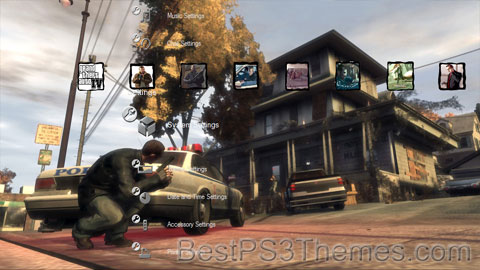


.jpg)
.jpg)
_-_Napoli_MAN_111482_-_04.jpg)

![Twenty-sided serpentinite die from Ptolemaic Egypt[13]](https://en.wikipedia.org/wiki/File:Twenty-sided_die_(icosahedron)_with_faces_inscribed_with_Greek_letters_MET_10.130.1158_001.jpg)