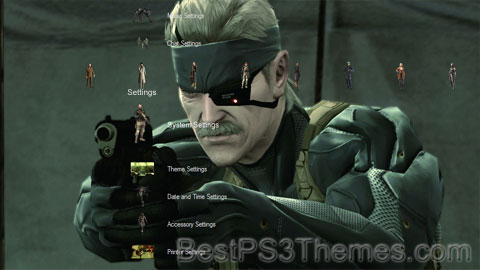
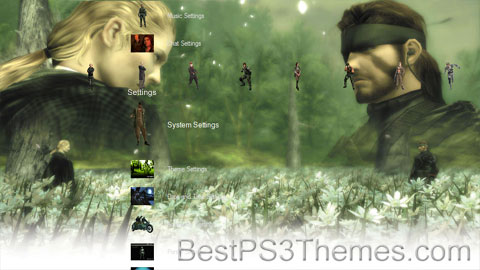
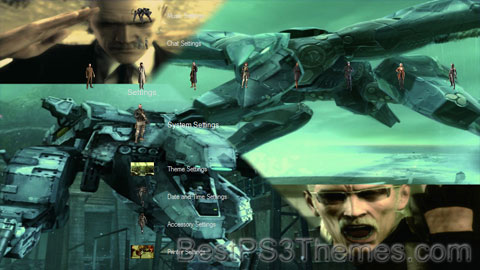
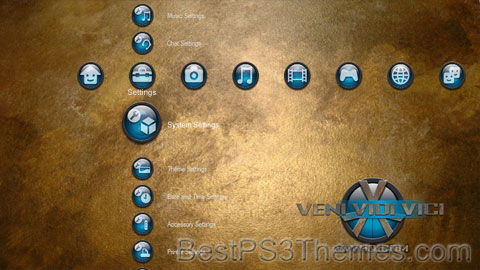
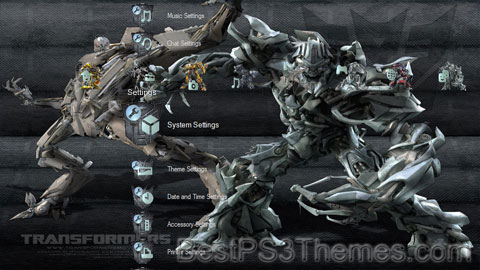
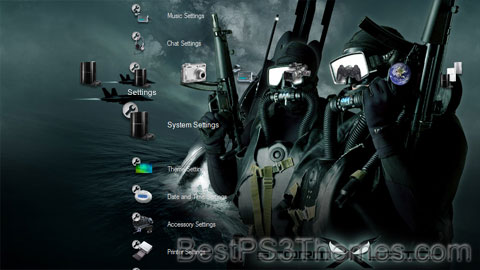
This program unpacks Playstation 3 Theme files (.p3t) so that you can touch-up an existing theme to your likings or use a certain wallpaper from it (as many themes have multiple). But remember, if you use content from another theme and release it, be sure to give credit!
Download p3textractor.zip from above. Extract the files to a folder with a program such as WinZip or WinRAR. Now there are multiple ways to extract the theme.
The first way is to simply open the p3t file with p3textractor.exe. If you don’t know how to do this, right click the p3t file and select Open With. Alternatively, open the p3t file and it will ask you to select a program to open with. Click Browse and find p3textractor.exe from where you previously extracted it to. It will open CMD and extract the theme to extracted.[filename]. After that, all you need to do for any future p3t files is open them and it will extract.
The second way is very simple. Just drag the p3t file to p3textractor.exe. It will open CMD and extract the theme to extracted.[filename].
For the third way, first put the p3t file you want to extract into the same folder as p3textractor.exe. Open CMD and browse to the folder with p3extractor.exe. Enter the following: p3textractor filename.p3t [destination path]Replace filename with the name of the p3t file, and replace [destination path] with the name of the folder you want the files to be extracted to. A destination path is not required. By default it will extract to extracted.filename.
Street Fighter is one of the highest-grossing video game franchises of all time and one of Capcom's flagship series, with total sales of 54 million units worldwide as of March 2024[update].[2] It is also one of the highest-grossing media franchises of all time.
Street Fighter, designed by Takashi Nishiyama and Hiroshi Matsumoto, debuted in arcades in 1987.[3][4] The player controls martial artist Ryu to compete in a worldwide martial arts tournament spanning five countries and 10 opponents. A second player can control Ryu's friendly American rival, Ken Masters. The player can perform three punch and kick attacks, each varying in speed and strength, and three special attacks: the Hadōken, Shōryūken, and Tatsumaki Senpūkyaku, performed by executing special joystick and button combinations.[5]
Street Fighter II: The World Warrior is the first one-on-one fighting game to give players a choice from a variety of player characters with different moves, allowing for more varied matches. Each player character has a unique fighting style with approximately 30 or more moves, including new grappling moves and throws, and two or three special attacks. In the single-player mode, the player character is pitted sequentially against the seven other main characters before confronting the final four bosses, exclusively CPU-controlled. As in the original, a second player can join anytime for competitive matches.[citation needed]
The original Japanese version of Street Fighter II introduced an African-American boxerboss character that shared the physical characteristics and likeness of real-life boxer Mike Tyson. (The character was originally named "Mike Bison". To avoid a likeness infringement lawsuit, Capcom rotated the names of three of the boss characters for international versions of the game. The final boss, named Vega in the Japanese version, was given the M. Bison name, the talon-wielding Spanish warrior, named Balrog in the Japanese version, was renamed Vega and the boxer became Balrog.[8] In a 2019 interview, Mike Tyson himself was asked about the "Mike Bison" character design, and revealed that he was "honored by the impersonation".[9])
Street Fighter II eclipsed its predecessor in popularity, eventually turning Street Fighter into a multimediafranchise.[10] It had an unexpectedly phenomenal impact on gaming. More than $10 billion in inflation-adjusted revenue as of 2017 was grossed from all versions, mostly from arcades.[11] More than 14 million cartridges were sold for the Super Nintendo Entertainment System and Sega Genesis/Mega Drive.[12]
The first official update to the series was Street Fighter II: Champion Edition, pronounced Street Fighter II Dash in Japan, as noted by the prime notation on the logo. The four computer-controlled boss characters are human-playable and two players can choose the same character, leaving one character with an alternate color pattern. It has slightly improved graphics, including differently colored backgrounds and refined gameplay. A second upgrade, Street Fighter II: Hyper Fighting (Street Fighter II Dash Turbo in Japan), was produced in response to the various bootleg editions of the game. Hyper Fighting offers faster gameplay than its predecessors, different character costume colors and new special techniques. Super Street Fighter II: The New Challengers, the third revision, gives the game a complete graphical and musical overhaul and introduces four new playable characters. It is also the first game for Capcom's CP System II arcade hardware. The fifth arcade installment, Super Street Fighter II Turbo, Super Street Fighter II X in Japan, brings back the faster gameplay of Hyper Fighting, a new type of special techniques known as "Super Combos" and a hidden character, Akuma.[citation needed]
Numerous home versions of the Street Fighter II games have been produced following the release of the original game. The original version, Street Fighter II: The World Warrior, was ported to the Super NES in 1992, which is Capcom's best-selling game as of 2008[update].[12] A Japanese-only port of Street Fighter II Dash for the PC Engine came in 1993. That year, two home versions of Hyper Fighting were released: Street Fighter II Turbo for Super NES and Street Fighter II: Special Champion Edition (Street Fighter II Dash Plus in Japan) for Genesis. The following game, Super Street Fighter II, was also ported to the Super NES and Genesis in 1994. That year, Super Street Fighter II Turbo was released for the 3DO Interactive Multiplayer and for Windows, released by the now-defunct GameTek.[citation needed]
In 1997, Capcom released the Street Fighter Collection for the PlayStation and Sega Saturn. This is a compilation including Super and Super Turbo, and Street Fighter Alpha 2 Gold (Street Fighter Zero 2′ (Dash) in Japan), an updated version of Street Fighter Alpha 2. It was followed by Street Fighter Collection 2 (Capcom Generation Vol. 5 in Japan), also released for the PlayStation and Saturn, which includes the original Street Fighter II, Champion Edition, and Hyper Fighting. In 2000, Capcom released Super Street Fighter II X for Matching Service exclusively in Japan for the Dreamcast. This version of the game features an online two-player versus mode. In 2003, Capcom released Hyper Street Fighter II: The Anniversary Edition for the arcades in Japan and Asia to commemorate the 15th anniversary of the series. As the final arcade installment, the game is a hybrid version of Super Turbo, which allows players to select between versions of characters from all five previous Street Fighter II games. Hyper was released in North America and the PAL region via its ports for the PlayStation 2 and the Xbox, released as part of the Street Fighter Anniversary Collection along with Street Fighter III: 3rd Strike. In 2005, the three games in Street Fighter Collection 2 were included in Capcom Classics Collection Vol. 1 for PlayStation 2 and Xbox. A version of Super Turbo, along with the original Street Fighter, was later included in the 2007 compilation Capcom Classics Collection Vol. 2, also released for the PlayStation 2 and Xbox. Street Fighter II and Super Street Fighter II are also available as downloadable games for select cellular phone services.[citation needed]
An updated version of Super Street Fighter II Turbo came to the PlayStation Network and Xbox Live Arcade services in 2008.[13] The game, Super Street Fighter II Turbo HD Remix, has fully redrawn artwork, including HD sprites 4.5x the original size, drawn by artists from UDON. This is the first time the Street Fighter characters have had new sprites, drawn by Capcom, since Capcom vs. SNK 2 in 2001. The game has several changes which address character balancing issues, but also features the original arcade version gameplay so that players can choose between the two.[14]
Ultra Street Fighter II: The Final Challengers is an updated version of 1994's Super Street Fighter II Turbo for the Nintendo Switch. The game features two graphical styles—classic pixel art and updated high-definition art. New gameplay mechanics and modes have been introduced and tweaks have been made to the game's balance. It has two more characters, who are classic alternate evil form of the classic characters Ryu and Ken, Evil Ryu and Violent Ken, and Akuma is now playable.[citation needed]
Street Fighter Alpha: Warriors' Dreams (Street Fighter Zero in Asia and Mexico), was released in 1995. It uses the same character designs Capcom previously employed in Darkstalkers and X-Men: Children of the Atom, with settings and character designs heavily influenced by Street Fighter II: The Animated Movie. Alpha expands on the Super Combo system from Super Turbo by extending Super Combo meter into three levels, allowing for super combos to be stored up and introducing Alpha Counters and Chain Combos, also from Darkstalkers. The plot of Alpha is set between the first two Street Fighter games and fleshes out the backstories and grudges held by many of the classic Street Fighter II characters.[15] It has a playable roster of ten immediately playable characters and three unlockable fighters, comprising not only younger versions of established characters, but also characters from the original Street Fighter and Final Fight, such as Adon and Guy.[citation needed]
Street Fighter Alpha 2 has all-new stages, music, and endings for some characters, some of which overlap with those from the original Alpha.[16] It also discards the Chain Combo system in favor of Custom Combos, which requires a portion of the Super Combo meter to be used. Alpha 2 retains all 13 characters from the original and adds five new characters to the roster along with hidden versions of returning characters. Alpha 2 is followed by a slightly enhanced arcade release, Street Fighter Zero 2 Alpha, released in Japan and Brazil, ported to home consoles as Street Fighter Alpha 2 Gold and Zero 2′ Dash in Japan.[citation needed]
The third and final Alpha game, Street Fighter Alpha 3, was released in 1998 following the release of the original Street Fighter III: 2nd Impact and Street Fighter EX. Alpha 3 introduces three selectable fighting styles and further expands the playable roster to 28 characters.[17] Console versions of the three games, including the original Alpha 2 and Alpha 2 Gold, were released for the PlayStation and Sega Saturn, although versions of specific games in the series were also released for the Game Boy Color, Super NES, Dreamcast, and Windows. The home console versions of Alpha 3 further expands the character roster by adding the remaining "New Challengers" from Super Street Fighter II. The Dreamcast version of the game was backported to the arcades in Japan as Street Fighter Zero 3 Upper. A version of Upper, titled Alpha 3 outside Japan, was released for the Game Boy Advance and added three characters from Capcom vs. SNK 2. A PlayStation Portable version, Alpha 3 MAX, or Zero 3 Double Upper in Japan, contains the added characters from the GBA version and Ingrid from Capcom Fighting Jam.[citation needed]
In 1996, Capcom co-produced a 3D fighting game Street Fighter EX with Arika, a company founded by Street Fighter II planner Akira Nishitani. It was developed for the PlayStation-based ZN-1 hardware. EX combined the established Street Fighter cast with original characters created and owned by Arika. It was followed by an upgraded version, Street Fighter EX Plus, in 1997, which expanded the character roster. A home version with additional features and characters, Street Fighter EX Plus Alpha, was released for the PlayStation during the same year.[citation needed]
A sequel was released in 1998, Street Fighter EX2, developed for the ZN-2 hardware. Custom combos were reintroduced and the character roster was expanded upon even further. In 1999, EX2 also received an upgraded version, Street Fighter EX2 Plus. A port of EX2 Plus was released for the PlayStation in 1999.[citation needed]
The third game in the series, Street Fighter EX3, was released as a launch game for the PlayStation 2 in 2000. This game included a tag team system, a mode that let a single player fight up to three opponents simultaneously, and another mode that allowed players to give the new character, Ace, a selection of special and super moves after purchasing them with experience points. The cast included many characters from the previous game.[citation needed]
Some of the Arika-owned characters from the series were later featured in other games developed by the company. The Namco-distributed arcade game Fighting Layer featured Allen Snider and Blair Dame from the original EX, while Skullomania would reappear in the PlayStation game Fighter Maker. A spiritual successor to Fighting Layer, featuring an initial roster consisting entirely of Arika-owned EX characters, Fighting EX Layer, was released in 2018.[18]
Capcom produced fighting games involving licensed characters from other companies and their own properties. In 1994, Capcom released the Marvel-licensed fighting game X-Men: Children of the Atom, which features Akuma from Super Turbo as a hidden character. It was followed by Marvel Super Heroes in 1995, which features Anita from Night Warriors
This page is a redirect. The following categories are used to track and monitor this redirect:
From an ambiguous term: This is a redirect from an ambiguous page name to a page or list that disambiguates it. These redirects are pointed to by links that should always be disambiguated. Therefore, this template should never appear on a page that has "(disambiguation)" in its title – in that case use {{R to disambiguation page}}instead.
From the plural form: This is a redirect from a plural noun to its singular form.
This redirect link is used for convenience; it is often preferable to add the plural directly after the link (for example, [[link]]s). However, do not replace these redirected links with a simpler link unless the page is updated for another reason (see WP:NOTBROKEN).
Use this rcat to tag onlymainspace redirects; when plural forms are found in other namespaces, use {{R from modification}}instead.
When appropriate, protection levels are automatically sensed, described and categorized.
This program unpacks Playstation 3 Theme files (.p3t) so that you can touch-up an existing theme to your likings or use a certain wallpaper from it (as many themes have multiple). But remember, if you use content from another theme and release it, be sure to give credit!
Download p3textractor.zip from above. Extract the files to a folder with a program such as WinZip or WinRAR. Now there are multiple ways to extract the theme.
The first way is to simply open the p3t file with p3textractor.exe. If you don’t know how to do this, right click the p3t file and select Open With. Alternatively, open the p3t file and it will ask you to select a program to open with. Click Browse and find p3textractor.exe from where you previously extracted it to. It will open CMD and extract the theme to extracted.[filename]. After that, all you need to do for any future p3t files is open them and it will extract.
The second way is very simple. Just drag the p3t file to p3textractor.exe. It will open CMD and extract the theme to extracted.[filename].
For the third way, first put the p3t file you want to extract into the same folder as p3textractor.exe. Open CMD and browse to the folder with p3extractor.exe. Enter the following: p3textractor filename.p3t [destination path]Replace filename with the name of the p3t file, and replace [destination path] with the name of the folder you want the files to be extracted to. A destination path is not required. By default it will extract to extracted.filename.
This program unpacks Playstation 3 Theme files (.p3t) so that you can touch-up an existing theme to your likings or use a certain wallpaper from it (as many themes have multiple). But remember, if you use content from another theme and release it, be sure to give credit!
Download p3textractor.zip from above. Extract the files to a folder with a program such as WinZip or WinRAR. Now there are multiple ways to extract the theme.
The first way is to simply open the p3t file with p3textractor.exe. If you don’t know how to do this, right click the p3t file and select Open With. Alternatively, open the p3t file and it will ask you to select a program to open with. Click Browse and find p3textractor.exe from where you previously extracted it to. It will open CMD and extract the theme to extracted.[filename]. After that, all you need to do for any future p3t files is open them and it will extract.
The second way is very simple. Just drag the p3t file to p3textractor.exe. It will open CMD and extract the theme to extracted.[filename].
For the third way, first put the p3t file you want to extract into the same folder as p3textractor.exe. Open CMD and browse to the folder with p3extractor.exe. Enter the following: p3textractor filename.p3t [destination path]Replace filename with the name of the p3t file, and replace [destination path] with the name of the folder you want the files to be extracted to. A destination path is not required. By default it will extract to extracted.filename.
Transformers is a media franchise produced by American toy company Hasbro and Japanese toy company Takara Tomy. It primarily follows the heroic Autobots and the villainous Decepticons, two alien robot factions at war that can transform into other forms, such as vehicles and animals. The franchise encompasses toys, animation, comic books, video games and films. As of 2011, it generated more than ¥2 trillion ($25 billion) in revenue,[1] making it one of the highest-grossing media franchises of all time.
The franchise began in 1984 with the Transformers toy line, comprising transforming mecha toys from Takara's Diaclone and Micro Change toylines rebranded for Western markets.[2] The term "Generation 1" covers both the animated television series The Transformers and the comic book series of the same name, which are further divided into Japanese, British and Canadian spin-offs, respectively. Sequels followed, such as the Generation 2 comic book and Beast Wars TV series, which became its own mini-universe. Generation 1 characters have been rebooted multiple times in the 21st century in comics from Dreamwave Productions (starting 2001), IDW Publishing (starting in 2005 and again in 2019), and Skybound Entertainment (beginning in 2023). There have been other incarnations of the story based on different toy lines during and after the 20th century. The first was the Robots in Disguise series, followed by three shows (Armada, Energon, and Cybertron) that constitute a single universe called the "Unicron Trilogy".
A live-action film series started in 2007, again distinct from previous incarnations, while the Transformers: Animated series merged concepts from the G1 continuity, the 2007 live-action film and the "Unicron Trilogy". For most of the 2010s, in an attempt to mitigate the wave of reboots, the "Aligned Continuity" was established. In 2018, Transformers: Cyberverse debuted, once again, distinct from the previous incarnations.
Classic Transformers franchise logo used until 2014Spider-Man battles Megatron on the cover of The Transformers #3.
Generation One is a retroactive term for the Transformers characters that appeared between 1984 and 1993. The Transformers began with the 1980s Japanese toy lines Micro Change and Diaclone. They presented robots able to transform into everyday vehicles, electronic items or weapons. Hasbro bought the Micro Change and Diaclone toys, and partnered with Takara.[4]Marvel Comics was hired by Hasbro to create the backstory; editor-in-chief Jim Shooter wrote an overall story, and gave the task of creating the characters to writer Dennis O'Neil.[5] Unhappy with O'Neil's work (although O'Neil created the name "Optimus Prime"), Shooter chose Bob Budiansky to create the characters.[6]
The Transformersmecha were largely designed by Shōji Kawamori, the creator of the Japanese mecha anime franchise Macross (which was adapted into the Robotech franchise in North America).[7] Kawamori came up with the idea of transforming mechs while working on the Diaclone and Macross franchises in the early 1980s (such as the VF-1 Valkyrie in Macross and Robotech), with his Diaclone mechs later providing the basis for Transformers.[8]
The primary concept of Generation One is that the heroic Optimus Prime, the villainous Megatron, and their finest soldiers crash-land on prehistoric Earth in the Ark and the Nemesis before awakening in 1985, Cybertron hurtling through the Neutral zone as an effect of the war. The Marvel comic was originally part of the main Marvel Universe, with appearances from Spider-Man and Nick Fury, plus some cameos,[9] as well as a visit to the Savage Land.[10]
The Transformers TV series began around the same time. Produced by Sunbow Productions and Marvel Productions, later Hasbro Productions, from the start it contradicted Budiansky's backstories. The TV series shows the Autobots looking for new energy sources, and crash landing as the Decepticons attack.[11] Marvel interpreted the Autobots as destroying a rogue asteroid approaching Cybertron.[12]Shockwave is loyal to Megatron on the TV series, keeping Cybertron in a stalemate during his absence,[13] but in the comic book, he attempts to take command of the Decepticons.[14] The TV series would also differ wildly from the origins Budiansky had created for the Dinobots,[15][16] the Decepticon turned Autobot Jetfire[17] (known as Skyfire on TV[18]), the Constructicons (who combine to form Devastator),[19][20] and Omega Supreme.[19][21] The Marvel comic establishes early on that Prime wields the Creation Matrix, which gives life to machines. In the second season, the two-part episode The Key to Vector Sigma introduced the ancient Vector Sigma computer, which served the same original purpose as the Creation Matrix (giving life to Transformers), and its guardian Alpha Trion.
In 1986, the cartoon became the film The Transformers: The Movie, which is set in the year 2005. It introduced the Matrix as the "Autobot Matrix of Leadership", as a fatally wounded Prime gives it to Ultra Magnus; however, as Prime dies he drops the matrix, which is then caught by Hot Rod who subsequently becomes Rodimus Prime later on in the film. Unicron, a Transformer who devours planets, fears its power and re-creates a heavily damaged Megatron as Galvatron, as well as Bombshell or Skywarp becoming Cyclonus, Thundercracker becoming Scourge and two other Insecticons becoming Scourge's huntsmen, the Sweeps. Eventually, Rodimus Prime takes out the Matrix and destroys Unicron.[22] In the United Kingdom, the weekly comic book interspliced original material to keep up with U.S. reprints,[23] and The Movie provided much new material. Writer Simon Furman proceeded to expand the continuity with movie spin-offs involving the time travelling Galvatron.[24][25] The Movie also featured guest voices from Leonard Nimoy as Galvatron, Scatman Crothers as Jazz, Casey Kasem as Cliffjumper, Orson Welles as Unicron and Eric Idle as the leader of the Junkions (Wreck-Gar, though unnamed in the movie). The Transformers theme tune for the film was performed by Lion with "Weird Al" Yankovic adding a song to the soundtrack.
The third season followed up The Movie, with the revelation of the Quintessons having used Cybertron as a factory. Their robots rebel, and in time the workers become the Autobots and the soldiers become the Decepticons. (Note: This appears to contradict background presented in the first two seasons of the series.) It is the Autobots who develop transformation.[26] Due to popular demand,[27] Optimus Prime is resurrected at the conclusion of the third season,[28] and the series ended with a three-episode story arc. However, the Japanese broadcast of the series was supplemented with a newly produced OVA, Scramble City, before creating entirely new series to continue the storyline, ignoring the 1987 end of the American series. The extended Japanese run consisted of The Headmasters, Super-God Masterforce, Victory and Zone, then in illustrated magazine form as Battlestars: Return of Convoy and Operation: Combination. Just as the TV series was wrapping up, Marvel continued to expand its continuity. It follows The Movie's example by killing Prime[29] and Megatron,[30] albeit in the present day. Dinobot leader Grimlock takes over as Autobot leader.[31] There was a G.I. Joe crossover[32] and the limited series The Transformers: Headmasters, which further expanded the scope to the planet Nebulon.[33] It led on to the main title resurrecting Prime as a Powermaster.[34]
In the United Kingdom, the mythology continued to grow. Primus is introduced as the creator of the Transformers, to serve his material body that is planet Cybertron and fight his nemesis Unicron.[35] Female Autobot Arcee also appeared, despite the comic book stating the Transformers had no concept of gender, with her backstory of being built by the Autobots to quell human accusations of sexism.[36]Soundwave, Megatron's second-in-command, also breaks the fourth wall in the letters page, criticising the cartoon continuity as an inaccurate representation of history.[37] The UK also had a crossover in Action Force, the UK counterpart to G.I. Joe.[38] The comic book features a resurrected Megatron,[39] whom Furman retconned to be a clone[40] when he took over the U.S. comic book, which depicted Megatron as still dead.[41] The U.S. comic would last for 80 issues until 1991,[42] and the UK comic lasted 332 issues and several annuals, until it was replaced as Dreamwave Productions, later in the 20th-Century.
In 2009, Shout! Factory released the entire G1 series in a 16-DVD box set called the Matrix of Leadership Edition.[43] They also released the same content as individual seasons.[44]
It was five issues[45] of the G.I. Joe comic in 1993 that would springboard a return for Marvel's Transformers, with the new twelve-issue series Transformers: Generation 2, to market a new toy line.
This story reveals that the Transformers originally breed asexually, though it is stopped by Primus because it produced the evil Swarm.[46] A new empire, neither Autobot nor Decepticon, is bringing it back, however. Though the year-long arc wrapped itself up with an alliance between Optimus Prime and Megatron, the final panel introduces the Liege Maximo, ancestor of the Decepticons.[47] This minor cliffhanger was not resolved until 2001 and 2002's Transforce convention when writer Simon Furman concluded his story in the exclusive novella Alignment.[48]
The story focuses on a small group of Maximals (the new Autobots), led by Optimus Primal, and Predacons, led by Megatron, 300 years after the "Great War". After a dangerous pursuit through transwarp space, both the Maximal and Predacon factions end up crash landing on a primitive, uncivilized planet similar to Earth, but with two moons and a dangerous level of Energon (which is later revealed to be prehistoric Earth with an artificial second moon, taking place sometime during the 4 million year period in which the Autobots and Decepticons were in suspended animation from the first episode of the original Transformers cartoon), which forces them to take organic beast forms in order to function without going into stasis lock.[49] After writing this first episode, Bob Forward and Larry DiTillio learned of the G1 Transformers and began to use elements of it as a historical backstory to their scripts,[50] establishing Beast Wars as a part of the Generation 1 universe through numerous callbacks to both the cartoon and the Marvel comic. By the end of the first season, the second moon and the Energon are revealed to have been constructed by a mysterious alien race known as the Vok.
The destruction of the second moon releases mysterious energies that make some of the characters "transmetal" and the planet is revealed to be prehistoric Earth, leading to the discovery of the Ark. Megatron attempts to kill the original Optimus Prime,[51] but at the beginning of the third season, Primal manages to preserve his spark. In the two-season follow-up series, Beast Machines, Cybertron is revealed to have organic origins, which Megatron attempts to stamp out.
After the first season of Beast Wars (comprising 26 episodes) aired in Japan, the Japanese were faced with a problem. The second Canadian season was only 13 episodes long, not enough to warrant airing on Japanese TV. While they waited for the third Canadian season to be completed (thereby making 26 episodes in total when added to season 2), they produced two exclusive cel-animated series of their own, Beast Wars II (also called Beast Wars Second) and Beast Wars Neo, to fill in the gap. Dreamwave retroactively revealed Beast Wars to be the future of their G1 universe,[52] and the 2006 IDW comic book Beast Wars: The Gathering eventually confirmed the Japanese series to be canon[53] within a story set during Season 3.[54]
Beast Wars contained elements from both the G1 cartoon series and comics. Attributes taken from the cartoon include Transformers that were female, the appearance of Starscream (who mentions being killed off by Galvatron in The Transformers: The Movie), and appearances of the Plasma Energy Chamber and Key to Vector Sigma. The naming of the Transformer ship, the Ark (and reference to 1984, the year the Transformers on board are revived), the character Ravage being shown as intelligent, and Cybertron having an organic core are elements taken from the comics.
In 2011, Shout! Factory released the complete series of Beast Wars on DVD.[55]
In 2001, Dreamwave Productions began a new universe of annual comics adapted from Marvel, but also included elements of the animated. The Dreamwave stories followe the concept of the Autobots defeating the Decepticons on Earth, but their 1997 return journey to Cybertron on the Ark II[56] is destroyed by Shockwave, now ruler of the planet.[57] The story follows on from there and was told in two six-issue limited series, then a ten-issue ongoing series. The series also adds extra complexities such as not all Transformers believing in the existence of Primus,[58] corruption in the Cybertronian government that first led Megatron to begin his war,[59] and Earth having an unknown relevance to Cybertron.[57][60]
Three Transformers: The War Within limited series were also published. These are set at the beginning of the Great War, and identify Prime as once being a clerk named Optronix.[61]Beast Wars was also retroactively stated as the future of this continuity, with the profile series More than Meets the Eye showing the PredaconMegatron looking at historical files detailing Dreamwave's characters and taking his name from the original Megatron.[52] In 2004, this real life universe also inspired three novels[62] and a Dorling Kindersley guide, which focused on Dreamwave as the "true" continuity when discussing in-universe elements of the characters. In a new twist, Primus and Unicron are siblings, formerly a being known as the One. Transformers: Micromasters, set after the Ark's disappearance, was also published. The real life universe was disrupted when Dreamwave went bankrupt in 2005.[63] This left the Generation One story hanging and the third volume of The War Within half finished. Plans for a comic book set between Beast Wars and Beast Machines were also left unrealized.[64]
Throughout the years, the G1 characters have also starred in crossovers with fellow Hasbro property G.I. Joe, but whereas those crossovers published by Marvel were in continuity with their larger storyline, those released by Dreamwave and G.I. Joe publisher Devil's Due Publishing occupy their own separate real life universes. In Devil's Due, the terrorist organization Cobra is responsible for finding and reactivating the Transformers. Dreamwave's version reimagines the familiar G1 and G.I. Joe characters in a World War II setting, and a second limited series was released set in the present day, though Dreamwave's bankruptcy meant it was cancelled after a single issue. Devil's Due had Cobra re-engineer the Transformers to turn into familiar Cobra vehicles, and released further mini-series that sent the characters travelling through time, battling Serpentor and being faced with the combined menace of Cobra-La and Unicron. During this time, Cobra teams up with the Decepticons. IDW Publishing has expressed interest in their own crossover.[65]
The following year, IDW Publishingrebooted the G1 series from scratch within various limited series and one shots. This allowed long-time writer of Marvel and Dreamwave comics, Simon Furman to create his own universe without continuity hindrance, similar to Ultimate Marvel. This new continuity originally consisted of a comic book series titled The Transformers with a companion series known as The Transformers: Spotlight. The main series was broken up into several story arcs. Eventually, with IDW Publishing losing sales, the series was given a soft reboot. Beginning with All Hail Megatron, the series was set in a new direction, discarding the miniseries and Spotlight format with ongoing comics. By 2012 the series had split into three ongoing series; The Transformers: More Than Meets The Eye, The Transformers: Robots in Disguise (which later changed in 2015 to "The Transformers") and The Transformers: Till All Are One. In 2022, it was announced that IDW lost the publishing rights to Transformers.[66]
In January 2006, the Hasbro Transformers Collectors' Club comic wrote a story based on the Transformers Classics toy line, set in the Marvel Comics universe, but excluding the Generation 2 comic. Fifteen years after Megatron crash-lands in the Ark with Ratchet, the war continues with the characters in their Classics bodies.[67]
IDW Publishing introduced The Transformers: Evolutions in 2006, a collection of mini-series that re-imagine and reinterpret the G1 characters in various ways. To date, only one miniseries has been published, Hearts of Steel, placing the characters in an Industrial Revolution-era setting. The series was delayed as Hasbro did not want to confuse newcomers with too many fictional universes before the release of the live-action film.[68]
Transformers: Kiss Players (トランスフォーマー キスぷれ, Toransufōmā Kisu Pure), shortened to Kiss Players (キスぷれ, Kisu Pure), is a Japanese Transformers franchise which began in 2006 to 2007 as was helmed by artist and writer Yuki Ohshima. By virtue of being the only Transformers toyline and fiction released in Japan by Takara between the conclusion of Cybertron and the live-acti
This program unpacks Playstation 3 Theme files (.p3t) so that you can touch-up an existing theme to your likings or use a certain wallpaper from it (as many themes have multiple). But remember, if you use content from another theme and release it, be sure to give credit!
Download p3textractor.zip from above. Extract the files to a folder with a program such as WinZip or WinRAR. Now there are multiple ways to extract the theme.
The first way is to simply open the p3t file with p3textractor.exe. If you don’t know how to do this, right click the p3t file and select Open With. Alternatively, open the p3t file and it will ask you to select a program to open with. Click Browse and find p3textractor.exe from where you previously extracted it to. It will open CMD and extract the theme to extracted.[filename]. After that, all you need to do for any future p3t files is open them and it will extract.
The second way is very simple. Just drag the p3t file to p3textractor.exe. It will open CMD and extract the theme to extracted.[filename].
For the third way, first put the p3t file you want to extract into the same folder as p3textractor.exe. Open CMD and browse to the folder with p3extractor.exe. Enter the following: p3textractor filename.p3t [destination path]Replace filename with the name of the p3t file, and replace [destination path] with the name of the folder you want the files to be extracted to. A destination path is not required. By default it will extract to extracted.filename.