
Summer Days theme by Rameez Yousefi (Dagobert)
Download: SummerDays.p3t
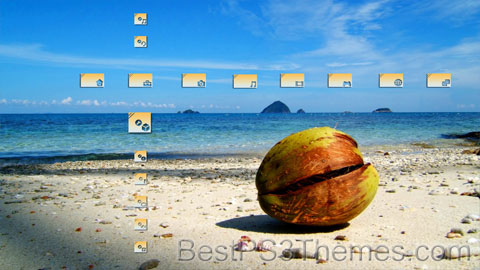
(6 backgrounds)
| Summer Days | |
 Limited edition cover of Summer Days (DVD-ROM) | |
| Genre | Drama, eroge, harem |
|---|---|
| Video game | |
| Developer | 0verflow (Microsoft Windows) AiCherry (DVD) ixia (PSP) |
| Publisher | 0verflow (Windows) AiCherry (DVD) PalaceGame (PSP) |
| Genre | Visual novel |
| Platform | |
| Released |
|
| Light novel | |
| Written by | Okada Ryuna |
| Illustrated by | Junji Goto |
| Published by | Harvest Publishing |
| Imprint | Harvest Novels |
| Demographic | Male |
| Published | December 1, 2006 |
| Volumes | 1 |
Summer Days is an erotic visual novel developed by 0verflow, released on June 23, 2006, for Microsoft Windows and later ported as a DVD game and for the PlayStation Portable (PSP). It is the second installation of School Days line of series, succeeding the visual novel of the same name and preceding Cross Days. Unlike the previous titles, that exist in the same continuity however, Summer Days is a spin-off of the original story retold from the perspective of Setsuna Kiyoura, a high school student out for summer vacation who finds herself attracted to Makoto Itou, a classmate and fellow patron of a restaurant she eventually comes to work at. The game retains the anime-like presentation familiar to the franchise, requiring little interaction from users, engaging players through a nonlinear plot they are given opportunities to change, and concluding with an ending specific to the choices made during play.
0verflow announced work on Summer Days in October 2005 and marketed it through a promotional campaign consisting of public screenings, sale of merchandise, and a celebratory event on the day of release. In spite of the game's positive performance during this time however, Summer Days was almost universally panned for its heavily bugged state that prompted a disorganized release of large, frustrating patches and an eventual recall. On August 26, 2011, 0verflow announced that the sale of Summer Days was being discontinued and that work on Shiny Days, a modern remake, was underway. The remake was released on April 27, 2012.
Though not as generous as its predecessor, Summer Days made transitions into other media following the game's release. A comics anthology of the series was published, as was two art books of character illustrations and a light novel. The game's soundtrack was also released by Lantis.
Gameplay[edit]
As a visual novel, Summer Days contains extremely minimal gameplay. The game's core onscreen presentation is composed of scenes that are viewed from a mostly third-person perspective. At predetermined intervals, the game brakes, and players are presented with one to two responses or actions relevant to the scene in progress to make, or not make, on behalf of characters. Each selection branches the game's progress up that point in an alternate direction, while also causing the player's love toward a character to blossom, plateau, or diminish,[1] thus providing for a nonlinear storytelling experience. As with its predecessor being an erotic title, relationships between characters may expectedly become sexual; scenes of this kind depict French kissing, masturbation, oral sex, anal sex, sexual intercourse, ejaculation, nudity (both female and male) or combination of the six, and pixelized censors over genitals[2] (The North America release did not censor the genitals). Each route the game takes does invariably conclude at some point with an ending specific to it, thus, players who wish to watch additional endings, and notably aforementioned sex scenes, will have to play through the game more than once.[1]

Much like the other games in the franchise, Summer Days is unusual in that instead of traditionally static characters with subtitled dialogue,[3] it incorporates motion and voice, making it reminiscent of an animated series. Cinamatics naturally play on their own, and players are afforded the ability to pause, fast-forward, and even skip those they've seen before; sex scenes, additionally, become unlockable from the main menu as they are reached in the game. Progress can be saved at any time and loaded from either the main menu or during play.[1]
Limited edition copies of Summer Days were also bundled with the standalone Flash mini-game Ahoge Battle (アホ毛 バトル, Ahoge Batoru),[4] a whimsical take on School Days ending "Bloody End". Choosing from three difficulties, the player controls Sekai, who attempts to fight off Kotonoha by pressing any two configurable keys in quick session. In the case of the highest difficulty, a third is also used. If the player is able to fend off their opponent long enough to fill their end of a progress bar, the game is won and a tally of how many times each key was pressed is recorded. If the player loses, they are given a chance to continue.[5] In an identical fashion, limited edition copies of Shiny Days are expected to come bundled with Strip Battle Days (ストリップバトルデイズ, Sutorippu Batoru Deizu), a rock-paper-scissors mini-game based around the disrobing of female characters.[6]
Plot[edit]
Setsuna Kiyoura is a high school student out of school for summer vacation, enjoying the break with family and peers. When her childhood friend Sekai is bedridden with mumps and unable to attend to her part-time waitressing job, Setsuna much to her chagrin, agrees to fill in for her. Though she finds the work almost thoroughly unpleasant, from the revealing uniforms to difficult customers, Setsuna manages to overcome the challenges of the job through the encouragement of friends, particularly that of Makoto Itōu, a classmate she likes.[7]
Setting[edit]
Set in the same universe as School Days, Summer Days retells the story of the first game had it occurred during the midst of summer vacation instead of at school[8] and from the perspective of another protagonist. The game takes place in a fictional, undisclosed prefecture of Japan that spans a range of cities, particularly a coastline called Haramihama, where the game's restaurant and center of activity, Radish, is established. As such Summer Days shares the same setting with a previous 0verflow game called Summer Radish Vaction!! as well as the same characters of Setsuna and Sekai's mothers.[9]
Characters[edit]
Summer Days incorporates all but a few of the recognized cast from School Days while introducing a handful of characters that would become new to the franchise. The game focuses on the life of Setsuna Kiyoura, a character remembered for her impassive personality in School Days,[10][11] repurposed as the thoroughly more open and emotional protagonist of its sequel. A first-year high school student out for summer vacation, Setsuna lives in the fictional city of Motehara[12][13] with her mother Mai,[11][14] a restaurateur who is frequently at work, and routinely visits Sekai Saionji, her childhood friend.[11][15]
In spite of the resentment she develops for the job she later takes, Setsuna finds the restaurant a wonderful social outlet. Besides reacquainting with Sekai's mother Youko, the owner,[11][16] and a couple of meddlesome co-workers, Noan and Oruha,[11][17][18] Setsuna meets a handful of new and familiar people on the job. Her first acquaintance is with Kokoro Katsura, a cheerful pre-teen who regularly stops in before piano lessons,[11][19] Itaru Itou, a contagiously sweet little girl visiting for the summer,[11][20] and Itaru's older brother Makoto,[11][21] a classmate whom Setsuna has a crush on.
Through Makoto, Setsuna is further introduced to Otome Katou, Makoto's best friend and a member of the school's women's basketball team,[11][22] her younger sister Karen, a rambunctious antithesis with a comparatively larger bust,[11][23] and Karen's friends Futaba and Kazuha Nijou, a pair of identical twins.[11][24][25] Of the people Setsuna knows, Hikari Kuroda, a girl whose family owns a bakery known for its custard pie,[11][26] and Ai Yamagata, a bespectacled and soft-spoken classmate,[11][27] make occasional stopovers.
Development[edit]
News about Summer Days arguably first appeared on October 1, 2005, when 0verflow posted a link to the game's then-live website on their official blog.[28] On April 1, 2006, 0verflow began a blog for the game, the first of which announced that Summer Days had been postponed from an original release in April to June 23.[29] Character profiles were added between April 9[29] to June 17.[30]
Promotion for the game began shortly after. 0verflow announced on April 26 that it would be attending Dream Party 2006, an anime convention, in Tokyo on May 4 and in Osaka on May 28,[29] selling retail copies of previous titles and Summer Days wall scrolls.[31] In addition to announcing its attendance, the company also began to sell costumes of the game's waitress uniform[32] on April 26.[33] On May 2,[30] 0verflow posted that the company would be visiting Akihabara, Osaka, Tokushima, Koriyama, Nagoya and Sapporo[34] showcasing the game and selling Summer Days phone cards.[35] Following a downloadable sample of the Summer Days limited edition DVD on May 12,[33] 0verflow released a teaser of the game on May 18.[33] The game's opening cinema was later posted for download on June 10.[36]
As Summer Days approached release, 0verflow announced on June 17[36] that it would host an autograph signing by the game's character artist, Junji Goto, from June 24 to 25 in Nagoya and Osaka respectively,[37] and that a celebratory event would be hosted at the Kyoto Kaikan Hall from 11:00am to 7:30pm on June 23.[38] Unfortunately for the company, Summer Days would not live up to its hype.
On December 1, 2006,[39] 0verflow posted that it would be attending Comic Exhibit 71, an anime convention, from December 29 to 30, selling Summer Days merchandise, such as phone cards and lanyards.[40] Following a short merchandise campaign from January 1 to January 9, 2007,[41] and the attendance of Dream Party 2007 in Osaka and Tokyo from April to May respectively,[42][43] active promotion for Summer Days effectively ended.
Patches and recall[edit]
On June 22, 2006, the day before the game's release, 0verflow posted on their blog[36] that a patch called 1.01B, at 1.25 GB, was being distributed through file hosting sites and BitTorrent as a successor to a 1.01A[44] at 2.29GB.[45] Customers were encouraged to use BitComet and to seed the patch to others after download.[46] On June 28, having discovered that the game had been released in a heavily bugged condition, 0verflow issued an apology to its customers, stating that work on patches had begun and would be distributed to players through BitTorrent and retail outlets at no charge.[47] Players who had contacted the company would equally be sent copies of the patches in the mail.[47] Holyseal.net, a file hosting service that 0verflow had used for its patches, accounts that from June 24 to July 24, eleven additional patches, comprising 1.02B, 1.02, 1.03, 1.03B, 1.04, 1.04B, 1.05, 1.05B, 1.06, 1.07 and 1.09, totaling roughly 8.56GB, were released.[45] On October 30[48] 0verflow posted 2.01, the final patch necessary to bring the game to stable build.[49]
Two days after patch 1.06 had been posted on July 7, 2006,[50] 0verflow announced that limited edition copies of Summer Days were found to contain uncensored sex scenes, a violation of their game rating partner's policy[51] and Article 175 of the Penal Code of Japan.[52] As a result, 0verflow issued a recall of the affected games. Customers who had purchased limited edition copies were asked to contact the company via mail for replacements;[53] on October 11, 0verflow announced that renewals would be shipped out on October 27.[54] As a result of the game's unprofitable recall, a rumor surfaced that 0verflow was forced to lay off half of its company employees, reported on at least once by New-akiba.com, a Chiyoda-based online magazine for Akihabara.[55]
Ports[edit]
Summer Days was ported to two other platforms. AiCherry, an interactive movie developer, announced on January 17, 2008,[56] that it had picked up the game for development, releasing it as a DVD game on April 11.[57] PalaceGame, a UMD publisher, also published the game for the PlayStation Portable (PSP) on September 24, 2010.[58]
Remake[edit]

News alluding to a remake or sequel of Summer Days called Shiny Summer Days surfaced on August 26, 2011,[59] when 0verflow announced via their blog that support for Summer Days was being discontinued.[60] Days later on August 31,[59] the company began its first promotion for the new game, selling brand T-shirts[61] which reportedly sold out on September 16.[59] Promotions continued with the attendance of Dream Party 2011 in Tokyo on October 3, where 0verflow sold brand phone cards and ornaments, T-shirts and dakimakura cases.[62] The game's official website went live on December 1,[63] revealing the new story[64] and characters, two making first appearances.[65] A day later on December 2, 0verflow announced that retailers would begin accepting pre-orders on December 15,[63] followed by a public release of the game's opening on December 6 and a subsequent promo on December 16.[63]
On February 2, 2012, a public trial of Shiny Days was released for download.[66] Eight days later on February 10, 0verflow announced that the game had been postponed from its original launch date to sometime in late April.[67] The company followed up this announcement on March 12,[59] stating that a more specific date would be posted in the next couple of days.[68] The date change was announced on Nico Nico Douga as April 27.[69]
Shiny Days received a North American release on September 29, 2015 through JAST USA, with translation by former fan translation group Sekai Project. However, JAST USA announced that sex scenes involving the characters Kokoro and her classmate will be removed from the North American version of the game, due to the possibility of these scenes being considered child pornography, which is a federal crime in the United States.[citation needed] These scenes can be added back via a patch that was made available for download three months after the game's initial release, though. The game was JAST's first new release from the School Days franchise since their School Days HQ release in October 2012.
Sales[edit]
In a national sales ranking of bishōjo games in PCNEWS, a now-defunct online magazine, Summer Days ranked as the number one game sold for the second half of June 2006,[70] seventh most for the first half of July,[71] twenty-fifth for the second half of October,[72] before ending as the twenty-eighth and forty-eighth game for the first and second half of November.[72][73]
Getchu.com recorded similar sales. Summer Days for Windows was the number one game sold during the month of its release[74] but failed to chart any further thereafter, ranking eighth in the company for the overall year.[75]
Media[edit]

Books and publications[edit]
Summer Days never transitioned into a serialized manga, though it did make it into other print. The first of these instances was a comics anthology by Junji Goto, fittingly titled Summer Days Comic Anthology, published by Comic XO on October 25, 2006.[76][77] Five days later, on October 30, Jive published two art books; The Summer Days & School Days Visual Collection and Summer Days Visual Guidebook.[76] The final publication to be made was a light novel written by Okada Ryuna, illustrated by Junji Goto, and published by Harvest Publishing under their Harvest Novels imprint on December 1.[76]
Audio CD[edit]
Like School Days, the original soundtrack of Summer Days was reproduced for distribution on June 23, 2006, by Lantis.[78][79] The album contains all the game's background music, all of which was composed by KIRIKO/HIKO Sound, and theme songs performed by YURIA, yozuca*, Minami Kuribayashi and Kanako Itō, totaling 31 tracks.[80]
| No. | Title | Writer(s) | Length |
|---|---|---|---|
| 1. | "SummerDays" | Masaki Suzuki | 4:20 |
| 2. | "Dandelion Veil" (タンポポの綿帽子, Tanpopo no Men Boushi) | Masaki Suzuki | 4:16 |
| 3. | "The Story Begins at the Sea" (海から始まる物語, Umi Kara Hajima Ru Monogatari) | Masaki Suzuki | 5:36 |
| 4. | "It Clears Up After Cloudy Weather" (曇りのち晴れ, Kumori Nochi Hare) | 1:45 | |
| 5. | "One Summer Day" | 1:56 | |
| 6. | "One Summer Day ~Waiting for Your Call~" | 1:24 | |
| 7. | "Sands of Twilight" (夕暮れの砂浜, Yuugure no Sunahama) | 1:49 | |
| 8. | "Good Night" (おやすみ, Oyasumi) | 1:50 | |
| 9. | "The Accent on Life" | 1:29 | |
| 10. | "It's Show Time!" | 1:30 | |
| 11. | "Festival Music" (お祭り囃子, Omatsuri Hayashi) | 1:19 | |
| 12. | "Grove of the Village Shrine" (鎮守の森, Chinju no Mori) | 2:03 | |
| 13. | "OBK Coming to Town" (OBK が街にやってきた, Obk ga Machi Niyattekita) | 1:23 | |
| 14. | "Until the Day We Meet" (また会う日まで, Mata au Nichi Made) | 2:24 | |
| 15. | "IAI Spirit" | 1:33 | |
| 16. | "Road to Hope" (希望への道, Kibou Heno Michi) | 2:13 | |
| 17. | "Saboritai!" (さぼりたい!) | 2:06 | |
| 18. | "Self-righteousness" (唯我独尊, Yuigadokuson) | 1:40 | |
| 19. | "Refuse" | 1:56 | |
| 20. | "As Close As Possible" | 2:43 | |
| 21. | "While Drifting..." (漂いながら..., Tadayoi Nagara...) | 2:12 | |
| 22. | "In the Midst of Fumbling" (手探りの中で, Tesaguri no Naka de) | 2:30 | |
| 23. | "Sweet Kiss" | 1:33 | |
| 24. | "Surely Someday..." (きっといつか..., Kittoitsuka) | 1:40 | |
| 25. | "Time of Trial" (試練の刻, Shiren no Koku) | 1:59 | |
| 26. | "And Before" (そして前へ, Soshite Maehe) | 1:55 | |
| 27. | "SummerDays ~piano arrange~" | 1:52 | |
| 28. | "SummerDays ~music box arrange~" | 1:52 | |
| 29. | "Knife or Saw? Part II" | 2:09 | |
| 30. | "Knife or Saw? Part II ~Introduce~" | 1:49 | |
| 31. | "Promise ~Girlhood's End~" (約束~Girlhood's End~, Yakusoku ~ Girlhood's End ~) | HIKO | 4:16 |
| Total length: | 69:02 | ||
References[edit]
- ^ a b c "-System-" (in Japanese). Kanda, Chiyoda-ku, Tokyo, Japan: 0verflow. Archived from the original on 2016-01-05. Retrieved 2011-12-23.
- ^ "Getchu.com: Sex scene samples". Getchu.com (in Japanese). Retrieved 2020-11-27.
- ^ Barnholt, Ray. "The Weird World of Japanese Novels". 1up.com. Archived from the original on 2012-10-18. Retrieved 2011-12-26.
- ^ "Getchu.com: Summer Days" (in Japanese). Getchu.com. Retrieved 2020-10-23.
- ^ 0verflow (June 2006). Ahoge Battle (Microsoft Windows 95) (in Japanese) (7.0.19.0 ed.). Stack.
{{cite book}}: CS1 maint: numeric names: authors list (link) - ^ "Strip Battle Days" (in Japanese). Kanda, Chiyoda-ku, Tokyo, Japan: 0verflow. Archived from the original on 2011-12-13. Retrieved 2012-03-05.
- ^
Death by Design
Death by Design theme by Divine
Download: DeathByDesign.p3t
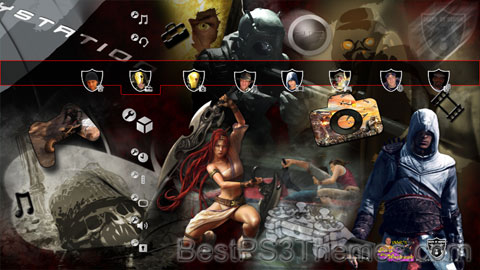
(1 background, no SD wallpaper)
 | This article needs additional citations for verification. (May 2020) |
| Death by Design | |
|---|---|
| Directed by | Germain Burger |
| Written by | Leonard Gribble |
| Produced by | Craig Baynes |
| Starring | John Longden Wally Patch Leonard Sharp Barbara James George Ellisia |
| Cinematography | Geoffrey Faithfull |
Production company | Guild Films |
Release date |
|
Running time | 18 minutes |
| Country | United Kingdom |
| Language | English |
Death by Design is a 1943 British mystery film directed by Germain Burger and starring John Longden, Wally Patch and Barbara James.[1]
Cast[edit]
- John Longden as Inspector Slade
- Wally Patch as Sergeant Clinton
- Leonard Sharp as Bob Joyce
- Barbara James as Betty Marston
- George Ellisia as Phil Gorman
References[edit]
- ^ "Death by Design". BFIPlayer. British Film Institute. Retrieved 1 June 2020.
Bibliography[edit]
- Low, Rachael. Filmmaking in 1930s Britain. George Allen & Unwin, 1985.
- Wood, Linda. British Films, 1927-1939. British Film Institute, 1986.
External links[edit]

PSN #2
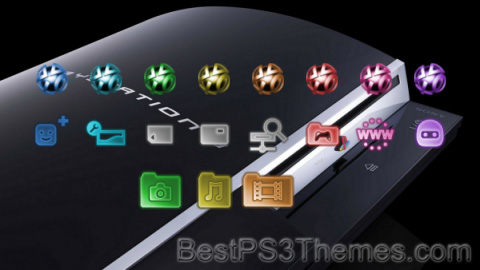
Marihuana

KSA(02)
KSA(02) theme by Waleed Almalki
Download: KSA02.p3t

(4 backgrounds)
P3T Unpacker v0.12
Copyright (c) 2007. Anoop Menon
This program unpacks Playstation 3 Theme files (.p3t) so that you can touch-up an existing theme to your likings or use a certain wallpaper from it (as many themes have multiple). But remember, if you use content from another theme and release it, be sure to give credit!
Download for Windows: p3textractor.zip
Instructions:
Download p3textractor.zip from above. Extract the files to a folder with a program such as WinZip or WinRAR. Now there are multiple ways to extract the theme.
The first way is to simply open the p3t file with p3textractor.exe. If you don’t know how to do this, right click the p3t file and select Open With. Alternatively, open the p3t file and it will ask you to select a program to open with. Click Browse and find p3textractor.exe from where you previously extracted it to. It will open CMD and extract the theme to extracted.[filename]. After that, all you need to do for any future p3t files is open them and it will extract.
The second way is very simple. Just drag the p3t file to p3textractor.exe. It will open CMD and extract the theme to extracted.[filename].
For the third way, first put the p3t file you want to extract into the same folder as p3textractor.exe. Open CMD and browse to the folder with p3extractor.exe. Enter the following:
p3textractor filename.p3t [destination path]Replace filename with the name of the p3t file, and replace [destination path] with the name of the folder you want the files to be extracted to. A destination path is not required. By default it will extract to extracted.filename.
KSA(01)
KSA(01) theme by Waleed Almalki
Download: KSA01.p3t

(5 backgrounds)
P3T Unpacker v0.12
Copyright (c) 2007. Anoop Menon
This program unpacks Playstation 3 Theme files (.p3t) so that you can touch-up an existing theme to your likings or use a certain wallpaper from it (as many themes have multiple). But remember, if you use content from another theme and release it, be sure to give credit!
Download for Windows: p3textractor.zip
Instructions:
Download p3textractor.zip from above. Extract the files to a folder with a program such as WinZip or WinRAR. Now there are multiple ways to extract the theme.
The first way is to simply open the p3t file with p3textractor.exe. If you don’t know how to do this, right click the p3t file and select Open With. Alternatively, open the p3t file and it will ask you to select a program to open with. Click Browse and find p3textractor.exe from where you previously extracted it to. It will open CMD and extract the theme to extracted.[filename]. After that, all you need to do for any future p3t files is open them and it will extract.
The second way is very simple. Just drag the p3t file to p3textractor.exe. It will open CMD and extract the theme to extracted.[filename].
For the third way, first put the p3t file you want to extract into the same folder as p3textractor.exe. Open CMD and browse to the folder with p3extractor.exe. Enter the following:
p3textractor filename.p3t [destination path]Replace filename with the name of the p3t file, and replace [destination path] with the name of the folder you want the files to be extracted to. A destination path is not required. By default it will extract to extracted.filename.
Black Label Clan 3rd
Black Label Clan 3rd theme by Third Degree
Download: BlackLabelClan3rd.p3t
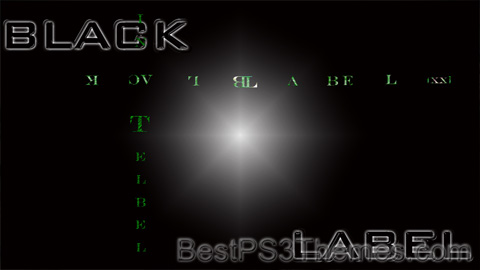
(3 backgrounds)
P3T Unpacker v0.12
Copyright (c) 2007. Anoop Menon
This program unpacks Playstation 3 Theme files (.p3t) so that you can touch-up an existing theme to your likings or use a certain wallpaper from it (as many themes have multiple). But remember, if you use content from another theme and release it, be sure to give credit!
Download for Windows: p3textractor.zip
Instructions:
Download p3textractor.zip from above. Extract the files to a folder with a program such as WinZip or WinRAR. Now there are multiple ways to extract the theme.
The first way is to simply open the p3t file with p3textractor.exe. If you don’t know how to do this, right click the p3t file and select Open With. Alternatively, open the p3t file and it will ask you to select a program to open with. Click Browse and find p3textractor.exe from where you previously extracted it to. It will open CMD and extract the theme to extracted.[filename]. After that, all you need to do for any future p3t files is open them and it will extract.
The second way is very simple. Just drag the p3t file to p3textractor.exe. It will open CMD and extract the theme to extracted.[filename].
For the third way, first put the p3t file you want to extract into the same folder as p3textractor.exe. Open CMD and browse to the folder with p3extractor.exe. Enter the following:
p3textractor filename.p3t [destination path]Replace filename with the name of the p3t file, and replace [destination path] with the name of the folder you want the files to be extracted to. A destination path is not required. By default it will extract to extracted.filename.
Blu Clan
Blu Clan theme by Lizzy
Download: BluClan.p3t
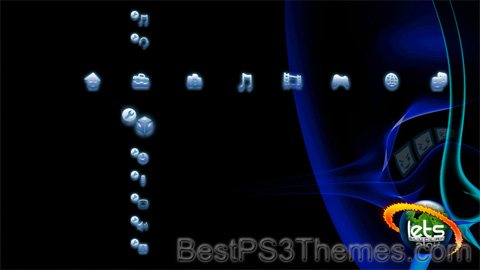
(2 backgrounds)
P3T Unpacker v0.12
Copyright (c) 2007. Anoop Menon
This program unpacks Playstation 3 Theme files (.p3t) so that you can touch-up an existing theme to your likings or use a certain wallpaper from it (as many themes have multiple). But remember, if you use content from another theme and release it, be sure to give credit!
Download for Windows: p3textractor.zip
Instructions:
Download p3textractor.zip from above. Extract the files to a folder with a program such as WinZip or WinRAR. Now there are multiple ways to extract the theme.
The first way is to simply open the p3t file with p3textractor.exe. If you don’t know how to do this, right click the p3t file and select Open With. Alternatively, open the p3t file and it will ask you to select a program to open with. Click Browse and find p3textractor.exe from where you previously extracted it to. It will open CMD and extract the theme to extracted.[filename]. After that, all you need to do for any future p3t files is open them and it will extract.
The second way is very simple. Just drag the p3t file to p3textractor.exe. It will open CMD and extract the theme to extracted.[filename].
For the third way, first put the p3t file you want to extract into the same folder as p3textractor.exe. Open CMD and browse to the folder with p3extractor.exe. Enter the following:
p3textractor filename.p3t [destination path]Replace filename with the name of the p3t file, and replace [destination path] with the name of the folder you want the files to be extracted to. A destination path is not required. By default it will extract to extracted.filename.
Lava
Lava theme by Donass
Download: Lava.p3t

(3 backgrounds)

Lava is molten or partially molten rock (magma) that has been expelled from the interior of a terrestrial planet (such as Earth) or a moon onto its surface. Lava may be erupted at a volcano or through a fracture in the crust, on land or underwater, usually at temperatures from 800 to 1,200 °C (1,470 to 2,190 °F). The volcanic rock resulting from subsequent cooling is also often called lava.
A lava flow is an outpouring of lava during an effusive eruption. (An explosive eruption, by contrast, produces a mixture of volcanic ash and other fragments called tephra, not lava flows.) The viscosity of most lava is about that of ketchup, roughly 10,000 to 100,000 times that of water. Even so, lava can flow great distances before cooling causes it to solidify, because lava exposed to air quickly develops a solid crust that insulates the remaining liquid lava, helping to keep it hot and inviscid enough to continue flowing.[1]
Etymology[edit]
The word lava comes from Italian and is probably derived from the Latin word labes, which means a fall or slide.[2][3] An early use of the word in connection with extrusion of magma from below the surface is found in a short account of the 1737 eruption of Vesuvius, written by Francesco Serao, who described "a flow of fiery lava" as an analogy to the flow of water and mud down the flanks of the volcano (a lahar) after heavy rain.[4][5]
Properties of lava[edit]
Composition[edit]
Solidified lava on the Earth's crust is predominantly silicate minerals: mostly feldspars, feldspathoids, olivine, pyroxenes, amphiboles, micas and quartz.[6] Rare nonsilicate lavas can be formed by local melting of nonsilicate mineral deposits[7] or by separation of a magma into immiscible silicate and nonsilicate liquid phases.[8]
Silicate lavas[edit]
Silicate lavas are molten mixtures dominated by oxygen and silicon, the most abundant elements of the Earth's crust, with smaller quantities of aluminium, calcium, magnesium, iron, sodium, and potassium and minor amounts of many other elements.[6] Petrologists routinely express the composition of a silicate lava in terms of the weight or molar mass fraction of the oxides of the major elements (other than oxygen) present in the lava.[9]
The silica component dominates the physical behavior of silicate magmas. Silicon ions in lava strongly bind to four oxygen ions in a tetrahedral arrangement. If an oxygen ion is bound to two silicon ions in the melt, it is described as a bridging oxygen, and lava with many clumps or chains of silicon ions connected by bridging oxygen ions is described as partially polymerized. Aluminium in combination with alkali metal oxides (sodium and potassium) also tends to polymerize the lava.[10] Other cations, such as ferrous iron, calcium, and magnesium, bond much more weakly to oxygen and reduce the tendency to polymerize.[11] Partial polymerization makes the lava viscous, so lava high in silica is much more viscous than lava low in silica.[10]
Because of the role of silica in determining viscosity and because many other properties of a lava (such as its temperature) are observed to correlate with silica content, silicate lavas are divided into four chemical types based on silica content: felsic, intermediate, mafic, and ultramafic.[12]
Felsic lava[edit]
Felsic or silicic lavas have a silica content greater than 63%. They include rhyolite and dacite lavas. With such a high silica content, these lavas are extremely viscous, ranging from 108 cP (105 Pa⋅s) for hot rhyolite lava at 1,200 °C (2,190 °F) to 1011 cP (108 Pa⋅s) for cool rhyolite lava at 800 °C (1,470 °F).[13] For comparison, water has a viscosity of about 1 cP (0.001 Pa⋅s). Because of this very high viscosity, felsic lavas usually erupt explosively to produce pyroclastic (fragmental) deposits. However, rhyolite lavas occasionally erupt effusively to form lava spines, lava domes or "coulees" (which are thick, short lava flows).[14] The lavas typically fragment as they extrude, producing block lava flows. These often contain obsidian.[15]
Felsic magmas can erupt at temperatures as low as 800 °C (1,470 °F).[16] Unusually hot (>950 °C; >1,740 °F) rhyolite lavas, however, may flow for distances of many tens of kilometres, such as in the Snake River Plain of the northwestern United States.[17]
Intermediate lava[edit]
Intermediate or andesitic lavas contain 52% to 63% silica, and are lower in aluminium and usually somewhat richer in magnesium and iron than felsic lavas. Intermediate lavas form andesite domes and block lavas and may occur on steep composite volcanoes, such as in the Andes.[18] They are also commonly hotter than felsic lavas, in the range of 850 to 1,100 °C (1,560 to 2,010 °F). Because of their lower silica content and higher eruptive temperatures, they tend to be much less viscous, with a typical viscosity of 3.5 × 10⁶ cP (3,500 Pa⋅s) at 1,200 °C (2,190 °F). This is slightly greater than the viscosity of smooth peanut butter.[19] Intermediate lavas show a greater tendency to form phenocrysts.[20] Higher iron and magnesium tends to manifest as a darker groundmass, including amphibole or pyroxene phenocrysts.[21]
Mafic lava[edit]
Mafic or basaltic lavas are typified by relatively high magnesium oxide and iron oxide content (whose molecular formulas provide the consonants in mafic) and have a silica content limited to a range of 52% to 45%. They generally erupt at temperatures of 1,100 to 1,200 °C (2,010 to 2,190 °F) and at relatively low viscosities, around 104 to 105 cP (10 to 100 Pa⋅s). This is similar to the viscosity of ketchup,[22] although it is still many orders of magnitude higher than that of water. Mafic lavas tend to produce low-profile shield volcanoes or flood basalts, because the less viscous lava can flow for long distances from the vent. The thickness of a solidified basaltic lava flow, particularly on a low slope, may be much greater than the thickness of the moving molten lava flow at any one time, because basaltic lavas may "inflate" by a continued supply of lava and its pressure on a solidified crust.[23] Most basaltic lavas are of ʻaʻā or pāhoehoe types, rather than block lavas. Underwater, they can form pillow lavas, which are rather similar to entrail-type pahoehoe lavas on land.[24]
Ultramafic lava[edit]
Ultramafic lavas, such as komatiite and highly magnesian magmas that form boninite, take the composition and temperatures of eruptions to the extreme. All have a silica content under 45%. Komatiites contain over 18% magnesium oxide and are thought to have erupted at temperatures of 1,600 °C (2,910 °F). At this temperature there is practically no polymerization of the mineral compounds, creating a highly mobile liquid.[25] Viscosities of komatiite magmas are thought to have been as low as 100 to 1000 cP (0.1 to 1 Pa⋅s), similar to that of light motor oil.[13] Most ultramafic lavas are no younger than the Proterozoic, with a few ultramafic magmas known from the Phanerozoic in Central America that are attributed to a hot mantle plume. No modern komatiite lavas are known, as the Earth's mantle has cooled too much to produce highly magnesian magmas.[26]
Alkaline lavas[edit]
Some silicate lavas have an elevated content of alkali metal oxides (sodium and potassium), particularly in regions of continental rifting, areas overlying deeply subducted plates, or at intraplate hotspots.[27] Their silica content can range from ultramafic (nephelinites, basanites and tephrites) to felsic (trachytes). They are more likely to be generated at greater depths in the mantle than subalkaline magmas.[28] Olivine nephelinite lavas are both ultramafic and highly alkaline, and are thought to have come from much deeper in the mantle of the Earth than other lavas.[29]
|
Tholeiitic basalt lava SiO2 (53.8%) Al2O3 (13.9%) FeO (9.3%) CaO (7.9%) MgO (4.1%) Na2O (3.0%) Fe2O3 (2.6%) TiO2 (2.0%) K2O (1.5%) P2O5 (0.4%) MnO (0.2%)
|
Rhyolite lava SiO2 (73.2%) Al2O3 (14%) FeO (1.7%) CaO (1.3%) MgO (0.4%) Na2O (3.9%) Fe2O3 (0.6%) TiO2 (0.2%) K2O (4.1%) P2O5 (0.%) MnO (0.%)
|
|---|
Non-silicate lavas[edit]
Some lavas of unusual composition have erupted onto the surface of the Earth. These include:
- Carbonatite and natrocarbonatite lavas are known from Ol Doinyo Lengai volcano in Tanzania, which is the sole example of an active carbonatite volcano.[31] Carbonatites in the geologic record are typically 75% carbonate minerals, with lesser amounts of silica-undersaturated silicate minerals (such as micas and olivine), apatite, magnetite, and pyrochlore. This may not reflect the original composition of the lava, which may have included sodium carbonate that was subsequently removed by hydrothermal activity, though laboratory experiments show that a calcite-rich magma is possible. Carbonatite lavas show stable isotope ratios indicating they are derived from the highly alkaline silicic lavas with which they are always associated, probably by separation of an immiscible phase.[32] Natrocarbonatite lavas of Ol Doinyo Lengai are composed mostly of sodium carbonate, with about half as much calcium carbonate and half again as much potassium carbonate, and minor amounts of halides, fluorides, and sulphates. The lavas are extremely fluid, with viscosities only slightly greater than water, and are very cool, with measured temperatures of 491 to 544 °C (916 to 1,011 °F).[33]
- Iron oxide lavas are thought to be the source of the iron ore at Kiruna, Sweden which formed during the Proterozoic.[8] Iron oxide lavas of Pliocene age occur at the El Laco volcanic complex on the Chile-Argentina border.[7] Iron oxide lavas are thought to be the result of immiscible separation of iron oxide magma from a parental magma of calc-alkaline or alkaline composition.[8]
- Sulfur lava flows up to 250 metres (820 feet) long and 10 metres (33 feet) wide occur at Lastarria volcano, Chile. They were formed by the melting of sulfur deposits at temperatures as low as 113 °C (235 °F).[7]
The term "lava" can also be used to refer to molten "ice mixtures" in eruptions on the icy satellites of the Solar System's giant planets.[34]
Rheology[edit]

The lava's viscosity mostly determines the behavior of lava flows. While the temperature of common silicate lava ranges from about 800 °C (1,470 °F) for felsic lavas to 1,200 °C (2,190 °F) for mafic lavas,[16] its viscosity ranges over seven orders of magnitude, from 1011 cP (108 Pa⋅s) for felsic lavas to 104 cP (10 Pa⋅s) for mafic lavas.[16] Lava viscosity is mostly determined by composition but also depends on temperature[13] and shear rate.[35]
Lava viscosity determines the kind of volcanic activity that takes place when the lava is erupted. The greater the viscosity, the greater the tendency for eruptions to be explosive rather than effusive. As a result, most lava flows on Earth, Mars, and Venus are composed of basalt lava.[36] On Earth, 90% of lava flows are mafic or ultramafic, with intermediate lava making up 8% of flows and felsic lava making up just 2% of flows.[37] Viscosity also determines the aspect (thickness relative to lateral extent) of flows, the speed with which flows move, and the surface character of the flows.[13][38]
When highly viscous lavas erupt effusively rather than in their more common explosive form, they almost always erupt as high-aspect flows or domes. These flows take the form of block lava rather than ʻaʻā or pāhoehoe. Obsidian flows are common.[39] Intermediate lavas tend to form steep stratovolcanoes, with alternating beds of lava from effusive eruptions and tephra from explosive eruptions.[40] Mafic lavas form relatively thin flows that can move great distances, forming shield volcanoes with gentle slopes.[41]
In addition to melted rock, most lavas contain solid crystals of various minerals, fragments of exotic rocks known as xenoliths, and fragments of previously solidified lava. The crystal content of most lavas gives them thixotropic and shear thinning properties.[42] In other words, most lavas do not behave like Newtonian fluids, in which the rate of flow is proportional to the shear stress. Instead, a typical lava is a Bingham fluid, which shows considerable resistance to flow until a stress threshold, called the yield stress, is crossed.[43] This results in plug flow of partially crystalline lava. A familiar example of plug flow is toothpaste squeezed out of a toothpaste tube. The toothpaste comes out as a semisolid plug, because shear is concentrated in a thin layer in the toothpaste next to the tube and only there does the toothpaste behave as a fluid. Thixotropic behavior also hinders crystals from settling out of the lava.[44] Once the crystal content reaches about 60%, the lava ceases to behave like a fluid and begins to behave like a solid. Such a mixture of crystals with melted rock is sometimes described as crystal mush.[45]
Lava flow speeds vary based primarily on viscosity and slope. In general, lava flows slowly, with typical speeds for Hawaiian basaltic flows of 0.40 km/h (0.25 mph) and maximum speeds of 10 to 48 km/h (6 to 30 mph) on steep slopes.[37] An exceptional speed of 32 to 97 km/h (20 to 60 mph) was recorded following the collapse of a lava lake at Mount Nyiragongo.[37] The scaling relationship for lavas is that the average speed of a flow scales as the square of its thickness divided by its viscosity.[46] This implies that a rhyolite flow would have to be about a thousand times thicker than a basalt flow to flow at a similar speed.
Temperature[edit]

The temperature of most types of molten lava ranges from about 800 °C (1,470 °F) to 1,200 °C (2,190 °F) [16] depending on the lava's chemical composition. This temperature range is similar to the hottest temperatures achievable with a forced air charcoal forge.[47] Lava is most fluid when first erupted, becoming much more viscous as its temperature drops.[13]
Lava flows quickly develop an insulating crust of solid rock as a result of radiative loss of heat. Thereafter, the lava cools by a very slow conduction of heat through the rocky crust. For instance, geologists of the United States Geological Survey regularly drilled into the Kilauea Iki lava lake, formed in an eruption in 1959. After three years, the solid surface crust, whose base was at a temperature of 1,065 °C (1,949 °F), was still only 14 m (46 ft) thick, even though the lake was about 100 m (330 ft) deep. Residual liquid was still present at depths of around 80 m (260 ft) nineteen years after the eruption.[16]
A cooling lava flow shrinks, and this fractures the flow. Basalt flows show a characteristic pattern of fractures. The uppermost parts of the flow show irregular downward-splaying fractures, while the lower part of the flow shows a very regular pattern of fractures that
Sfere Purple
Sfere Purple by Dremth
Download: SferePurple.p3t
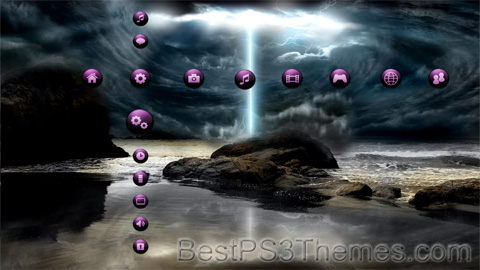
(2 backgrounds)
P3T Unpacker v0.12
Copyright (c) 2007. Anoop Menon
This program unpacks Playstation 3 Theme files (.p3t) so that you can touch-up an existing theme to your likings or use a certain wallpaper from it (as many themes have multiple). But remember, if you use content from another theme and release it, be sure to give credit!
Download for Windows: p3textractor.zip
Instructions:
Download p3textractor.zip from above. Extract the files to a folder with a program such as WinZip or WinRAR. Now there are multiple ways to extract the theme.
The first way is to simply open the p3t file with p3textractor.exe. If you don’t know how to do this, right click the p3t file and select Open With. Alternatively, open the p3t file and it will ask you to select a program to open with. Click Browse and find p3textractor.exe from where you previously extracted it to. It will open CMD and extract the theme to extracted.[filename]. After that, all you need to do for any future p3t files is open them and it will extract.
The second way is very simple. Just drag the p3t file to p3textractor.exe. It will open CMD and extract the theme to extracted.[filename].
For the third way, first put the p3t file you want to extract into the same folder as p3textractor.exe. Open CMD and browse to the folder with p3extractor.exe. Enter the following:
p3textractor filename.p3t [destination path]Replace filename with the name of the p3t file, and replace [destination path] with the name of the folder you want the files to be extracted to. A destination path is not required. By default it will extract to extracted.filename.