Dude

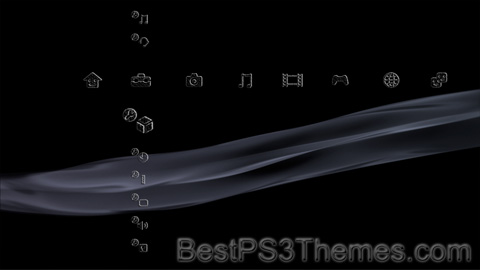
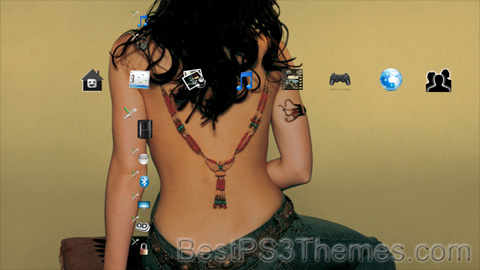
Dude theme by Elvfam. Icons by GAT305

Download: Dude.p3t
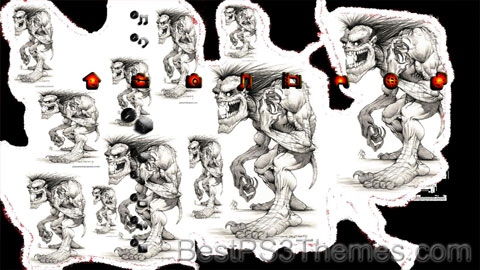
Dude Theme
(1 background)

Dude is American slang for an individual, typically male.[1] From the 1870s to the 1960s, dude primarily meant a male person who dressed in an extremely fashionable manner (a dandy) or a conspicuous citified person who was visiting a rural location, a "city slicker". In the 1960s, dude evolved to mean any male person, a meaning that slipped into mainstream American slang in the 1970s. Current slang retains at least some use of all three of these common meanings.[2]

History[edit]

Evander Berry Wall, a New York socialite, was dubbed "King of the Dudes". He is pictured (1888) in the New York American newspaper at the time of the "battle of the Dudes".[3][4]

The term "dude" may have derived from the 18th-century word "doodle", as in "Yankee Doodle Dandy".[5]

In the popular press of the 1880s and 1890s, "dude" was a new word for "dandy"—an "extremely well-dressed male", a man who assigned particular importance to his appearance. The café society and Bright Young Things of the late 1800s and early 1900s were populated with dudes. Young men of leisure vied to display their wardrobes. The best known of this type is probably Evander Berry Wall, who was dubbed "King of the Dudes" in 1880s New York and maintained a reputation for sartorial splendor all his life. This meaning of the word, though rarely consciously known today, remains occasionally in some American slang, as in the phrase "all duded up" for getting dressed in fancy clothes.[6]

Among the first published descriptions defining "dude"; Chicago Tribune, 25 February 1883

The word was used to refer to American Easterners, specifically referring to a man with "store-bought clothes".[7] The word was used by cowboys to unfavorably refer to the city dwellers.[8]

A variation of this was a "well-dressed man who is unfamiliar with life outside a large city". In The Home and Farm Manual (1883), author Jonathan Periam used the term "dude" several times to denote an ill-bred and ignorant but ostentatious man from the city.[citation needed]

The implication of an individual who is unfamiliar with the demands of life outside of urban settings gave rise to the definition of dude as a "city slicker", or "an Easterner in the [American] West".[1] Thus "dude" was used to describe the wealthy men of the expansion of the United States during the 19th century by ranch-and-homestead-bound settlers of the American Old West. This use is reflected in the dude ranch, a guest ranch catering to urbanites seeking more rural experiences. Dude ranches began to appear in the American West in the early 20th century, for wealthy Easterners who came to experience the "cowboy life". The implicit contrast is with those persons accustomed to a given frontier, agricultural, mining, or other rural setting. This usage of "dude" was still in use in the 1950s in America, as a word for a tourist—of either sex—who attempts to dress like the local culture but fails.[9] An inverse of these uses of "dude" would be the term "redneck," a contemporary American colloquialism referring to poor farmers and uneducated persons, which itself became pejorative, and is also still in use.[10][11][12]

As the word gained popularity and reached the coasts of the U.S. and traveled between borders, variations of the slang began to pop up such as the female versions of dudette and dudines; however, they were short lived due to dude also gaining a neutral gender connotation and some linguists see the female versions as more artificial slang. The slang eventually had gradual decline in usage until the early to mid 20th century when other subcultures of the U.S. began using it more frequently while again deriving it from the type of dress and eventually using it as a descriptor for common male and sometimes female companions. Eventually, lower class schools with a greater mix of subcultures allowed the word to spread to almost all cultures and eventually up the class ladders to become common use in the U.S. By the late 20th to early 21st century, dude had gained the ability to be used in the form of expression, whether that be disappointment, excitement, or loving and it also widened to be able to refer to any general person no matter race, sex, or culture.[13]

The term was also used as a "job description", such as "bush hook dude" as a position on a railroad in the 1880s. For an example, see the Stampede Tunnel.[citation needed]

In the early 1960s, dude became prominent in surfer culture as a synonym of guy or fella. The female equivalent was "dudette" or "dudess", but these have both fallen into disuse and "dude" is now also used as a unisex term. This more general meaning of "dude" started creeping into the mainstream in the mid-1970s. "Dude", particularly in surfer and "bro" culture,[citation needed] is[when?] generally used informally to address someone ("Dude, I'm glad you finally called") or refer to another person ("I've seen that dude around here before").[14]

One of the first known references to the word in American film was in the 1969 movie Easy Rider where Wyatt (portrayed by Peter Fonda) explains to his cellmate lawyer (portrayed by Jack Nicholson) the definition of "dude": "Dude means nice guy; Dude means regular sort of person." Mark Farner of Grand Funk Railroad claims that drummer Don Brewer popularized the word dude with the song "We're an American Band" which was released in 1973.[15] The usage of the word to mean a "cool person" was further popularized in American films of the 1980s and 1990s such as Teenage Mutant Ninja Turtles, Fast Times at Ridgemont High, Bill and Ted's Excellent Adventure, Wayne's World, and Clerks.[16]

The 1998 film The Big Lebowski featured Jeff Bridges as "The Dude", described as a "lazy deadbeat". The character was largely inspired by activist and producer Jeff Dowd who has been called "Dude" since childhood.[17] The film's central character inspired the creation of Dudeism, a neoreligion.[18]

In 2008, Bud Light aired an advertising campaign in which the dialogue consists entirely of different inflections of "Dude!" and does not mention the product by name. It was a followup to their near-identical and more widely noted "Whassup?" campaign.[19][16]

On July 23, 2019, Boris Johnson used the word "dude" as an acronym for his Conservative Party leadership campaign platform. In his leadership speech he explained it as referring to Deliver Brexit – Unite the country – Defeat Jeremy Corbyn – Energize the country.[20]

References[edit]

  1. ^ a b "Dude, Def. 2 – The Merriam-Webster Online Dictionary". Merriam-Webster. Archived from the original on March 8, 2023. Retrieved May 8, 2007.
  2. ^ Winona Bullard; Shirley Johnson; Jerkeshea Morris; Kelly Fox; Cassie Howell. "Slang". Archived from the original on February 4, 2013.
  3. ^ Bryk, William (June 22, 2005). "King of the Dudes". The New York Sun. Archived from the original on October 17, 2017. Retrieved November 11, 2008.
  4. ^ Jeffers, Harry Paul (2005). Diamond Jim Brady: Prince of the Gilded Age, p.45. John Wiley and Sons. ISBN 0-471-39102-6
  5. ^ Okrent, Arika (November 5, 2013). "Mystery Solved: The Etymology of Dude". Slate. ISSN 1091-2339. Archived from the original on October 15, 2018. Retrieved October 24, 2017.
  6. ^ "duded up", McGraw-Hill Dictionary of American Idioms and Phrasal Verbs, The McGraw-Hill Companies, Inc., 2002, archived from the original on February 4, 2013, retrieved October 10, 2012
  7. ^ Heicher, Kathy (June 4, 2013). Eagle County Characters: Historic Tales of a Colorado Mountain Valley. Arcadia Publishing. ISBN 9781614239505. Archived from the original on March 14, 2024. Retrieved September 23, 2020 – via Google Books.
  8. ^ Ltd, Not Panicking (October 29, 1999). "h2g2 - The Word 'Dude' - Edited Entry". h2g2.com. Archived from the original on April 27, 2015. Retrieved July 26, 2015.
  9. ^ Robert Knoll (1952). "The meanings and etymologies of dude". American Speech. 27 (1): 20–22. doi:10.2307/453362. JSTOR 453362.
  10. ^ Harold Wentworth, and Stuart Berg Flexner, Dictionary of American Slang (1975) p. 424.
  11. ^ "Redneck" Archived May 21, 2013, at the Wayback Machine. Dictionary.com.
  12. ^ Barbara Ann Kipfer and Robert L. Chapman, American Slang (2008), p. 404.
  13. ^ Hill, Richard A. (1994). "You've Come a Long Way, Dude: A History". American Speech. 69 (3): 321–327. doi:10.2307/455525. JSTOR 455525.
  14. ^ Howell, Cassie. "Examples of Slang". Archived from the original on February 4, 2013. Retrieved October 10, 2012.
  15. ^ Guitarist gave Drummer SOLE CREDIT On 70s Hit He Helped CREATE-Cost Him Millions on YouTube
  16. ^ a b Peters, Mark (April 25, 2010). "The History of the "Dude"". GOOD Worldwide, Inc. Archived from the original on February 2, 2017. Retrieved January 27, 2017.
  17. ^ Raz, Guy (May 25, 2008). "The Dude: A Little Lebowski, Alive in All of Us". All Things Considered. National Public Radio. Archived from the original on September 5, 2019. Retrieved January 27, 2017.
  18. ^ Ehrlich, Richard (March 20, 2013). "The man who founded a religion based on 'The Big Lebowski'". CNN Travel. CNN. Archived from the original on March 24, 2013. Retrieved January 27, 2017.
  19. ^ Swansburg, John (January 28, 2008). "Dude! How great are those new Bud Light ads?". Slate. Archived from the original on March 13, 2008. Retrieved March 10, 2008.
  20. ^ "Dude! We are going to energise the country". BBC News. Archived from the original on July 23, 2019. Retrieved December 12, 2019.

Further reading[edit]

Ghost

Ghost theme by Creighton

Download: Ghost.p3t

Ghost Theme
(no backgrounds)

An engraving of the Hammersmith Ghost appears in Roger Kirby's Wonderful and Scientific Museum, a magazine published in 1804. The "ghost" turned out to be an old local cobbler who used a white sheet to get back at his apprentice for scaring his grandchildren.[1]

In folklore, a ghost is the soul or spirit of a dead person or non-human animal that is believed to be able to appear to the living. In ghostlore, descriptions of ghosts vary widely, from an invisible presence to translucent or barely visible wispy shapes to realistic, lifelike forms. The deliberate attempt to contact the spirit of a deceased person is known as necromancy, or in spiritism as a séance. Other terms associated with it are apparition, haunt, haint, phantom, poltergeist, shade, specter, spirit, spook, wraith, demon, and ghoul.

The belief in the existence of an afterlife, as well as manifestations of the spirits of the dead, is widespread, dating back to animism or ancestor worship in pre-literate cultures. Certain religious practices—funeral rites, exorcisms, and some practices of spiritualism and ritual magic—are specifically designed to rest the spirits of the dead. Ghosts are generally described as solitary, human-like essences, though stories of ghostly armies and the ghosts of animals other than humans have also been recounted.[2][3] They are believed to haunt particular locations, objects, or people they were associated with in life. According to a 2009 study by the Pew Research Center, 18% of Americans say they have seen a ghost.[4]

The overwhelming consensus of science is that there is no proof that ghosts exist.[5] Their existence is impossible to falsify,[5] and ghost hunting has been classified as pseudoscience.[6][7][8] Despite centuries of investigation, there is no scientific evidence that any location is inhabited by the spirits of the dead.[6][9] Historically, certain toxic and psychoactive plants (such as datura and hyoscyamus niger), whose use has long been associated with necromancy and the underworld, have been shown to contain anticholinergic compounds that are pharmacologically linked to dementia (specifically DLB) as well as histological patterns of neurodegeneration.[10][11] Recent research has indicated that ghost sightings may be related to degenerative brain diseases such as Alzheimer's disease.[12] Common prescription medication and over-the-counter drugs (such as sleep aids) may also, in rare instances, cause ghost-like hallucinations, particularly zolpidem and diphenhydramine.[13] Older reports linked carbon monoxide poisoning to ghost-like hallucinations.[14]

In folklore studies, ghosts fall within the motif index designation E200–E599 ("Ghosts and other revenants").

Terminology[edit]

The English word ghost continues Old English gāst. Stemming from Proto-Germanic *gaistaz, it is cognate with Old Frisian gāst, Old Saxon gēst, Old Dutch gēst, and Old High German geist. Although this form is not attested in North Germanic and East Germanic languages (the equivalent word in Gothic is ahma, Old Norse has andi m., önd f.), it appears to be a dental suffix derivative of pre-Germanic *ghois-d-oz ('fury, anger'), which is comparable to Sanskrit héḍas ('anger') and Avestan zōižda- ('terrible, ugly'). The prior Proto-Indo-European form is reconstructed as *ǵʰéys-d-os, from the root *ǵʰéys-, which is reflected in Old Norse geisa ('to rage') and *geiski ('fear'; cf. geiskafullr 'full of fear'), in Gothic usgaisjan ('to terrify') and usgaisnan ('to be terrified'), as well as in Avestan zōiš- (cf. zōišnu 'shivering, trembling').[15][16][17]

The Germanic word is recorded as masculine only, but likely continues a neuter s-stem. The original meaning of the Germanic word would thus have been an animating principle of the mind, in particular capable of excitation and fury (compare óðr). In Germanic paganism, "Germanic Mercury", and the later Odin, was at the same time the conductor of the dead and the "lord of fury" leading the Wild Hunt.

Besides denoting the human spirit or soul, both of the living and the deceased, the Old English word is used as a synonym of Latin spiritus also in the meaning of "breath" or "blast" from the earliest attestations (9th century). It could also denote any good or evil spirit, such as angels and demons; the Anglo-Saxon gospel refers to the demonic possession of Matthew 12:43 as se unclæna gast. Also from the Old English period, the word could denote the spirit of God, viz. the "Holy Ghost".

The now-prevailing sense of "the soul of a deceased person, spoken of as appearing in a visible form" only emerges in Middle English (14th century). The modern noun does, however, retain a wider field of application, extending on one hand to "soul", "spirit", "vital principle", "mind", or "psyche", the seat of feeling, thought, and moral judgement; on the other hand used figuratively of any shadowy outline, or fuzzy or unsubstantial image; in optics, photography, and cinematography especially, a flare, secondary image, or spurious signal.[18]

The synonym spook is a Dutch loanword, akin to Low German spôk (of uncertain etymology); it entered the English language via American English in the 19th century.[19][20][21][22] Alternative words in modern usage include spectre (altn. specter; from Latin spectrum), the Scottish wraith (of obscure origin), phantom (via French ultimately from Greek phantasma, compare fantasy) and apparition. The term shade in classical mythology translates Greek σκιά,[23] or Latin umbra,[24] in reference to the notion of spirits in the Greek underworld. The term poltergeist is a German word, literally a "noisy ghost", for a spirit said to manifest itself by invisibly moving and influencing objects.[25]

Wraith is a Scots word for ghost, spectre, or apparition. It appeared in Scottish Romanticist literature, and acquired the more general or figurative sense of portent or omen. In 18th- to 19th-century Scottish literature, it also applied to aquatic spirits. The word has no commonly accepted etymology; the OED notes "of obscure origin" only.[26] An association with the verb writhe was the etymology favored by J. R. R. Tolkien.[27] Tolkien's use of the word in the naming of the creatures known as the Ringwraiths has influenced later usage in fantasy literature. Bogey[28] or bogy/bogie is a term for a ghost, and appears in Scottish poet John Mayne's Hallowe'en in 1780.[29][30]

A revenant is a deceased person returning from the dead to haunt the living, either as a disembodied ghost or alternatively as an animated ("undead") corpse. Also related is the concept of a fetch, the visible ghost or spirit of a person yet alive.

Typology[edit]

Relief from a carved funerary lekythos at Athens showing Hermes as psychopomp conducting the soul of the deceased, Myrrhine into Hades (ca. 430-420 B.C.)

Anthropological context[edit]

A notion of the transcendent, supernatural, or numinous, usually involving entities like ghosts, demons, or deities, is a cultural universal.[31] In pre-literate folk religions, these beliefs are often summarized under animism and ancestor worship. Some people believe the ghost or spirit never leaves Earth until there is no-one left to remember the one who died.[32]

In many cultures, malignant, restless ghosts are distinguished from the more benign spirits involved in ancestor worship.[33]

Ancestor worship typically involves rites intended to prevent revenants, vengeful spirits of the dead, imagined as starving and envious of the living. Strategies for preventing revenants may either include sacrifice, i.e., giving the dead food and drink to pacify them, or magical banishment of the deceased to force them not to return. Ritual feeding of the dead is performed in traditions like the Chinese Ghost Festival or the Western All Souls' Day. Magical banishment of the dead is present in many of the world's burial customs. The bodies found in many tumuli (kurgan) had been ritually bound before burial,[34] and the custom of binding the dead persists, for example, in rural Anatolia.[35]

Nineteenth-century anthropologist James Frazer stated in his classic work The Golden Bough that souls were seen as the creature within that animated the body.[36]

Ghosts and the afterlife[edit]

Although the human soul was sometimes symbolically or literally depicted in ancient cultures as a bird or other animal, it appears to have been widely held that the soul was an exact reproduction of the body in every feature, even down to clothing the person wore. This is depicted in artwork from various ancient cultures, including such works as the Egyptian Book of the Dead, which shows deceased people in the afterlife appearing much as they did before death, including the style of dress.

Fear of ghosts[edit]

Yūrei (Japanese ghost) from the Hyakkai Zukan, c. 1737

While deceased ancestors are universally regarded as venerable, and often believed to have a continued presence in some form of afterlife, the spirit of a deceased person that persists in the material world (a ghost) is regarded as an unnatural or undesirable state of affairs and the idea of ghosts or revenants is associated with a reaction of fear. This is universally the case in pre-modern folk cultures, but fear of ghosts also remains an integral aspect of the modern ghost story, Gothic horror, and other horror fiction dealing with the supernatural.

Common attributes[edit]

Another widespread belief concerning ghosts is that they are composed of a misty, airy, or subtle material. Anthropologists link this idea to early beliefs that ghosts were the person within the person (the person's spirit), most noticeable in ancient cultures as a person's breath, which upon exhaling in colder climates appears visibly as a white mist.[32] This belief may have also fostered the metaphorical meaning of "breath" in certain languages, such as the Latin spiritus and the Greek pneuma, which by analogy became extended to mean the soul. In the Bible, God is depicted as synthesising Adam, as a living soul, from the dust of the Earth and the breath of God.

In many traditional accounts, ghosts were often thought to be deceased people looking for vengeance (vengeful ghosts), or imprisoned on earth for bad things they did during life. The appearance of a ghost has often been regarded as an omen or portent of death. Seeing one's own ghostly double or "fetch" is a related omen of death.[37] The impetus of haunting is commonly considered an unnatural death.[38]

Union Cemetery in Easton, Connecticut is home to the legend of the White Lady.

White ladies were reported to appear in many rural areas, and supposed to have died tragically or suffered trauma in life. White Lady legends are found around the world. Common to many of them is the theme of losing a child or husband and a sense of purity, as opposed to the Lady in Red ghost that is mostly attributed to a jilted lover or prostitute. The White Lady ghost is often associated with an individual family line or regarded as a harbinger of death similar to a banshee.[39][40][needs context]

Legends of ghost ships have existed since the 18th century; most notable of these is the Flying Dutchman. This theme has been used in literature in The Rime of the Ancient Mariner by Coleridge.

Ghosts are often depicted as being covered in a shroud and/or dragging chains.[41]

Locale[edit]

A place where ghosts are reported is described as haunted, and often seen as being inhabited by spirits of deceased who may have been former residents or were familiar with the property. Supernatural activity inside homes is said to be mainly associated with violent or tragic events in the building's past such as murder, accidental death, or suicide—sometimes in the recent or ancient past. However, not all hauntings are at a place of a violent death, or even on violent grounds. Many cultures and religions believe the essence of a being, such as the 'soul', continues to exist. Some religious views argue that the 'spirits' of those who have died have not 'passed over' and are trapped inside the property where their memories and energy are strong.

History[edit]

Ancient Sumerian cylinder seal impression showing the god Dumuzid being tortured in the Underworld by galla demons

Ancient Near East and Egypt[edit]

There are many references to ghosts in Mesopotamian religions – the religions of Sumer, Babylon, Assyria, and other early states in Mesopotamia. Traces of these beliefs survive in the later Abrahamic religions that came to dominate the region.[42] The concept of ghosts may p

Black Label Clan

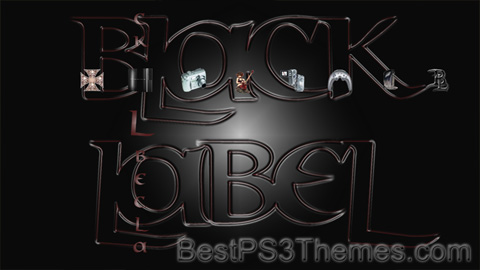
Black Label Clan theme by capone

Download: BlackLabelClan.p3t

Black Label Clan Theme
(1 background)

P3T Unpacker v0.12
Copyright (c) 2007. Anoop Menon

This program unpacks Playstation 3 Theme files (.p3t) so that you can touch-up an existing theme to your likings or use a certain wallpaper from it (as many themes have multiple). But remember, if you use content from another theme and release it, be sure to give credit!

Download for Windows: p3textractor.zip

Instructions:

Download p3textractor.zip from above. Extract the files to a folder with a program such as WinZip or WinRAR. Now there are multiple ways to extract the theme.

The first way is to simply open the p3t file with p3textractor.exe. If you don’t know how to do this, right click the p3t file and select Open With. Alternatively, open the p3t file and it will ask you to select a program to open with. Click Browse and find p3textractor.exe from where you previously extracted it to. It will open CMD and extract the theme to extracted.[filename]. After that, all you need to do for any future p3t files is open them and it will extract.

The second way is very simple. Just drag the p3t file to p3textractor.exe. It will open CMD and extract the theme to extracted.[filename].

For the third way, first put the p3t file you want to extract into the same folder as p3textractor.exe. Open CMD and browse to the folder with p3extractor.exe. Enter the following:
p3textractor filename.p3t [destination path]Replace filename with the name of the p3t file, and replace [destination path] with the name of the folder you want the files to be extracted to. A destination path is not required. By default it will extract to extracted.filename.

vS-c0nc3pt

vS-c0nc3pt theme by Versus-

Download: vS-c0nc3pt.p3t

vS-c0nc3pt Theme
(3 backgrounds)

P3T Unpacker v0.12
Copyright (c) 2007. Anoop Menon

This program unpacks Playstation 3 Theme files (.p3t) so that you can touch-up an existing theme to your likings or use a certain wallpaper from it (as many themes have multiple). But remember, if you use content from another theme and release it, be sure to give credit!

Download for Windows: p3textractor.zip

Instructions:

Download p3textractor.zip from above. Extract the files to a folder with a program such as WinZip or WinRAR. Now there are multiple ways to extract the theme.

The first way is to simply open the p3t file with p3textractor.exe. If you don’t know how to do this, right click the p3t file and select Open With. Alternatively, open the p3t file and it will ask you to select a program to open with. Click Browse and find p3textractor.exe from where you previously extracted it to. It will open CMD and extract the theme to extracted.[filename]. After that, all you need to do for any future p3t files is open them and it will extract.

The second way is very simple. Just drag the p3t file to p3textractor.exe. It will open CMD and extract the theme to extracted.[filename].

For the third way, first put the p3t file you want to extract into the same folder as p3textractor.exe. Open CMD and browse to the folder with p3extractor.exe. Enter the following:
p3textractor filename.p3t [destination path]Replace filename with the name of the p3t file, and replace [destination path] with the name of the folder you want the files to be extracted to. A destination path is not required. By default it will extract to extracted.filename.

Motorstorm #3

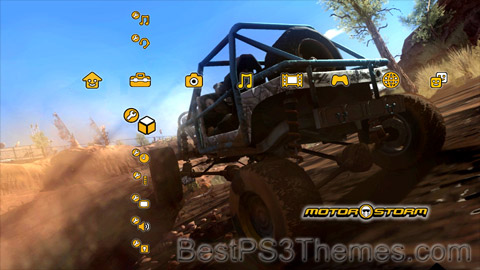
Motorstorm theme by ajefferism

Download: Motorstorm_3.p3t

Motorstorm Theme 3
(7 backgrounds)

Redirect to:

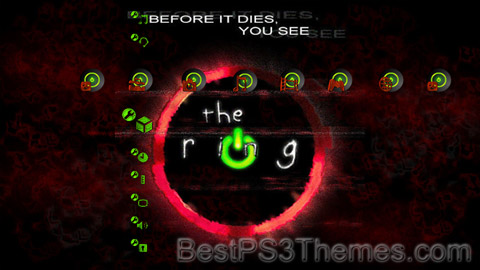
The Ring

The Ring theme by blindedcoon

Download: TheRing.p3t

The Ring Theme
(1 background)

The Ring may refer to:

Arts and entertainment[edit]

Literature[edit]

Film[edit]

Television[edit]

Music[edit]

Other uses[edit]

See also[edit]

Zero Punctuation

Zero Punctuation theme by gtrunner

Download: ZeroPunctuation.p3t

Zero Punctuation Theme
(1 background)

Zero Punctuation
Logo featuring Yahtzee's cartoon avatar
GenreVideo game reviews, black comedy, insult comedy, satire
Created byBen "Yahtzee" Croshaw
Theme music composerIan Dorsch
Country of originAustralia
United States
Original languageEnglish
No. of episodes836
Original release
NetworkThe Escapist
ReleaseJuly 24, 2007 (2007-07-24) –
November 21, 2023 (2023-11-21)

Zero Punctuation is a series of video game reviews created by English comedy writer and video game journalist Ben "Yahtzee" Croshaw. From its inception in 2007, episodes were published weekly by internet magazine The Escapist. Episodes typically range from five to six minutes in length. Videos provide caustic humour, rapid-fire delivery, visual gags and critical insight into recently released video games, with occasional reviews of older games and retrospectives of the industry itself. In 2023, Zero Punctuation was discontinued following Croshaw's resignation from The Escapist and the formation of Second Wind, with new reviews being published by him under the rebranded series Fully Ramblomatic.

History[edit]

Prior to Zero Punctuation, Croshaw primarily authored content for his blog, Fully Ramblomatic, and would occasionally review video games, often with an emphasis on humor and criticism.[1] In July 2007, Croshaw uploaded two game reviews in video format to YouTube in the same style that would eventually be used for Zero Punctuation: one of the demo of The Darkness for the PlayStation 3, and the other of Fable: The Lost Chapters for the PC. Both were well-received and The Escapist was one of several publishers to offer Croshaw a contract.[2]

The name "Zero Punctuation" refers to the speed of Croshaw's narration. Since its creation, the series has become popular in the gaming community.[2] Video game developers and publishers have occasionally acknowledged Croshaw's reviews of their games, and at least one internet meme has resulted from Zero Punctuation.[3][4] At the end of each year, starting in 2008, Croshaw created special episodes of Zero Punctuation discussing what he believes were the best and worst games of the year. He occasionally dedicated episodes to new technologies or milestones in video gaming, such as E3 and the coming of the eighth generation of consoles.[5][6] Croshaw also dedicated certain episodes to covering events or periods in gaming history that he considered to have disparaged the industry or its reputation. These include the video game industry crash of 1983, and the controversial Hot Coffee mod for Grand Theft Auto: San Andreas.[7][8]

From 2009 to 2017, Croshaw authored a column on The Escapist known as Extra Punctuation. These articles were originally published every Tuesday and often supplemented the previous week's review by discussing a certain topic or trend exhibited by that game. Croshaw resumed the series in 2021 in video format.[9]

On November 6, 2023, Croshaw announced he had resigned from The Escapist with other colleagues out of solidarity following the firing of editor-in-chief Nick Calandra that same day. He also confirmed that he did not own the rights to Zero Punctuation, leaving the future of the series in doubt.[10][11] Two days later, on November 8, Calandra and Croshaw announced that Croshaw would continue making weekly short-form reviews under the title of Fully Ramblomatic. This show is hosted on Second Wind, a new outlet formed by the staff who left The Escapist.[12][13] The Escapist's parent company Gamurs published the final two episodes of Zero Punctuation—reviews of Sonic Superstars and Marvel's Spider-Man 2—on November 21.[14][15][16]

Format[edit]

Typical Zero Punctuation imagery, illustrating Croshaw's confusion with obtaining spaceship fuel in Starbound

In Zero Punctuation, Croshaw usually reviews a game in a highly critical manner using rapid-fire speech delivery accompanied by minimalistic cartoon imagery and animation on a distinctive yellow background, which illustrates what is being said or provides an ironic counterpoint to it. Subtle references or jokes may be inserted to the visuals for comic effect or to add additional context to the narration. His reviews are intended to be humorous with constant usage of puns, analogies, metaphors, and dark humour accompanied by frequent use of profanity.[17][18][19] Croshaw usually substitutes the main character or himself with his own avatar, a cartoon man distinguished by a trilby, with other cartoon people in the same style representing the main characters in a video game, celebrities, video game programmers, or friends of Croshaw. Another character used often is an imp-like creature (originally meant to resemble a "darkling" from The Darkness) which represents antagonists, animals, children, or less important characters from a game. Video games, developers, countries, and other entities are often anthropomorphized as box arts, logos, or flags, respectively, with arms and legs. Croshaw often allegorizes jokes, game details, or video game industry activities with references to, or commentaries on popular culture, politics, and history.

Zero Punctuation opens and closes with a theme song, a rock track composed and performed by Ian Dorsch.[20] The ending credits usually feature humorous notes or other information relating to the review, as well as imagery of characters from the review engaging in slapstick. Prior to mid-2008, Zero Punctuation featured commercial songs at the beginning and end of each episode, which were usually related to the context of, or at odds with the game in question, such as the Ramones' "I Wanna Be Sedated" and Eric Johnson's "Cliffs of Dover" at the beginning and end, respectively, of his review of Guitar Hero III: Legends of Rock.

The series' format has proved inspirational for several other web series, such as the critical and educational series Extra Credits[21] and CGP Grey.[22][23]

Critical style[edit]

Croshaw provides highly critical reviews of games, usually pointing out the faults that he implies other professional reviewers ignore in high-profile releases.[4][24] He tends to disdain certain tropes and conventions in video games he feels have been overused, such as quick time events, highly common uses of motion controls, cover-based shooting, crafting systems,[25][26][27][28][29][30] and an unbalanced emphasis on graphics over story or gameplay.[5][31][32] Similarly, he has expressed cynicism of the prevalence of specific game designs, including military-themed first-person shooters for being very similar in gameplay, poor in ethics, and contrived in story;[33][34][35] open-world games including crafting, collectibles, and stealth mechanics that he feels bloats a game's content;[36] cinematic games that consist of linear, uneventful sections separated by action sequences and brief exploration;[37] and live service games with repetitive gameplay that incorporates grinding to unlock new content.[38][39] He also disapproves of game franchises that release sequels in rapid succession, such as Final Fantasy, Assassin's Creed, and Call of Duty.[40] Croshaw generally does not review certain genres of games, such as sports and racing games, and has openly admitted to not liking most JRPGs, real-time strategy games, fighting games, or simulation games.[citation needed]

Certainly I focus on the bad, because I reckon plenty of sources focus on the good already. Happily, the bad is also easier to make funny.

Croshaw on a Reddit "Ask me Anything" thread in 2011[41]

Although Zero Punctuation episodes are usually intended to highlight Croshaw's criticisms of video games, his opinions are not universally negative, and any positive feelings towards the aspects of a game will usually be explicitly stated.[42] During his review of Portal, he admitted to being unable to find any faults with the game.[43] He opened his review of BioShock by saying "nobody likes it when I'm being nice to a game," referring to the negative reception of his favorable review of Psychonauts.[44]

Croshaw cites the work of British television critic and PC Zone journalist Charlie Brooker as the "main inspiration" for his own reviewing style, as well as the writings of Douglas Adams, Sean "Seanbaby" Riley, Victor Lewis-Smith, and Old Man Murray's Chet Faliszek and Erik Wolpaw.[42][45][46] He expressed respect towards the late Roger Ebert, noting that he "might one day aspire to being his videogaming equivalent".[47]

Games of the Year[edit]

From 2008, Croshaw created annual, year-end episodes of Zero Punctuation which enumerate his favorite and least favorite games from that year. For 2008 and 2009, mock "awards" were given for games based on arbitrarily defined categories. Starting in 2010, the "awards" format was replaced with ordered lists of his five favorite and least favorite games of the year. For 2015, he added a new category for his choices of the blandest and least innovative games of the year.[48] To commemorate the end of the 2010s, Croshaw ranked in order of preference the best and worst games he had awarded during the decade.[49]

In his 2013 lists, he awarded the "Lifetime Achievement Award for Total Abhorrence" to Ride to Hell: Retribution, expressing that it was so poor in quality that he hardly considered it a game but rather saw it as "congealed failure."[40]

Best Game of the Year
Year Game Notes
2008 Saints Row 2
2009 Batman: Arkham Asylum
2010 Just Cause 2 9th Best of the 2010s
2011 Portal 2 2nd Best of the 2010s
2012 Spec Ops: The Line 7th Best of the 2010s
2013 BioShock Infinite 8th Best of the 2010s
2014 Middle-earth: Shadow of Mordor 10th Best of the 2010s
2015 Undertale Best Game of the 2010s
2016 Doom 4th Best of the 2010s
2017 Resident Evil 7: Biohazard 5th Best of the 2010s
2018 Return of the Obra Dinn 3rd Best of the 2010s
2019 Disco Elysium 6th Best of the 2010s
2020 Spiritfarer
2021 Psychonauts 2
2022 Neon White
2023 Hi-Fi Rush Ranking published under Fully Ramblomatic
Worst Game of the Year
Year Game(s) Notes
2009 Wet
2010 Kane & Lynch 2: Dog Days 6th Worst of the 2010s
2011 Battlefield 3 and Call of Duty: Modern Warfare 3 (tie) 10th Worst of the 2010s
2012 Amy 2nd Worst of the 2010s
2013 Call of Duty: Ghosts 8th Worst of the 2010s
2014 Thief 9th Worst of the 2010s
2015 The Order: 1886 5th Worst of the 2010s
2016 Homefront: The Revolution 4th Worst of the 2010s
2017 Sniper Ghost Warrior 3 7th Worst of the 2010s
2018 Hunt Down the Freeman Worst Game of the 2010s
2019 Contra: Rogue Corps 3rd Worst of the 2010s
2020 The Last of Us Part II
2021 Balan Wonderworld
2022 Five Nights at Freddy's: Security Breach
2023 The Lord of the Rings: Gollum Ranking published under Fully Ramblomatic
Blandest Game of the Year
Year Game(s) Notes
2015 Halo 5: Guardians
2016 No Man's Sky
2017 Star Wars Battlefront II
2018 Conan Exiles
2019 Anthem
2020 Marvel's Avengers
2021 Medal of Honor: Above and Beyond
2022 Saints Row
2023 Starfield Ranking published under Fully Ramblomatic

Reception[edit]

In his 2008 review of The Witcher, Croshaw sarcastically referred to the PC gaming community as "the glorious PC gaming master race", intending to criticize the perceived elitist attitudes in that community. The phrase has since become an internet meme, and has been appropriated and championed by that community.[50] In a 2018 review of Kingdom Come: Deliverance, Croshaw explained that he regretted calling the community "PC master race" instead of "dick-slurp all-stars," citing a continuation of the behavior that originally prompted the term.[51]

Croshaw's negative review of Super Smash Bros. Brawl in 2008 was poorly received by fans of the game.[52] He claimed to have received a disproportionate amount of hate mail following the review, and dedicated an episode to highlight and respond to various e-mails that he had allegedly received in response to it.

In 2009, Croshaw reviewed Prototype by comparing it to InFamous, attempting to decide which game was better. Unable to determine a victor, he jokingly suggested that the developers of each game send him artwork of the opposing game's main character wearing lingerie in order to claim the award. Radical Entertainment and Sucker Punch – the respective developers – unexpectedly complied with the challenge, prompting Croshaw to declare InFamous the winner after judging the quality of the images.[3]

In 2013, Croshaw came under fire after an episode of Zero Punctuation on Papers, Please contained a metaphor that was viewed as transphobic. Croshaw agreed with the criticism and apologized, expressing regret towards making the statement.[53] The offending remark was retroactively omitted from the video.

Croshaw was one of the founders of the Mana Bar, a video gaming lounge in Brisbane that operated from 2010 until 2015. Croshaw's popularity through Zero Punctuation has been credited with the initial success of the establishment.[54]

References[edit]

  1. ^ Croshaw, Ben (2008). "Reviews on FullyRamblomatic". Retrieved January 9, 2014.
  2. ^ a b Orland, Kyle (March 22, 2008). "PressSpotting: Ramblin' with Ben 'Yahtzee' Croshaw". GameSpot. Retrieved September 3, 2011.[permanent dead link]
  3. ^ a b Good, Owen (July 5, 2009). "inFamous Defeats Prototype in Cross-Dressing Playoff". Kotaku. Retrieved January 8, 2014.
  4. ^ a b Francis, Tom (August 5, 2010). "Community heroes: Yahtzee, for Zero Punctuation". PC Gamer. Retrieved January 8, 2014.
  5. ^ a b Croshaw, Ben (October 26, 2011). "Zero Punctuation – Kinect". The Escapist. Retrieved January 8, 2014.
  6. ^ Croshaw, Ben (June 5, 2013). "Zero Punctuation – Next Gen Buyer's Guide". The Escapist. Retrieved January 8, 2014.
  7. ^ "E.T. – "The Worst Game Ever"". The Escapist. Retrieved March 17, 2018.
  8. ^ "Hot Coffee". The Escapist. Retrieved March 17, 2018.
  9. ^ "Extra Punctuation". The Escapist.
  10. ^ Nicholas Finch (November 7, 2023). "Flagship gaming website loses its video team as star of 'Zero Punctuation' resigns". news.com.au.
  11. ^ "Zero Punctuation star Yahtzee Croshaw quits after 16 years". BBC News. November 7, 2023. Retrieved November 7, 2023.
  12. ^

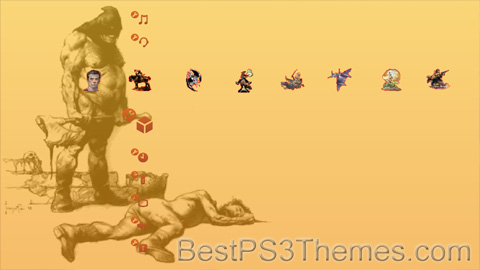
    Frazetta

    Frazetta theme by bracomadar

    Download: Frazetta.p3t

    Frazetta Theme
    (5 backgrounds)

    Redirect to:

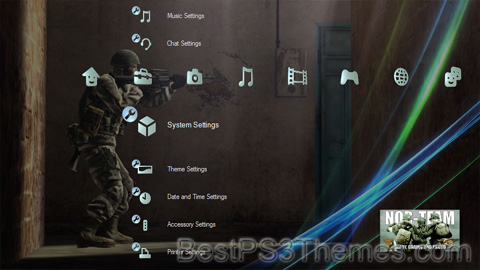
NOR-Team 2

NOR-Team 2 by Zlasher

Download: NORTeam2.p3t

NOR-Team 2
(1 backgrounds, different for HD and SD)

P3T Unpacker v0.12
Copyright (c) 2007. Anoop Menon

This program unpacks Playstation 3 Theme files (.p3t) so that you can touch-up an existing theme to your likings or use a certain wallpaper from it (as many themes have multiple). But remember, if you use content from another theme and release it, be sure to give credit!

Download for Windows: p3textractor.zip

Instructions:

Download p3textractor.zip from above. Extract the files to a folder with a program such as WinZip or WinRAR. Now there are multiple ways to extract the theme.

The first way is to simply open the p3t file with p3textractor.exe. If you don’t know how to do this, right click the p3t file and select Open With. Alternatively, open the p3t file and it will ask you to select a program to open with. Click Browse and find p3textractor.exe from where you previously extracted it to. It will open CMD and extract the theme to extracted.[filename]. After that, all you need to do for any future p3t files is open them and it will extract.

The second way is very simple. Just drag the p3t file to p3textractor.exe. It will open CMD and extract the theme to extracted.[filename].

For the third way, first put the p3t file you want to extract into the same folder as p3textractor.exe. Open CMD and browse to the folder with p3extractor.exe. Enter the following:
p3textractor filename.p3t [destination path]Replace filename with the name of the p3t file, and replace [destination path] with the name of the folder you want the files to be extracted to. A destination path is not required. By default it will extract to extracted.filename.